Culinary Advisor
A cooking platform built around craft, culture, and the stories behind what we eat.
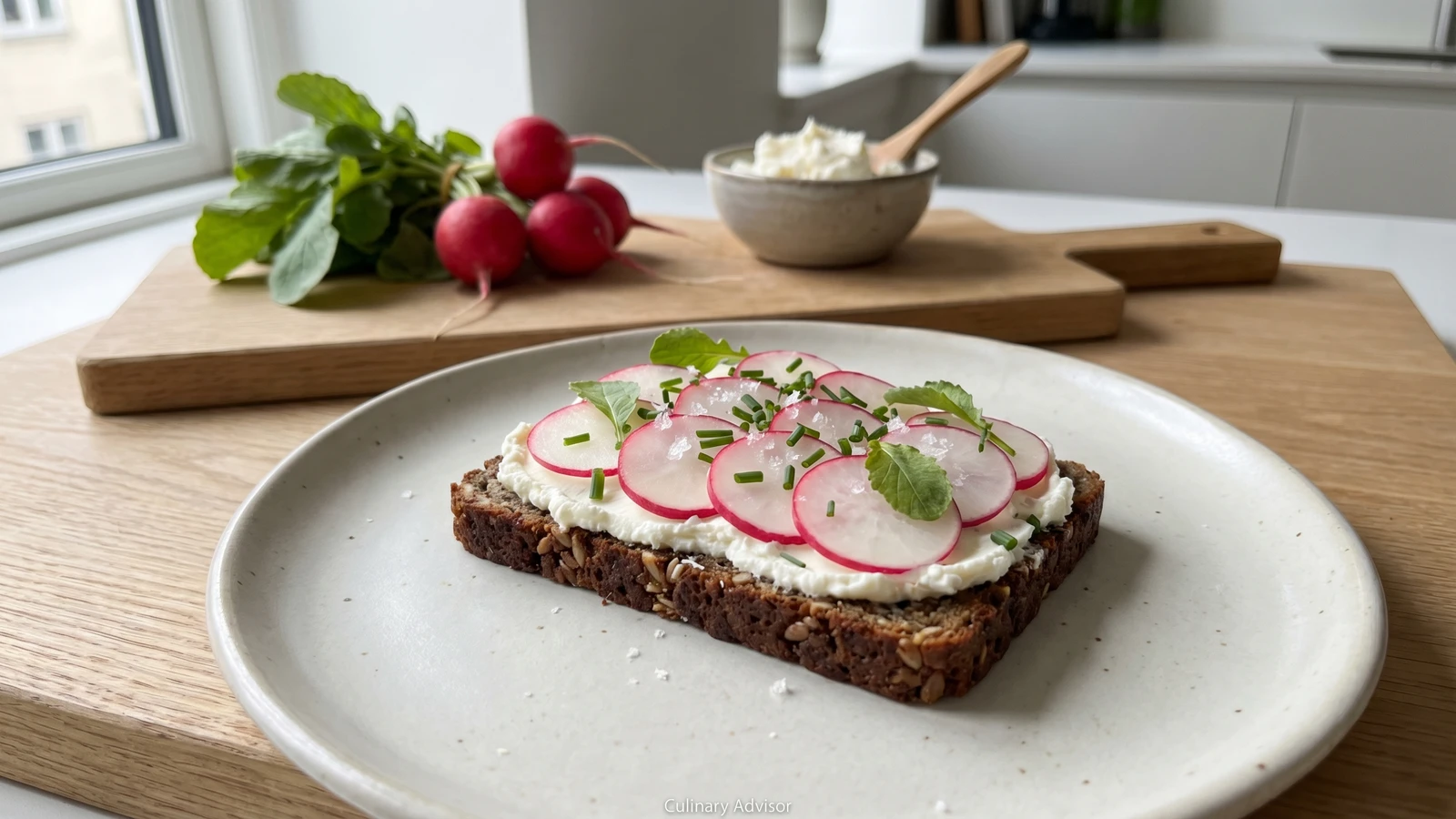
Rygeostmad med Radiser og Purlog
Created by Chef Freja
Funen's straw-smoked fresh cheese spread thick on buttered rugbrod, layered with crisp radish slices and a bright scatter of chives. The lightest smorrebrod in the Danish summer kitchen, and the only one built around a cheese that exists nowhere else.
June in Denmark is radish season. They appear at the market stalls in tight bunches, still wearing soil, their skins so bright they look painted. This is when rygeostmad makes the most sense: a cool, light smorrebrod that belongs to the long evenings when nobody wants to cook and the kitchen window stays open until ten.
Rygeost is something you need to understand. It's Denmark's only indigenous cheese, a soft, fresh curd smoked over straw on the island of Funen. The flavor is gentle, creamy and clean with a whisper of smoke that stays in the background. It doesn't taste like smoked cheddar or smoked gouda. Those are assertive. Rygeost is quiet. It wants crisp things around it, peppery radishes, sharp chives, good rye bread underneath, and it rewards that company by pulling everything together into something surprisingly complete.
There's almost nothing to the technique here, and that's exactly why the details matter. The butter must go edge to edge. The radishes must be sliced thin enough to bend. The cheese should be at room temperature so it spreads soft and creamy. If you get those three things right, you'll have a piece of smorrebrod that's as good as anything you'd find at a Copenhagen lunch table. You'll know when it's right because it'll taste like summer and smoke and something you want to make again tomorrow.
Rygeost has been made on Funen since at least the 18th century, when farmwives would smoke fresh curd over damp straw or hay in low wooden boxes, a preservation technique born from necessity that became a regional tradition. It is the only cheese considered truly indigenous to Denmark, distinct from the many varieties that arrived through German and Dutch influence. By the mid-20th century, production had nearly disappeared, but a revival by small Funen dairies in the 1990s brought rygeost back to Danish tables, and its pairing with radishes and chives on rugbrod has become one of the defining open sandwiches of the Danish summer.
The technique, the tradition, and the story behind every dish.
Discover Culinary AdvisorIngredients
dark rugbrod
Quantity
4 thick slices
unsalted butter
Quantity
30g
softened
rygeost
Quantity
200g
radishes
Quantity
8-10 (1 bunch)
scrubbed, thinly sliced
fresh chives
Quantity
small bunch
snipped
flaky sea salt
Quantity
to taste
black pepper
Quantity
freshly ground, to taste
radish leaves (optional)
Quantity
a few small leaves
| Ingredient | Quantity |
|---|---|
| dark rugbrod | 4 thick slices |
| unsalted buttersoftened | 30g |
| rygeost | 200g |
| radishesscrubbed, thinly sliced | 8-10 (1 bunch) |
| fresh chivessnipped | small bunch |
| flaky sea salt | to taste |
| black pepper | freshly ground, to taste |
| radish leaves (optional) | a few small leaves |
Equipment Needed
- •Sharp knife or mandoline for the radishes
- •Bread knife for slicing the rugbrod
Instructions
- 1
Slice the radishes
Wash the radishes well and slice them as thinly as you can manage. A sharp knife and a steady hand are all you need, though a mandoline makes it faster. You want them thin enough to bend without snapping, almost translucent at the edges so the pink bleeds into white. Thick slices taste too peppery and fight the cheese instead of complementing it. Drop the slices into a bowl of cold water for five minutes. This crisps them and takes the edge off their heat.
If the radishes have fresh, bright leaves still attached, save a few small ones. They're peppery and pretty, and they belong on the finished sandwich. - 2
Butter the rugbrod
Spread each slice of rugbrod with a thin, even layer of butter, going right to the edges. The butter is not optional and it is not just flavor. It seals the surface of the bread so the moisture from the cheese doesn't soak in and turn the rye soggy. Every piece of smorrebrod starts with butter for this reason. Use real butter, softened to room temperature so it spreads without tearing the bread. Cold butter rips the surface of rugbrod, and then the architecture falls apart.
- 3
Spread the rygeost
Spoon the rygeost generously over each buttered slice and spread it in a thick, uneven layer. Don't smooth it flat like plaster. You want small peaks and ridges where the radish slices can nestle and the salt can catch. Rygeost is soft and yielding, somewhere between ricotta and a fresh chevre, but with that distinctive straw-smoke flavor underneath. If your cheese has been in the fridge, let it sit out for ten minutes before you spread it. Cold rygeost is stiff and loses its creaminess.
Be generous. This is not a condiment; the rygeost is the heart of the sandwich. You want a layer thick enough that you taste smoke and cream in every bite. - 4
Layer the radishes
Drain the radish slices and pat them dry on a clean cloth. Arrange them over the rygeost in overlapping rows or in a loose scatter, whichever feels natural to you. There's no single correct way to lay them, but they should cover most of the cheese surface so you get radish in every bite. The contrast matters here: cool, crisp, peppery radish against soft, smoky cheese. That tension is the whole point of this sandwich.
- 5
Finish and serve
Scatter the snipped chives generously over the top. Add a few small radish leaves if you saved them. Finish with a pinch of flaky sea salt and a grind of black pepper. The salt brightens the smoke in the cheese and sharpens the radish. Serve immediately, on the plate you'd eat it from. This is smorrebrod, so it's eaten with a knife and fork, and it does not wait. Rygeostmad is best the moment it's made, before the radishes lose their snap and the bread starts to soften. Tak for mad.
Chef Tips
- •Rygeost is sold in tubs at Danish supermarkets and increasingly at Scandinavian specialty shops elsewhere. If you truly cannot find it, a very mild fresh goat cheese mixed with a tiny amount of smoked salt comes closest, but it's a workaround, not a substitute. The real thing is worth seeking out.
- •The radishes matter as much as the cheese. Look for small, firm ones with smooth skin and no sponginess when you squeeze them. A spongy radish has lost its water and its snap, and snap is half of what this sandwich does.
- •Rugbrod for smorrebrod should be dense, dark, and at least a day old. Fresh-baked rugbrod crumbles when you spread it. A day of rest lets the crumb firm up enough to hold the butter and the weight of the topping.
- •If you're serving this outside on a warm evening, keep the assembled sandwiches covered with a damp cloth until the moment you sit down. The cheese dries out quickly in open air and the radishes lose their brightness.
Advance Preparation
- •The radishes can be sliced and held in cold water for up to two hours ahead. Drain and pat dry just before assembling.
- •Do not assemble this sandwich in advance. The butter seals the bread, but the cheese will soften it over time. Build each piece just before you serve it.
Frequently Asked Questions
Nutrition Information
1 serving (about 165g)
Where cooking meets culture.
Culinary mentorship, cultural storytelling, and the editorial depth that makes cooking meaningful.
Explore Culinary Advisor