Culinary Advisor
A cooking platform built around craft, culture, and the stories behind what we eat.
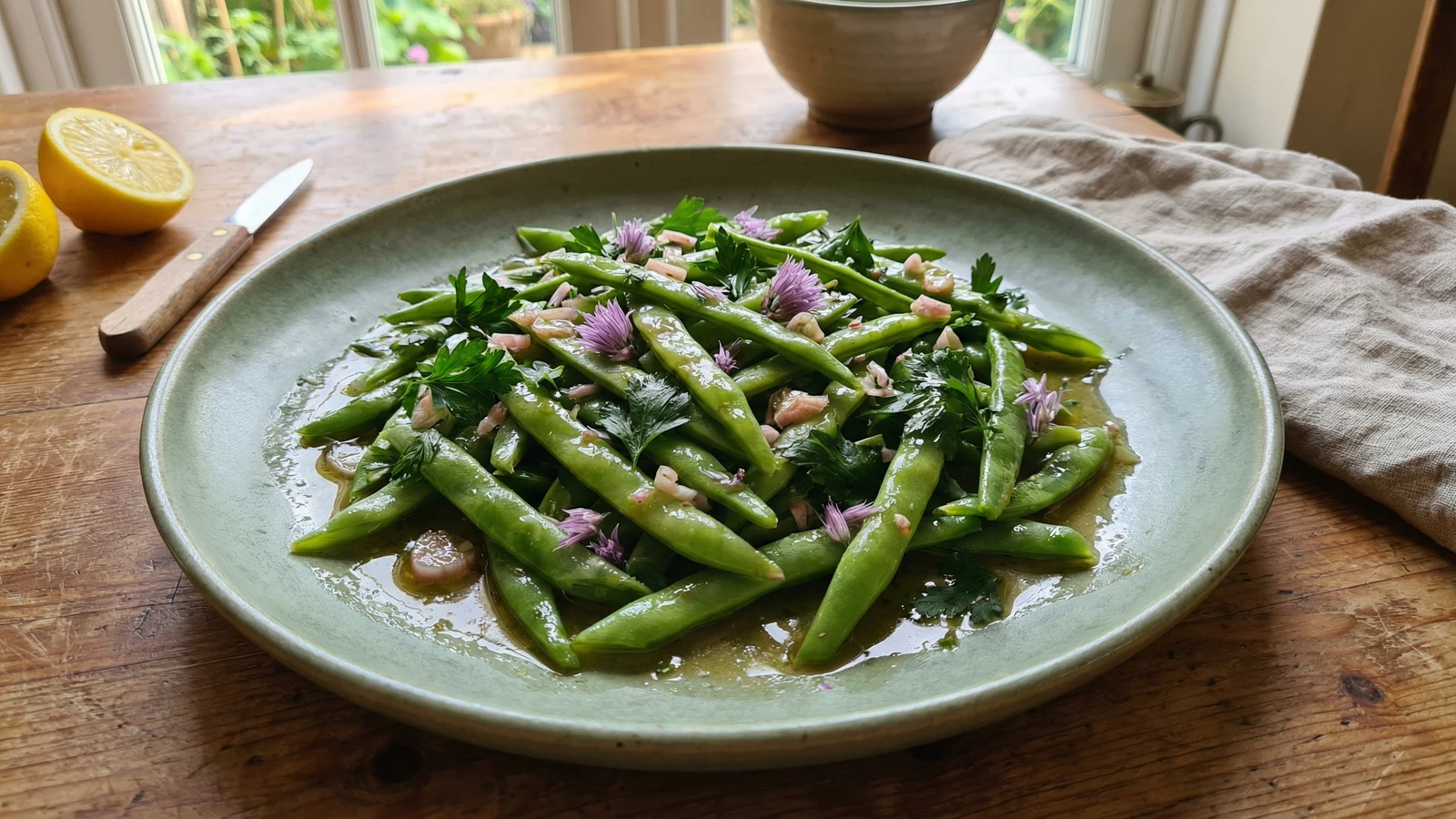
Runner Bean Salad with Shallot Vinaigrette
Created by Chef Thomas
Runner beans from the garden or the market, blanched until bright and tender, dressed warm with a sharp shallot vinaigrette that softens as it sits. August on a plate.
August, and the runner beans have taken over. They do this every year. You plant four seeds in May, thinking that seems reasonable, and by midsummer you've got a wall of green and more beans than you know what to do with. The neighbours start avoiding eye contact because you've already left a bag on their doorstep twice this week.
This is the salad that makes sense of the glut. Beans sliced on the diagonal, blanched in properly saltedwater until they're tender but still have something to say, then dressed while warm with a vinaigrette sharp enough to cut through their sweetness. The shallots sit in vinegar first, losing their rawness and turning pink. The mustard holds the dressing together. The whole thing takes twenty minutes and tastes like the garden.
I make this more than any other salad between July and September. It goes next to a piece of grilled lamb, beside a few slices of good ham, or on its own with bread and butter when it's too warm to cook anything more. I wrote it down in the notebook years ago: beans, shallots, vinegar, Tuesday. The recipe hasn't changed since, because it doesn't need to.
We're only making dinner. But dinner, when the beans are this good and the evening is still light at eight o'clock, can be a quietly splendid thing.
The technique, the tradition, and the story behind every dish.
Discover Culinary AdvisorIngredients
runner beans
Quantity
500g
topped, tailed, strings removed
banana shallots
Quantity
2
peeled and finely diced
red wine vinegar
Quantity
2 tablespoons
Dijon mustard
Quantity
1 teaspoon
good olive oil
Quantity
5 tablespoons
garlic
Quantity
1 small clove
crushed to a paste with salt
fine sea salt
Quantity
to taste
black pepper
Quantity
to taste
flat-leaf parsley
Quantity
small handful
roughly chopped
chive flowers (optional)
Quantity
a few
lemon juice
Quantity
a squeeze
| Ingredient | Quantity |
|---|---|
| runner beanstopped, tailed, strings removed | 500g |
| banana shallotspeeled and finely diced | 2 |
| red wine vinegar | 2 tablespoons |
| Dijon mustard | 1 teaspoon |
| good olive oil | 5 tablespoons |
| garliccrushed to a paste with salt | 1 small clove |
| fine sea salt | to taste |
| black pepper | to taste |
| flat-leaf parsleyroughly chopped | small handful |
| chive flowers (optional) | a few |
| lemon juice | a squeeze |
Equipment Needed
- •Large saucepan for blanching
- •Colander
- •Small mixing bowl for vinaigrette
- •Wide, flat serving plate
Instructions
- 1
Prepare the beans
Slice the beans on the diagonal, about the width of your little finger. Not too thin. You want them to have some presence on the plate, some bite. Runner beans cut on the diagonal look like they're going somewhere. Flat, square-cut beans look like school dinners.
Run your thumb down the edge of each bean to check for strings. Young beans from the garden won't have them. Older ones, and most from the shops, will. Pull them off from top to tail. It takes a minute and saves the dish. - 2
Blanch until tender
Bring a large pan of well-salted water to a rolling boil. Salt it like the sea. Drop the beans in and cook for three to four minutes, tasting one after three. You want them tender with a slight resistance, not squeaky, not soft. The colour will go from garden green to a brighter, almost startling green. That's when they're close. Drain and spread them on a wide plate to cool. Don't refresh them in iced water. You want them warm when the dressing goes on.
Spreading the beans on a plate rather than leaving them in the colander stops them steaming into limpness. You've just cooked them carefully. Don't undo it. - 3
Make the vinaigrette
While the beans cook, make the dressing. Put the diced shallots in a small bowl with the vinegar and a pinch of salt. Let them sit for five minutes. The vinegar softens their bite and turns them a lovely, flushed pink. Add the mustard and the garlic paste. Stir. Then pour in the olive oil slowly, whisking with a fork until it comes together into something glossy and sharp. Taste it. It should make you wince slightly. The beans will absorb that sharpness and mellow it.
- 4
Dress and serve
Tumble the warm beans onto a serving plate, something flat and generous. Spoon the vinaigrette over, making sure the shallot pieces are evenly scattered, not pooled in the middle. Toss gently with your hands if you're comfortable with that, or two spoons if you're not. A squeeze of lemon. The parsley, torn more than chopped if you can be bothered. Chive flowers pulled apart over the top if the garden has them. Eat while the beans are still warm and the dressing is still sharp. This doesn't improve with waiting.
Chef Tips
- •The best runner beans are young and firm, no longer than the length of your hand. If the beans inside have started to bulge through the pod, they're past their best for this salad. Use those ones in a stew instead, where long cooking will tenderize them.
- •Make the dressing while the water boils. You want the shallots to have their five minutes in the vinegar before the beans are ready. Timing, not technique, is the only skill here.
- •This salad is best eaten warm or at room temperature, never cold from the fridge. Cold mutes everything: the sharpness of the dressing, the sweetness of the beans, the whole point. If you must make it ahead, bring it back to room temperature and retoss with a squeeze of lemon before serving.
- •If you're serving this at a barbecue, dress the beans just before people sit down. Vinaigrette on warm beans is alive. Vinaigrette on beans that have been sitting for an hour is a different, duller thing.
Advance Preparation
- •The vinaigrette can be made several hours ahead and left at room temperature. It improves a little as the shallots continue to soften in the vinegar.
- •The beans are best blanched just before serving. If you must do them ahead, spread them on a plate and dress them at the last moment with a fresh squeeze of lemon to revive them.
Frequently Asked Questions
Nutrition Information
1 serving (about 180g)
Where cooking meets culture.
Culinary mentorship, cultural storytelling, and the editorial depth that makes cooking meaningful.
Explore Culinary Advisor