Culinary Advisor
A cooking platform built around craft, culture, and the stories behind what we eat.
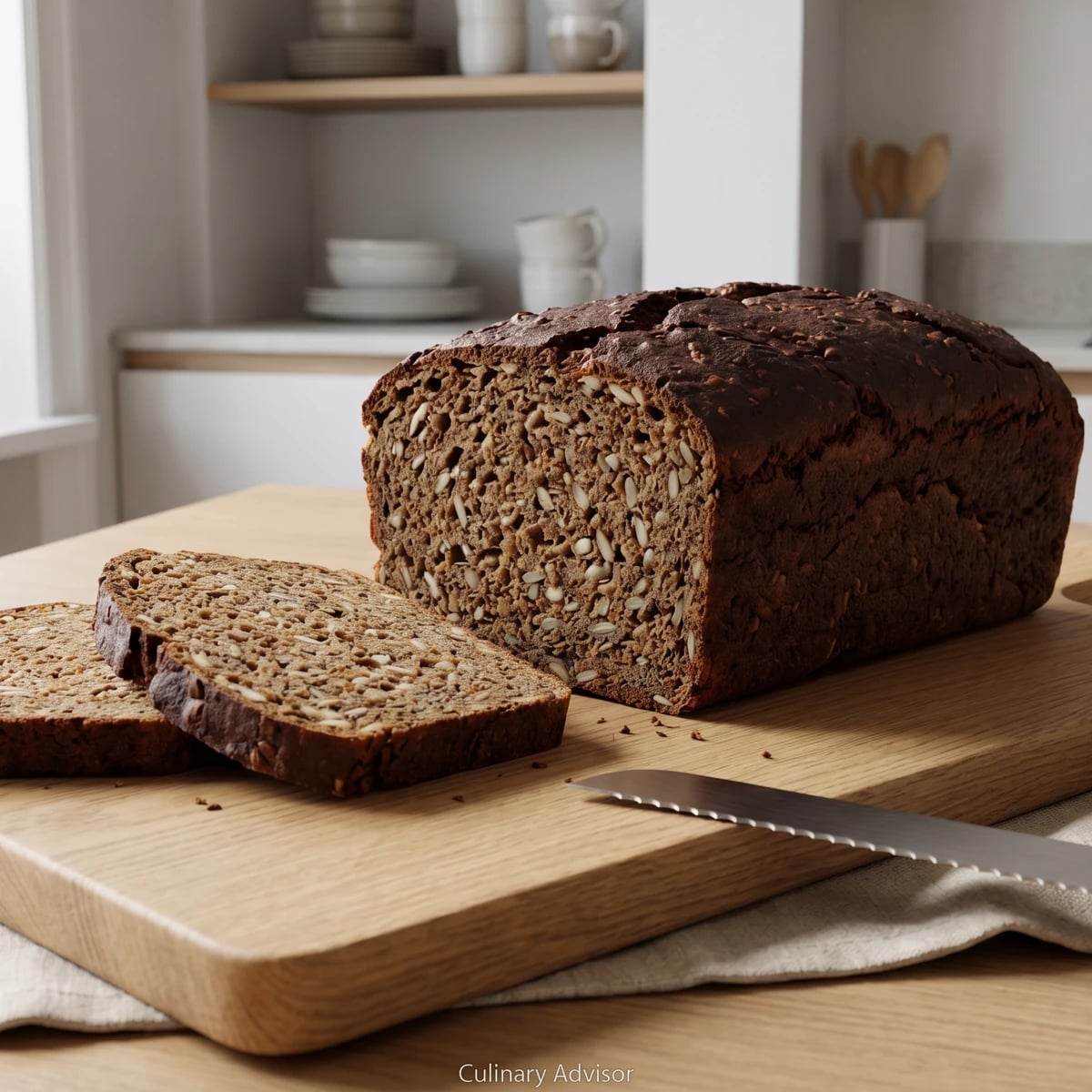
Rugbrod
Created by Chef Freja
Dense, dark, seeded sourdough rye. The bread that holds the Danish kitchen together. You don't knead rugbrod, you give it time, and it gives you the platform for everything that goes on top.
Every Danish meal begins with rugbrod. Not because someone decided it should, but because nothing else does what it does. It holds butter. It holds herring and leverpostej and pickled beets and aged cheese. It is the platform, and without it, smorrebrod is just a plate of toppings with nowhere to land.
Rugbrod is not bread the way most of the world understands bread. You don't knead it. There's no gluten to develop, because rye barely has any. What you make is closer to a batter: dark, heavy, thick with seeds and cracked grains, sour from the starter that brings it to life. You stir it together in the evening, press it into a pan, and give it the night. Twelve hours while the kitchen sleeps. The starter does the work. Patience is the skill.
What I want you to watch for is the surface the next morning. It will have cracked slightly, like dry earth after a warm day. The batter will have risen, but only a little. That's enough. Those cracks tell you the starter has done its work, that the acids and the gases have moved through the batter and given it the deep, sour flavor that makes this bread what it is. If you see those cracks, you're ready to bake. And once it's cooled, once you've waited (and you must wait), you'll slice into something dense and dark and alive with seeds. You'll spread butter on it, or lay a piece of cheese across it, and you'll understand why an entire country has built its kitchen on this single loaf.
Ingredients
dark rye flour
Quantity
500g
stone-ground
cracked rye berries
Quantity
200g
raw sunflower seeds
Quantity
100g
| Ingredient | Quantity |
|---|---|
| dark rye flourstone-ground | 500g |
| cracked rye berries | 200g |
| raw sunflower seeds | 100g |