Culinary Advisor
A cooking platform built around craft, culture, and the stories behind what we eat.
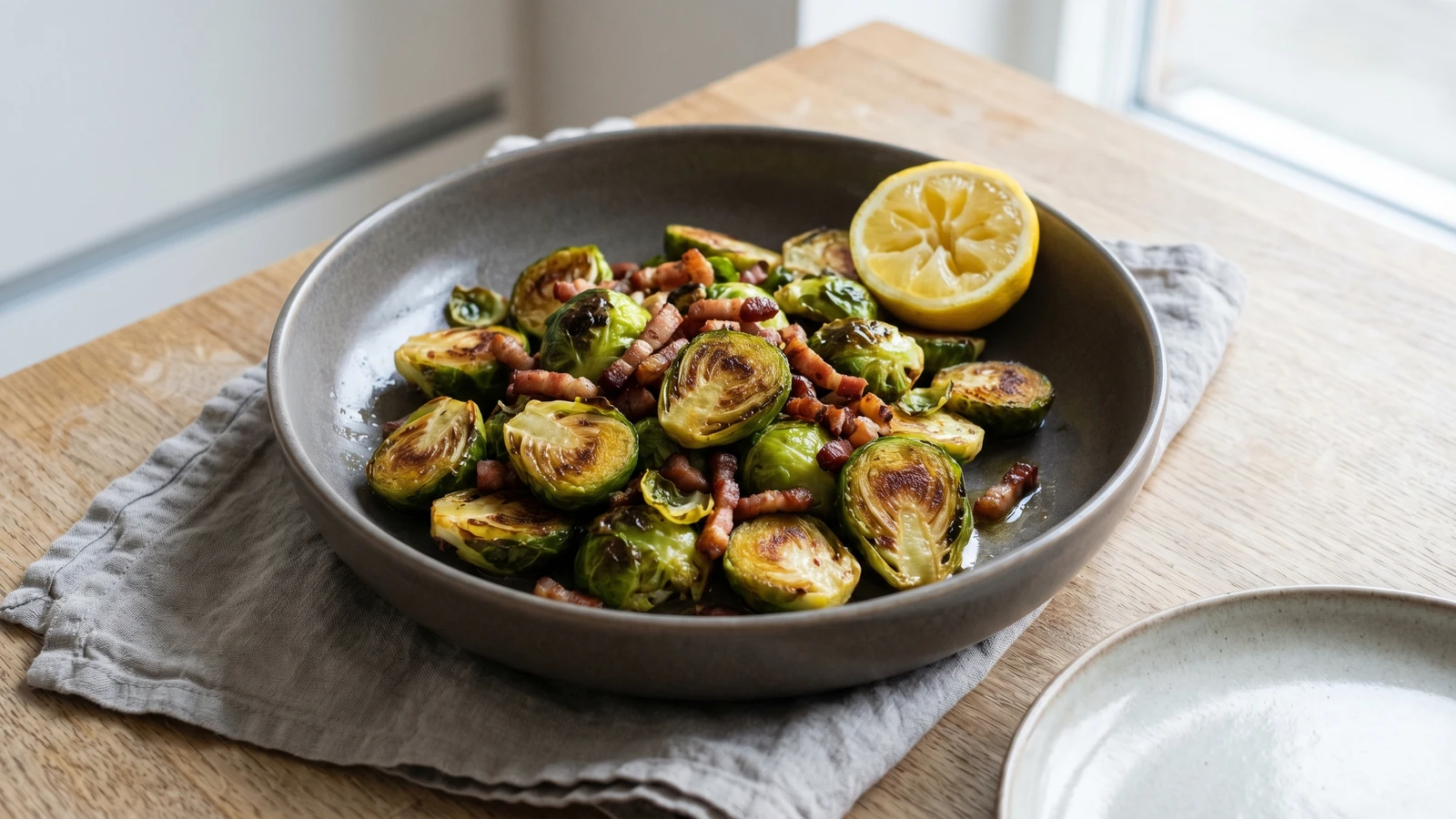
Rosenkaal med Bacon
Created by Chef Freja
Halved Brussels sprouts seared hard in bacon fat and butter until deeply golden, tossed with crispy lardons, and finished with a squeeze of lemon that makes the whole dish lift. The winter side that belongs on the Danish Christmas table and every cold weeknight in between.
December in Denmark is dark by half past three. The candles come out, the windows glow, and the kitchen becomes the warmest room in the house. This is when rosenkaal med bacon earns its place.
Brussels sprouts carry a reputation they don't deserve, and I blame every cook who ever boiled them into grey submission. That's not what we're doing here. You're going to halve them, lay them cut-side down in a pan slick with rendered bacon fat and butter, and leave them alone until the flat surface turns the color of a hazelnut shell. That caramelization is the entire point. It converts the sprout's natural bitterness into something sweet, nutty, and deeply savory. The crisp bacon lardons scattered back through at the end give you salt and smoke. A squeeze of lemon at the finish gives you brightness. The whole thing comes together in half an hour.
I want you to watch for one thing: the moment after you've laid the sprouts cut-side down. Your instinct will be to stir. Don't. Let the heat do its work. Four minutes of patience, and you'll lift a sprout to find a golden crust underneath that changes everything. That color is where the flavor lives. You'll know when it's right.
Brussels sprouts, rosenkaal in Danish, arrived in Scandinavia from the Low Countries in the 1800s and found themselves at home in the cold, short growing season of a Danish autumn. The first frost sweetens the sprouts by converting their starches to sugars, and Danish cooks have long known to wait for that frost before bringing them to the table. By the twentieth century, rosenkaal med bacon had become a fixture of the Danish Christmas spread, served alongside flæskesteg, rødkål, and brunede kartofler, the side dish that quietly holds the whole plate together.
The technique, the tradition, and the story behind every dish.
Discover Culinary AdvisorIngredients
Brussels sprouts
Quantity
600g
trimmed and halved lengthwise
thick-cut smoked bacon
Quantity
200g
cut into lardons
unsalted butter
Quantity
30g
neutral oil
Quantity
1 tablespoon
lemon
Quantity
1
halved
fine sea salt
Quantity
to taste
black pepper
Quantity
freshly ground, to taste
flaky sea salt (optional)
Quantity
to finish
| Ingredient | Quantity |
|---|---|
| Brussels sproutstrimmed and halved lengthwise | 600g |
| thick-cut smoked baconcut into lardons | 200g |
| unsalted butter | 30g |
| neutral oil | 1 tablespoon |
| lemonhalved | 1 |
| fine sea salt | to taste |
| black pepper | freshly ground, to taste |
| flaky sea salt (optional) | to finish |
Equipment Needed
- •Large heavy frying pan or cast iron skillet, 28cm or larger
- •Slotted spoon
- •Sharp kitchen knife
Instructions
- 1
Render the bacon
Place the bacon lardons in a large, cold frying pan and set it over medium heat. Starting in a cold pan is important: it lets the fat render slowly out of the meat, and that fat is what you'll cook the sprouts in. Stir the lardons occasionally and let them cook for six to eight minutes, until they're golden and crisp at the edges and the pan is slick with melted fat. Lift the bacon out with a slotted spoon and set it aside on a plate. Leave every drop of fat in the pan.
Cut the lardons yourself from a thick slab of smoked bacon. Pre-sliced thin rashers won't give you the same meaty bite or the same amount of rendered fat. You need that fat. - 2
Sear the sprouts
Add the butter and oil to the bacon fat in the pan and raise the heat to medium-high. When the butter is foaming and beginning to smell nutty, lay the sprout halves cut-side down in a single layer. Do not move them. This is the step that matters most. The cut face needs to sit flat against the hot pan, undisturbed, for four to five minutes until it turns a deep, uneven gold with dark spots at the edges. That color is flavor: the natural sugars in the sprout caramelizing against the hot fat. If you stir or shake the pan, you lose it.
If the sprouts don't all fit in one layer, cook them in two batches. Crowding the pan traps steam and the sprouts will turn grey and soft instead of golden and crisp. Two batches and patience will give you the dish. One crowded pan will not. - 3
Cook through
Once the cut sides are deeply caramelized, turn the sprouts over and season them with fine sea salt and a good amount of black pepper. Lower the heat to medium and cook for another four to five minutes, tossing once or twice, until the outer leaves are browning and the centers are just tender when pierced with the tip of a knife. You want them yielding but not soft. A little resistance at the core is right. Overcooked sprouts taste of sulfur. Properly cooked sprouts taste sweet, nutty, and clean.
- 4
Return the bacon
Scatter the reserved bacon lardons back into the pan and toss everything together over the heat for thirty seconds, just long enough for the bacon to warm through and the flavors to meet. Take the pan off the heat.
- 5
Finish with lemon
Squeeze half the lemon directly over the sprouts in the pan. The acid is not optional. It lifts the whole dish, cutting through the richness of the bacon fat and butter and brightening the sweetness of the caramelized sprouts. Without it, the dish is heavy. With it, it's alive. Taste. If it needs more lemon, use the other half. Transfer to a warm serving dish, finish with a pinch of flaky sea salt, and bring it to the table immediately.
Chef Tips
- •The season decides. Brussels sprouts picked after the first frost are sweeter and less bitter than anything harvested in warm weather. If you're buying them in October, wait. November and December sprouts are a different vegetable entirely.
- •Use thick-cut smoked bacon, not the thin, floppy kind. You need lardons with substance, pieces that render their fat generously and stay chewy at the center while crisping at the edges. Ask your butcher for a piece cut from the slab.
- •Save the small loose leaves that fall away when you trim the sprouts. Toss them into the pan in the last minute of cooking. They turn into crisp, papery chips that shatter between your teeth. They're a cook's reward.
- •This dish is good alongside roast pork or duck, but it's also a meal on its own with a fried egg on top and a slice of rugbrod. Don't underestimate a side dish that can carry a plate by itself.
Advance Preparation
- •The sprouts can be trimmed and halved up to a day ahead. Keep them in a sealed container in the fridge. Bring them to room temperature before cooking, or the cold centers will slow down the caramelization.
- •The bacon lardons can be rendered ahead of time and the fat reserved. Reheat the fat in the pan before adding the sprouts. But the final assembly, searing and finishing, must happen just before serving. This dish does not wait.
Frequently Asked Questions
Nutrition Information
1 serving (about 185g)
Where cooking meets culture.
Culinary mentorship, cultural storytelling, and the editorial depth that makes cooking meaningful.
Explore Culinary Advisor