Culinary Advisor
A cooking platform built around craft, culture, and the stories behind what we eat.
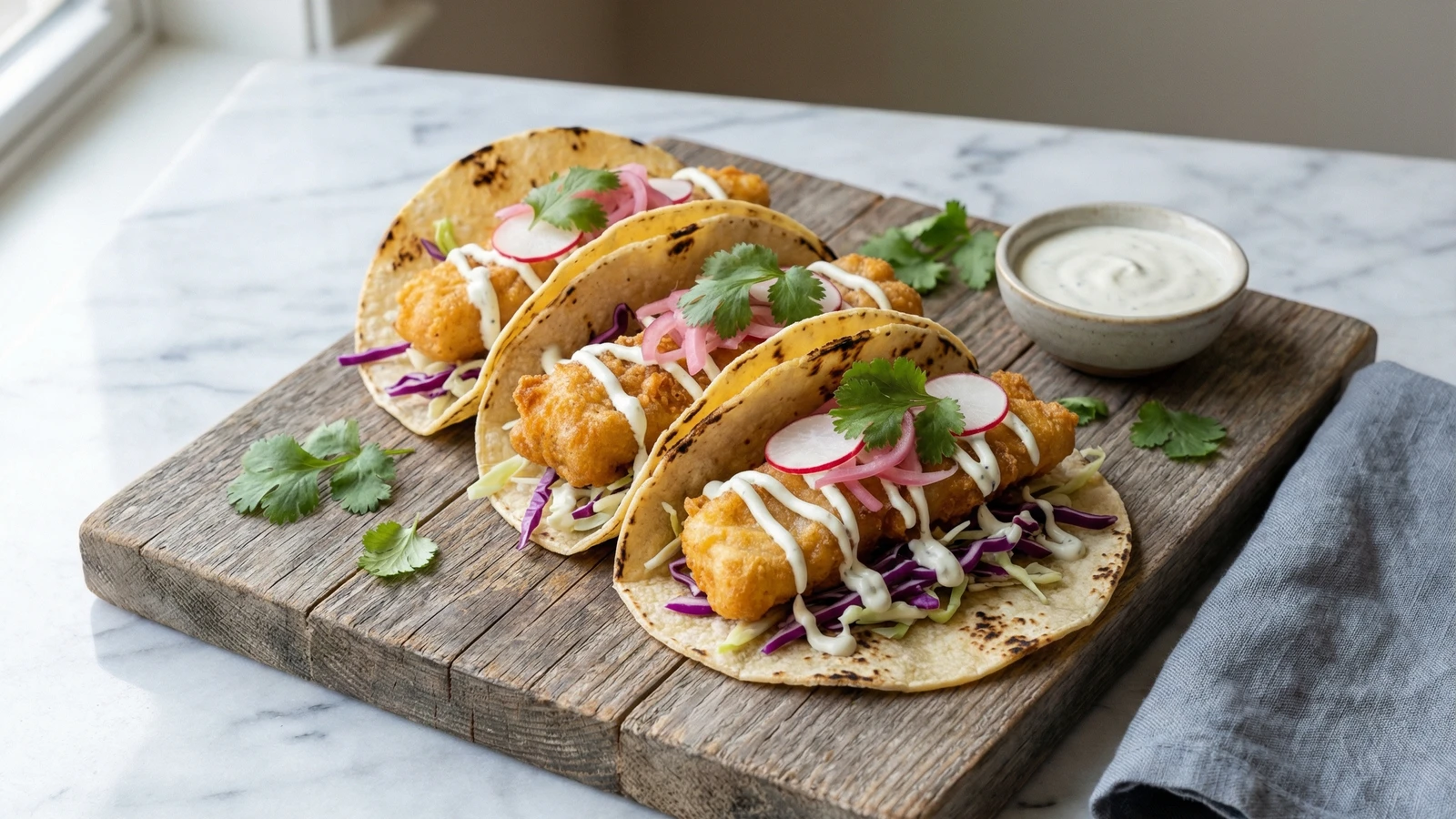
Rockfish Tacos with Lime Crema
Created by
Golden-battered Pacific rockfish nestled in warm corn tortillas with crisp cabbage slaw and bright lime crema, the kind of honest beach food that makes you understand why people move to the coast.
The fish taco arrived on American shores from Baja California, but it found a second home along the Pacific Northwest coast where sustainable rockfish swim in cold, clean waters. This is food born of practicality: fishermen needed something quick to eat between hauls, something that honored the catch without fussing over it. What they created deserves your attention.
Rockfish is the workhorse of West Coast seafood. The name covers dozens of species, all with firm white flesh that holds up beautifully to battering and frying. When you buy from boats that practice sustainable harvest, you're supporting fishing families who've worked these waters for generations, many of them descendants of the Native American, Asian, and Scandinavian communities that built Pacific seafood culture.
The technique here matters more than any single ingredient. Your batter must be cold. Your oil must be hot. The fish goes in dry and comes out shatteringly crisp, ready for cool cabbage and that bright punch of lime crema. This is weeknight cooking that feels like a celebration, beach food you can make two thousand miles from any ocean.
The technique, the tradition, and the story behind every dish.
Discover Culinary AdvisorIngredients
rockfish fillets, skinned
Quantity
1 1/2 pounds
all-purpose flour, plus more for dredging
Quantity
1 cup
cornstarch
Quantity
1/2 cup
baking powder
Quantity
1 teaspoon
kosher salt (for batter)
Quantity
1 teaspoon
smoked paprika
Quantity
1/2 teaspoon
cayenne pepper
Quantity
1/4 teaspoon
light Mexican lager, very cold
Quantity
1 cup
vegetable or peanut oil
Quantity
for frying
green cabbage
Quantity
3 cups
thinly sliced
red cabbage
Quantity
1 cup
thinly sliced
fresh cilantro leaves
Quantity
1/2 cup
roughly chopped
fresh lime juice (for slaw)
Quantity
2 tablespoons
kosher salt (for slaw)
Quantity
1/2 teaspoon
Mexican crema or sour cream
Quantity
1 cup
fresh lime juice (for crema)
Quantity
2 tablespoons
lime zest
Quantity
1 teaspoon
garlic
Quantity
1 small clove
finely grated
kosher salt (for crema)
Quantity
1/4 teaspoon
corn tortillas
Quantity
12
ripe avocado (optional)
Quantity
1
sliced
pickled red onions (optional)
Quantity
for serving
fresh cilantro sprigs (optional)
Quantity
for garnish
lime wedges
Quantity
for serving
| Ingredient | Quantity |
|---|---|
| rockfish fillets, skinned | 1 1/2 pounds |
| all-purpose flour, plus more for dredging | 1 cup |
| cornstarch | 1/2 cup |
| baking powder | 1 teaspoon |
| kosher salt (for batter) | 1 teaspoon |
| smoked paprika | 1/2 teaspoon |
| cayenne pepper | 1/4 teaspoon |
| light Mexican lager, very cold | 1 cup |
| vegetable or peanut oil | for frying |
| green cabbagethinly sliced | 3 cups |
| red cabbagethinly sliced | 1 cup |
| fresh cilantro leavesroughly chopped | 1/2 cup |
| fresh lime juice (for slaw) | 2 tablespoons |
| kosher salt (for slaw) | 1/2 teaspoon |
| Mexican crema or sour cream | 1 cup |
| fresh lime juice (for crema) | 2 tablespoons |
| lime zest | 1 teaspoon |
| garlicfinely grated | 1 small clove |
| kosher salt (for crema) | 1/4 teaspoon |
| corn tortillas | 12 |
| ripe avocado (optional)sliced | 1 |
| pickled red onions (optional) | for serving |
| fresh cilantro sprigs (optional) | for garnish |
| lime wedges | for serving |
Equipment Needed
- •Heavy Dutch oven or deep pot (at least 5-quart capacity)
- •Deep-fry or instant-read thermometer
- •Wire cooling rack set over a sheet pan
- •Spider skimmer or slotted spoon
Instructions
- 1
Make the lime crema
Whisk together the crema, lime juice, lime zest, grated garlic, and salt in a small bowl until completely smooth. The mixture should be pourable but not thin. Taste it. The lime should be bright and forward, the garlic barely there. Refrigerate while you prepare everything else. The flavors will marry as it sits.
If using sour cream instead of Mexican crema, thin it with a tablespoon of milk to achieve the right drizzling consistency. - 2
Prepare the cabbage slaw
Toss both cabbages with the chopped cilantro, lime juice, and salt in a large bowl. Work the mixture with your hands, squeezing gently to help the cabbage soften slightly and absorb the lime. It should taste bright and clean with just enough salt to wake everything up. Set aside at room temperature. The slaw improves as it sits but should retain its crunch.
- 3
Cut and dry the fish
Slice the rockfish fillets into strips about one inch wide and three inches long. These are generous pieces that will hang over the edges of your tortillas, which is exactly what you want. Pat each piece aggressively dry with paper towels. Any moisture on the fish will cause your batter to slide off and your oil to spatter. Dry fish, crispy results.
If your fillets have any pin bones remaining, run your fingers along the flesh and pull them out with tweezers or needle-nose pliers. - 4
Mix the batter
Whisk together the flour, cornstarch, baking powder, salt, smoked paprika, and cayenne in a medium bowl. Pour in the cold beer and whisk just until combined. Some lumps are fine. The batter should coat a spoon thickly but drip off in a steady stream. If too thick, add another splash of beer. Keep this batter cold. Set the bowl over a larger bowl filled with ice if your kitchen runs warm.
- 5
Heat the oil
Pour three inches of oil into a Dutch oven or heavy pot. Clip on your thermometer and heat over medium-high until it reaches 375°F. This takes longer than most people expect, usually eight to ten minutes. Patience here prevents greasy fish. While the oil heats, set up your dredging station: a shallow dish of flour next to the batter bowl, with a wire rack over a sheet pan nearby for draining.
Peanut oil gives the cleanest flavor and handles high heat beautifully. Vegetable oil works fine if that's what you have. - 6
Dredge and batter the fish
Working with one piece at a time, dredge the fish in flour, shaking off any excess. The flour creates a dry surface for the batter to grip. Dip immediately into the cold batter, letting excess drip off for a few seconds. The coating should be even and not too thick.
- 7
Fry until golden
Carefully lower three or four pieces of battered fish into the hot oil. Don't crowd the pot. The temperature will drop when the fish goes in. Adjust your heat to maintain 350-365°F. Fry for three to four minutes, turning once halfway through, until the crust is deeply golden and the fish is cooked through. The sound tells you everything: aggressive bubbling at first, then a quieter, steadier sizzle as moisture escapes and the crust sets. Transfer to the wire rack. Season immediately with a pinch of salt while still glistening.
- 8
Warm the tortillas
While frying in batches, warm your tortillas directly over a gas flame or in a dry skillet until pliable and lightly charred in spots, about thirty seconds per side. Stack them in a clean kitchen towel to keep warm. Cold tortillas crack when you fold them. Warm tortillas embrace their filling.
- 9
Assemble the tacos
Lay a warm tortilla flat. Add a generous handful of cabbage slaw down the center, then top with a piece of fried rockfish. Drizzle liberally with lime crema. Add a slice or two of avocado if using, a few pickled onions, and a sprig of fresh cilantro. Serve immediately with lime wedges on the side. These tacos don't wait. Eat them while the fish is still crackling.
Chef Tips
- •Ask your fishmonger for Pacific rockfish, black cod, or lingcod. All are excellent choices with sustainable populations when properly managed. Avoid any fish that seems soft or smells of anything other than clean ocean.
- •The beer must be cold. Warm beer creates a heavy, greasy coating. I keep a can in the freezer for fifteen minutes before mixing the batter.
- •Fry in batches small enough that your oil temperature never drops below 350°F. Crowding the pot is the fastest path to soggy fish.
- •Leftover crema keeps refrigerated for a week and improves almost anything: drizzle it over grilled vegetables, roasted potatoes, or scrambled eggs.
- •For a lighter version, the fish can be grilled or pan-seared instead of fried. Season the fillets with the same spices used in the batter and cook over high heat until just opaque.
Advance Preparation
- •Lime crema can be made up to 3 days ahead and refrigerated. The flavor improves overnight.
- •Cabbage slaw can be prepared up to 4 hours ahead. Keep refrigerated and toss again before serving.
- •Fish can be cut and refrigerated up to 1 day ahead. Pat completely dry before dredging.
- •Pickled red onions keep for 2 weeks refrigerated and improve most Mexican-inspired dishes.
Frequently Asked Questions
Nutrition Information
1 serving (about 575g)
Where cooking meets culture.
Culinary mentorship, cultural storytelling, and the editorial depth that makes cooking meaningful.
Explore Culinary Advisor