Culinary Advisor
A cooking platform built around craft, culture, and the stories behind what we eat.
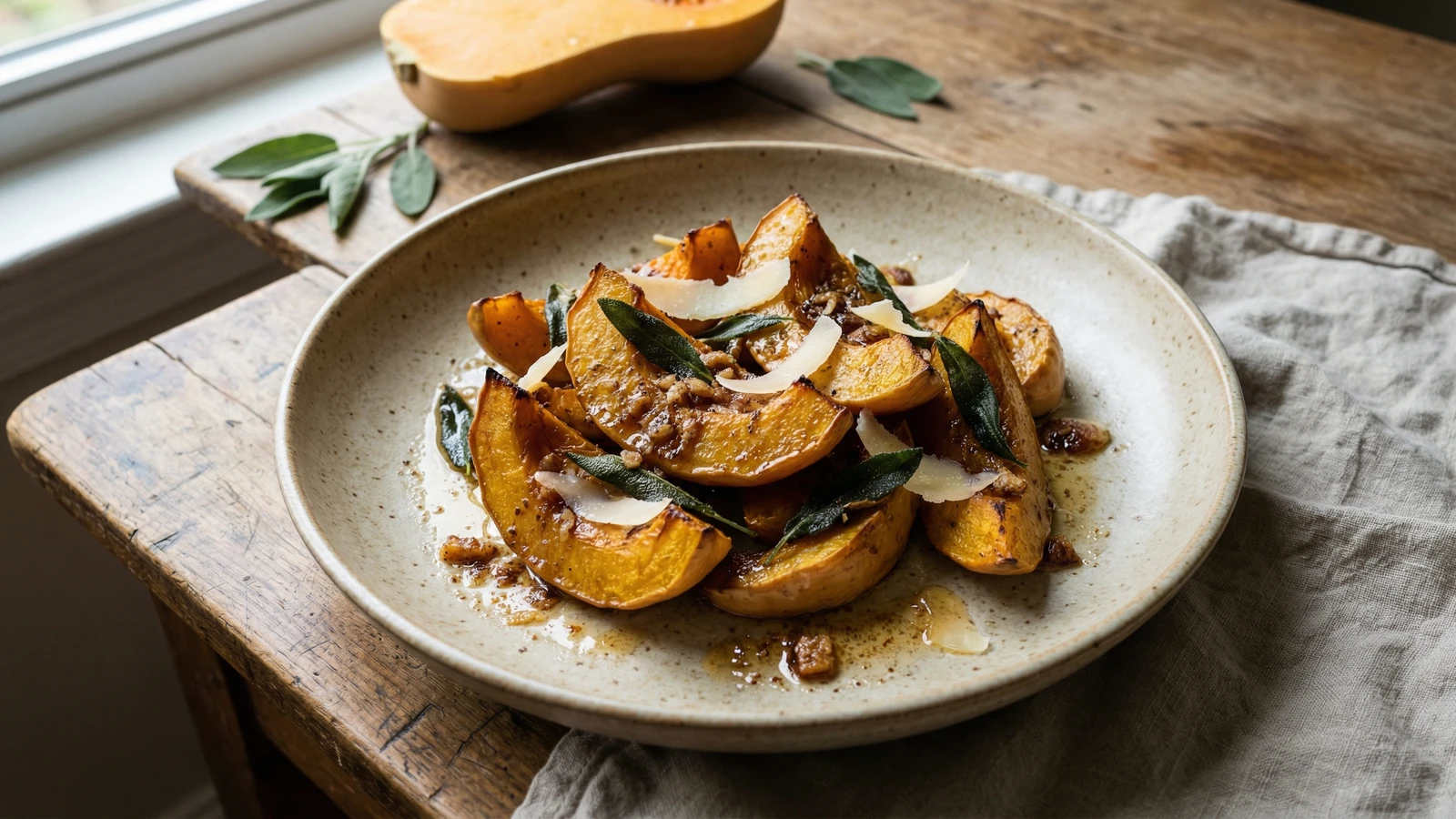
Roasted Squash with Sage and Brown Butter
Created by Chef Thomas
Squash wedges roasted until their edges go sticky and golden, then doused in brown butter that smells of hazelnuts and scattered with sage leaves fried until they shatter between your teeth.
October. The clocks have gone back, the evenings arrive before you're ready, and the squash at the Saturday market are piled in crates like small, dense suns. I pick one up, weigh it in my hand, and that's supper sorted.
This is the dish I cook more than any other between October and Christmas. Squash wedges, roasted hot until the cut surfaces go deep gold and the edges caramelise into something almost toffee-like. Then brown butter, made in the time it takes the squash to come out of the oven, spooned over while it's still foaming and fragrant. Sage leaves dropped into the butter at the last moment, where they crisp and crackle and turn into something you'll eat straight from the pan if no one is watching.
A recipe is a conversation, not a contract. These are rough proportions, a starting point. Use more butter if you're feeling generous. Use less if you aren't. The squash will tell you what it needs, and your nose will tell you when the butter is ready. The whole thing takes about an hour, most of it hands-off, and the result is the kind of side dish that quietly takes over the table. I've served it beside a roast chicken and watched people go back for the squash.
I wrote it down in the notebook years ago. Just three words: squash, sage, butter. It didn't need more than that. It still doesn't.
The technique, the tradition, and the story behind every dish.
Discover Culinary AdvisorIngredients
butternut or Crown Prince squash
Quantity
1 medium (about 1kg)
halved, seeds scooped out, cut into wedges
olive oil
Quantity
2 tablespoons
fine sea salt
Quantity
to taste
black pepper
Quantity
to taste
unsalted butter
Quantity
60g
fresh sage leaves
Quantity
a small handful (about 12-15)
lemon juice
Quantity
1 tablespoon
Parmesan (optional)
Quantity
a few shavings
| Ingredient | Quantity |
|---|---|
| butternut or Crown Prince squashhalved, seeds scooped out, cut into wedges | 1 medium (about 1kg) |
| olive oil | 2 tablespoons |
| fine sea salt | to taste |
| black pepper | to taste |
| unsalted butter | 60g |
| fresh sage leaves | a small handful (about 12-15) |
| lemon juice | 1 tablespoon |
| Parmesan (optional) | a few shavings |
Equipment Needed
- •Large baking tray
- •Small saucepan for brown butter
- •Serving platter or warm plate
Instructions
- 1
Prepare and roast the squash
Set the oven high, around 210C/190C fan. Cut the squash in half lengthways, scoop out the seeds and fibres, and cut into wedges about two fingers thick. Leave the skin on. It holds the flesh together as it softens, and the edges where flesh meets skin go the most beautifully sticky. Toss the wedges in olive oil, season with salt and pepper, and lay them cut-side down on a large baking tray. Give them space. Crowded squash steams rather than roasts, and you want colour, not pallor.
If you can find a Crown Prince squash at the market, use it. The flesh is denser and sweeter than butternut, and it roasts to something almost chestnut-like. But a good butternut will do the job honestly. - 2
Roast until deeply golden
Roast for thirty-five to forty-five minutes, turning the wedges once halfway through. You're looking for deep gold on the cut surfaces, soft flesh that yields when you press it with the back of a spoon, and edges that have gone slightly caramelised and sticky. The kitchen will smell sweet and nutty. That's the sugars doing their work. Don't pull them out early. Pale, undercooked squash is bland. The flavour lives in those browned edges.
- 3
Make the brown butter and sage
While the squash finishes, put the butter in a small saucepan over a medium heat. Let it melt, then foam. Stir occasionally. Watch it. The milk solids will begin to turn golden, then amber, and the smell will shift from butter to something closer to hazelnuts and warm toast. This happens quickly once it starts. The moment it smells like that, drop in the sage leaves. They'll spit and hiss and crisp within ten seconds or so, curling at the edges and turning a deeper, almost translucent green. Pull the pan off the heat immediately. A squeeze of lemon juice into the butter. It will bubble furiously. Stir once.
Trust your nose. It knows before you do. The moment the butter smells of hazelnuts, you're there. Fifteen seconds later, you've gone too far and it's burnt. Stay close and keep the heat moderate. - 4
Assemble and serve
Lay the roasted squash wedges on a warm serving plate or your favourite worn platter. Spoon the brown butter over them generously, letting it pool in the hollows and run down the sides. Scatter the crisp sage leaves on top. If you've got a piece of Parmesan in the fridge, a few shavings over the top won't hurt, though the dish doesn't need it. Season once more. Taste a corner. Carry it to the table while the butter is still glossy.
Chef Tips
- •The squash variety matters more than the technique. A Crown Prince or Onion squash from a decent grower will have a sweetness and density that no amount of roasting can coax from a tired supermarket butternut. Go to the market. Pick one up. It should feel heavy for its size.
- •Don't peel the squash. The skin softens in the oven and holds the wedges together, and the contrast between the roasted flesh and the slightly firmer skin is part of the pleasure. If you're using something with a very tough rind, score it with a knife so the heat can get in.
- •Brown butter is about attention, not skill. Keep the heat moderate, stay by the pan, and the moment it smells of hazelnuts and the solids have gone the colour of a hazelnut shell, it's done. That moment lasts about ten seconds. After that, it's burnt butter, which is a different thing entirely and not what we're after.
- •This is a side that wants to be the centre of attention. Serve it with something simple: a roast bird, good bread, a green salad. Don't compete with it. Let the squash be the reason the plate is interesting.
Advance Preparation
- •The squash can be cut into wedges and kept in the fridge, covered, for up to a day before roasting. Bring to room temperature before it goes in the oven.
- •Don't make the brown butter ahead. It takes two minutes and needs to go on the squash while it's still warm and fragrant. This is a last-minute pleasure, not a make-ahead convenience.
Frequently Asked Questions
Nutrition Information
1 serving (about 175g)
Where cooking meets culture.
Culinary mentorship, cultural storytelling, and the editorial depth that makes cooking meaningful.
Explore Culinary Advisor