Culinary Advisor
A cooking platform built around craft, culture, and the stories behind what we eat.
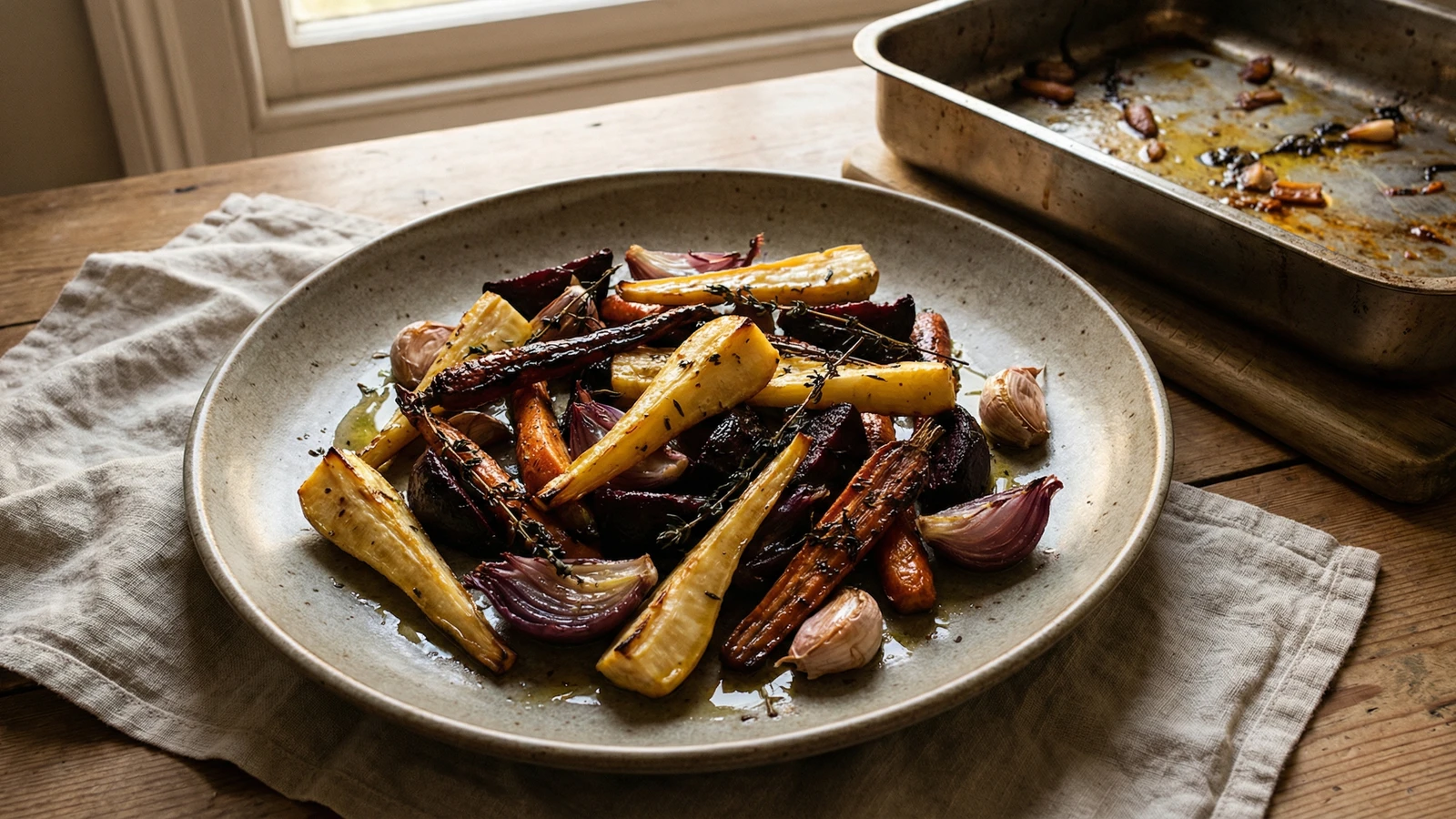
Roasted Root Vegetables with Thyme
Created by Chef Thomas
A tray of thick-cut roots, tossed in olive oil and thyme, roasted in a fierce oven until the edges go dark and sticky and the kitchen smells like the best version of a cold evening.
October. The clocks have gone back and the light is different by four o'clock, low and amber through the kitchen window. This is when root vegetables start to make sense. Not because you can't get them in August, but because they don't taste like themselves until the cold arrives. A parsnip needs a frost. A beetroot needs the kind of weather where you want the oven on anyway.
I brought the usual haul back from the market on Saturday. Carrots with their tops still on, a celeriac the size of a small football, parsnips that still had soil on them, a bunch of beetroot with leaves I'll wilt in butter tomorrow. No plan. The market decides. By Sunday evening the plan was obvious: cut them thick, toss them in oil and thyme, and let a hot oven do the rest.
This is the kind of cooking I come back to every autumn. A recipe is a conversation, not a contract, and this one barely qualifies as either. It's a method. A suggestion. You use whatever roots you have, in whatever proportions look right, and you roast them until they're done. The thyme goes in on its sprigs and scents the whole tray. The garlic softens inside its skin. The edges go golden and slightly charred, sweet and savoury at once, and the kitchen smells like the kind of evening where you're glad to be home.
We're only making dinner. But a tray of roasted roots, pulled from a hot oven and set on the table still sizzling, has a way of making dinner feel like enough. There are few better feelings than putting a warm plate in front of someone on a cold night and watching them reach for seconds without being asked.
The technique, the tradition, and the story behind every dish.
Discover Culinary AdvisorIngredients
carrots
Quantity
3 medium
scrubbed and cut into thick batons
parsnips
Quantity
2
peeled and quartered lengthways
celeriac
Quantity
1 small
peeled and cut into rough chunks
beetroot
Quantity
3 medium
scrubbed and cut into wedges
red onion
Quantity
1 large
peeled and cut into thick wedges through the root
good olive oil
Quantity
4 tablespoons
fresh thyme
Quantity
a generous handful of sprigs
garlic
Quantity
1 whole head
cloves separated, unpeeled
fine sea salt
Quantity
to taste
black pepper
Quantity
to taste
red wine vinegar
Quantity
1 tablespoon
| Ingredient | Quantity |
|---|---|
| carrotsscrubbed and cut into thick batons | 3 medium |
| parsnipspeeled and quartered lengthways | 2 |
| celeriacpeeled and cut into rough chunks | 1 small |
| beetrootscrubbed and cut into wedges | 3 medium |
| red onionpeeled and cut into thick wedges through the root | 1 large |
| good olive oil | 4 tablespoons |
| fresh thyme | a generous handful of sprigs |
| garliccloves separated, unpeeled | 1 whole head |
| fine sea salt | to taste |
| black pepper | to taste |
| red wine vinegar | 1 tablespoon |
Equipment Needed
- •Large heavy roasting tin (or two, if needed)
- •Large mixing bowl
- •Fish slice or metal spatula for turning
Instructions
- 1
Heat the oven properly
Get the oven hot. 220C/200C fan. This isn't a gentle roast. You want real heat, the kind that makes the edges of things go dark and sticky while the centres stay tender. Put your largest roasting tin in the oven while it heats. A hot tin is the difference between vegetables that roast and vegetables that steam in their own disappointment.
Space matters more than anything else here. If the vegetables are crowded they'll stew rather than caramelise. Use two tins if you need to. Better two half-full trays than one overstuffed one. - 2
Prepare and toss the roots
Put all the vegetables in a large bowl. Pour over the olive oil, be generous, and toss with the thyme sprigs, the unpeeled garlic cloves, and a good seasoning of salt and pepper. Use your hands. You want oil on every surface. The beetroot will stain everything pink. Don't worry about it. It washes off, and the colour on the finished tray is worth it.
- 3
Roast until caramelised
Tip the vegetables onto the hot roasting tin in a single layer. Spread them out. Don't touch them for twenty minutes. Then turn them once with a spatula, scraping up any bits that have caught on the tin, and return to the oven for another twenty to twenty-five minutes. You're looking for edges that have gone properly golden and slightly charred in places, centres that yield when you press them with a fork. The parsnips will go first. The beetroot will take longest. Trust your eyes.
If the thyme sprigs go very dark, that's fine. They've given their oil to the pan. The kitchen will smell of it for hours. - 4
Finish with vinegar
Take the tin from the oven and splash the red wine vinegar over the hot vegetables. It will hiss and the steam will smell sharp and sweet at the same time. Toss gently. The vinegar cuts through the sweetness of the roots and wakes everything up. Taste a piece. Season again if it needs it. Serve straight from the tin, or pile onto a warm dish. Squeeze the soft garlic from its skins over the top if you like. It will have turned to a sweet, mild paste inside its papery shell.
Chef Tips
- •Cut the vegetables into roughly similar-sized pieces so they cook at the same rate, but don't be obsessive about it. A few smaller pieces that go properly dark and crisp at the edges are a good thing. Variety of texture is the point.
- •The beetroot question. Some people roast it separately to avoid staining the other vegetables. I don't bother. Everything ends up with a faint pink blush and it looks beautiful. If it troubles you, toss the beetroot in oil on a separate corner of the tin.
- •Swap in whatever roots the season gives you. Turnips, swede, sweet potato, Jerusalem artichokes if you can get them. The method doesn't change. Good olive oil, thyme, salt, ahot oven. Your kitchen, your rules.
- •The vinegar at the end isn't optional. Sweet roasted roots need something sharp to balance them. A splash of red wine vinegar while they're still hot does the job quietly. You won't taste vinegar. You'll taste vegetables that are properly seasoned.
Advance Preparation
- •The vegetables can be peeled, cut, and tossed in oil and seasonings up to four hours ahead. Keep them covered at room temperature. Don't refrigerate, as cold vegetables in a hot oven lose precious roasting time.
- •Leftovers are good cold the next day, tossed through salad leaves with a bit of goat's cheese and a squeeze of lemon. Or warmed through in a pan with a fried egg on top for a quick lunch.
Frequently Asked Questions
Nutrition Information
1 serving (about 270g)
Where cooking meets culture.
Culinary mentorship, cultural storytelling, and the editorial depth that makes cooking meaningful.
Explore Culinary Advisor