Culinary Advisor
A cooking platform built around craft, culture, and the stories behind what we eat.
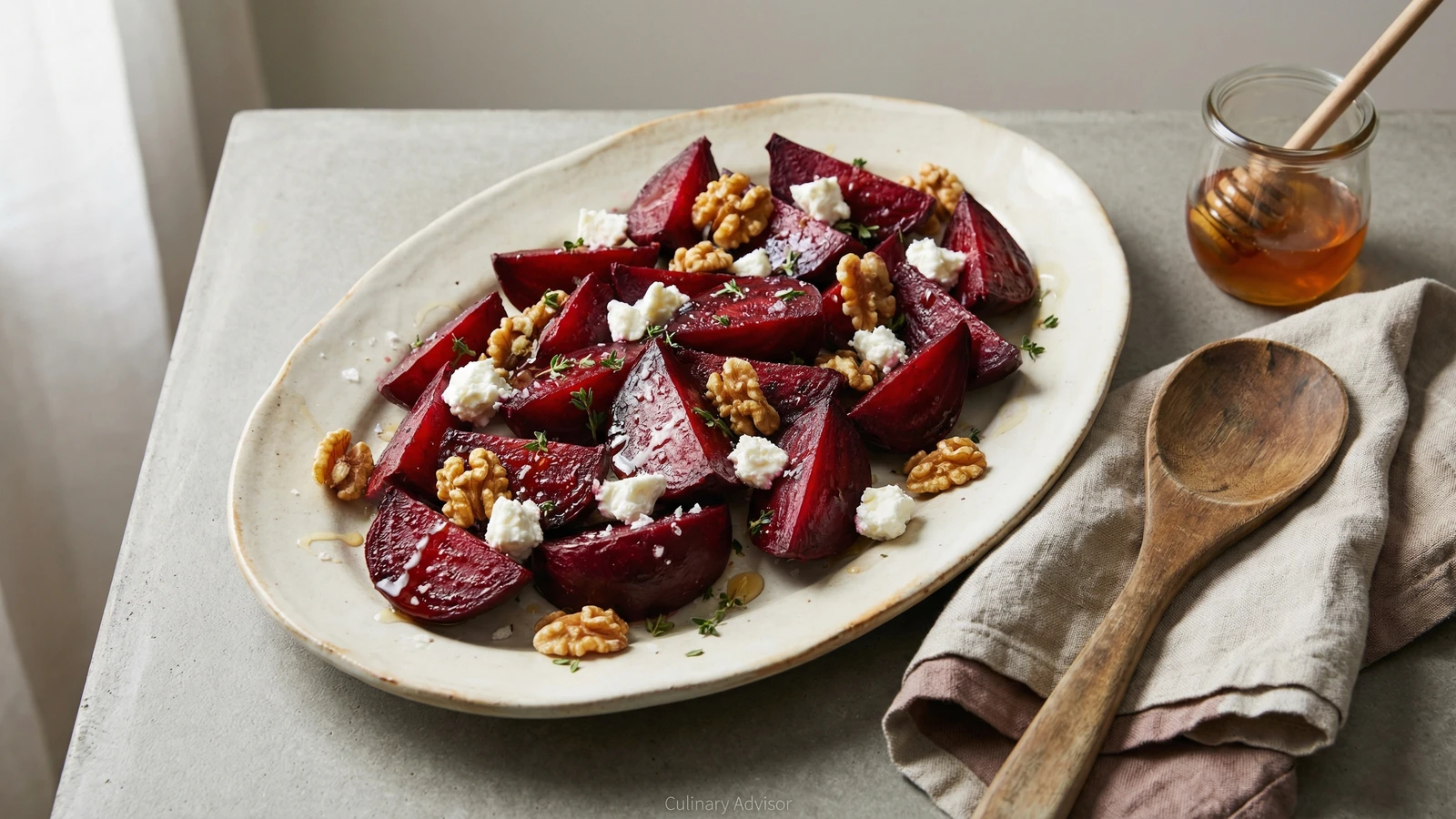
Roasted Beets with Goat Cheese
Created by
Sweet, earthy beets roasted until tender, dressed warm in honey-sherry vinaigrette, then scattered with tangy goat cheese and crunchy toasted walnuts. The kind of honest, beautiful side dish that makes a dinner party feel complete.
There is no vegetable more misunderstood than the beet. Generations of Americans know it only from cans, those sad burgundy slices that stained school cafeteria plates and tasted of nothing but the tin that held them. What a tragedy. A properly roasted beet is candy from the earth: dense, sweet, with a mineral depth that speaks of the soil itself.
This pairing of beets with goat cheese has become a modern American classic, and for good reason. The tangy, creamy cheese cuts through the beet's sweetness while sharing its earthiness. Add toasted walnuts for crunch, a drizzle of honey for complexity, and you have a dish that stops conversation at the dinner table.
The technique here matters more than the ingredients. Roasting beets in foil concentrates their natural sugars through patient, even heat. Dressing them while warm allows the vinaigrette to penetrate rather than just coat. These small acts of attention separate a memorable dish from one that simply fills space on the buffet.
I have served this at countless dinner parties, and the reaction never varies. Someone who claims to hate beets takes a polite bite, pauses, and reaches for seconds. The dish converts people. It reminds them what vegetables can be when treated with respect.
The technique, the tradition, and the story behind every dish.
Discover Culinary AdvisorIngredients
medium beets
Quantity
2 pounds (about 6)
trimmed and scrubbed
extra-virgin olive oil
Quantity
3 tablespoons, divided
kosher salt
Quantity
1 teaspoon, plus more to taste
black pepper
Quantity
1/2 teaspoon
freshly ground
fresh goat cheese
Quantity
4 ounces
crumbled
walnut halves
Quantity
1/2 cup
good honey
Quantity
2 tablespoons
sherry vinegar
Quantity
1 tablespoon
shallot
Quantity
1 small
minced
fresh thyme leaves
Quantity
2 teaspoons
flaky sea salt
Quantity
for finishing
| Ingredient | Quantity |
|---|---|
| medium beetstrimmed and scrubbed | 2 pounds (about 6) |
| extra-virgin olive oil | 3 tablespoons, divided |
| kosher salt | 1 teaspoon, plus more to taste |
| black pepperfreshly ground | 1/2 teaspoon |
| fresh goat cheesecrumbled | 4 ounces |
| walnut halves | 1/2 cup |
| good honey | 2 tablespoons |
| sherry vinegar | 1 tablespoon |
| shallotminced | 1 small |
| fresh thyme leaves | 2 teaspoons |
| flaky sea salt | for finishing |
Equipment Needed
- •Heavy-duty aluminum foil
- •Rimmed baking sheet
- •Small whisk
- •Thin-bladed knife for testing doneness
Instructions
- 1
Prepare beets for roasting
Preheat your oven to 400°F. Scrub the beets under cold running water, removing any dirt clinging to the crevices. Trim the tops to within an inch of the crown and leave the root tails intact. This keeps the beets sealed during roasting, preventing them from bleeding out their gorgeous color and earthy sweetness into the pan.
Choose beets of similar size so they cook evenly. If sizes vary widely, remove smaller ones earlier and let larger ones continue. - 2
Wrap and roast
Place beets on a large sheet of heavy-duty aluminum foil. Drizzle with one tablespoon of olive oil and season with half the salt and pepper. Fold the foil into a sealed packet, crimping the edges tightly. Set the packet on a rimmed baking sheet to catch any juices that might escape. Roast until a thin knife slides easily into the center of the largest beet, about one hour to one hour and fifteen minutes.
- 3
Toast the walnuts
While the beets roast, spread walnut halves on a small baking sheet. Toast in the same oven for six to eight minutes, shaking the pan halfway through. Watch them carefully. Walnuts contain oils that go from perfectly toasted to burnt in the time it takes to answer the phone. They should smell fragrant and deepen slightly in color. Transfer immediately to a plate to stop the cooking.
Set a timer. The nose knows when nuts are done, but the eyes can deceive you. By the time they look dark, they've gone too far. - 4
Make the honey vinaigrette
In a small bowl, whisk together the remaining two tablespoons of olive oil, honey, sherry vinegar, and minced shallot. Season with a pinch of salt and several grinds of black pepper. The dressing should taste balanced: sweet from the honey, sharp from the vinegar, with the shallot adding a gentle bite. It will mellow as it sits.
- 5
Peel the beets
Open the foil packet carefully, letting the steam escape away from your face. When cool enough to handle but still warm, the skins will slip off under gentle pressure from a paper towel. Rub the skin away rather than peeling. Cut larger beets into wedges, smaller ones into halves. The goal is uniform pieces that will share space gracefully on the plate.
Wear disposable gloves or embrace magenta-stained fingers for the next day or two. The color is temporary; the flavor is worth it. - 6
Dress while warm
Transfer the warm beet wedges to a serving bowl or platter. Drizzle half the honey vinaigrette over them immediately. Warm beets absorb dressing like a sponge drinks water, pulling the sweet-tart flavors deep into their flesh. Toss gently, then let them rest for at least ten minutes at room temperature. This step transforms good roasted beets into something memorable.
- 7
Compose the dish
Arrange the dressed beets on your serving platter, letting them overlap casually rather than standing at attention. Scatter crumbled goat cheese across the top in generous pieces. The cheese should look like it fell there naturally, not like someone measured it with tweezers. Add the toasted walnuts, drizzle the remaining vinaigrette over everything, and finish with fresh thyme leaves and flaky sea salt.
- 8
Serve at the right temperature
This dish shines at room temperature, when the beets have cooled enough to let their sweetness emerge and the goat cheese has softened into lush creaminess. Serve within two hours of composing for the best texture, though the components can wait separately much longer.
If serving at a potluck, transport the dressed beets and toppings separately. Compose on site so the cheese stays distinct and the walnuts keep their crunch.
Chef Tips
- •Seek out beets at your farmers market in late summer through fall when they're at their sweetest. Golden beets offer a milder, less earthy flavor and won't stain everything magenta, but they lack the drama of the traditional red.
- •The quality of your goat cheese matters tremendously. Look for a fresh, creamy chèvre from a local creamery if possible. Industrial goat cheese can be chalky and sour. Good cheese should taste bright and tangy with a smooth, spreadable texture.
- •Sherry vinegar brings a nutty complexity that ordinary red wine vinegar cannot match. If you don't have it, substitute balsamic, but use a lighter hand. One good bottle of sherry vinegar lasts years and improves dozens of dishes.
- •This dish pairs beautifully with roasted lamb, grilled pork chops, or a simple roast chicken. The sweetness of the beets complements rich, fatty proteins while the acidity cuts through the richness.
Advance Preparation
- •Beets can be roasted, peeled, and cut up to three days ahead. Store in an airtight container in the refrigerator. Bring to room temperature before dressing.
- •The honey vinaigrette keeps refrigerated for one week. Whisk well before using as the honey may settle.
- •Toast walnuts up to three days ahead. Store in an airtight container at room temperature to maintain their crunch.
- •Compose the final dish no more than two hours before serving. Earlier assembly causes the cheese to absorb moisture from the beets and the walnuts to soften.
Frequently Asked Questions
Nutrition Information
1 serving (about 180g)
Where cooking meets culture.
Culinary mentorship, cultural storytelling, and the editorial depth that makes cooking meaningful.
Explore Culinary Advisor