Culinary Advisor
A cooking platform built around craft, culture, and the stories behind what we eat.
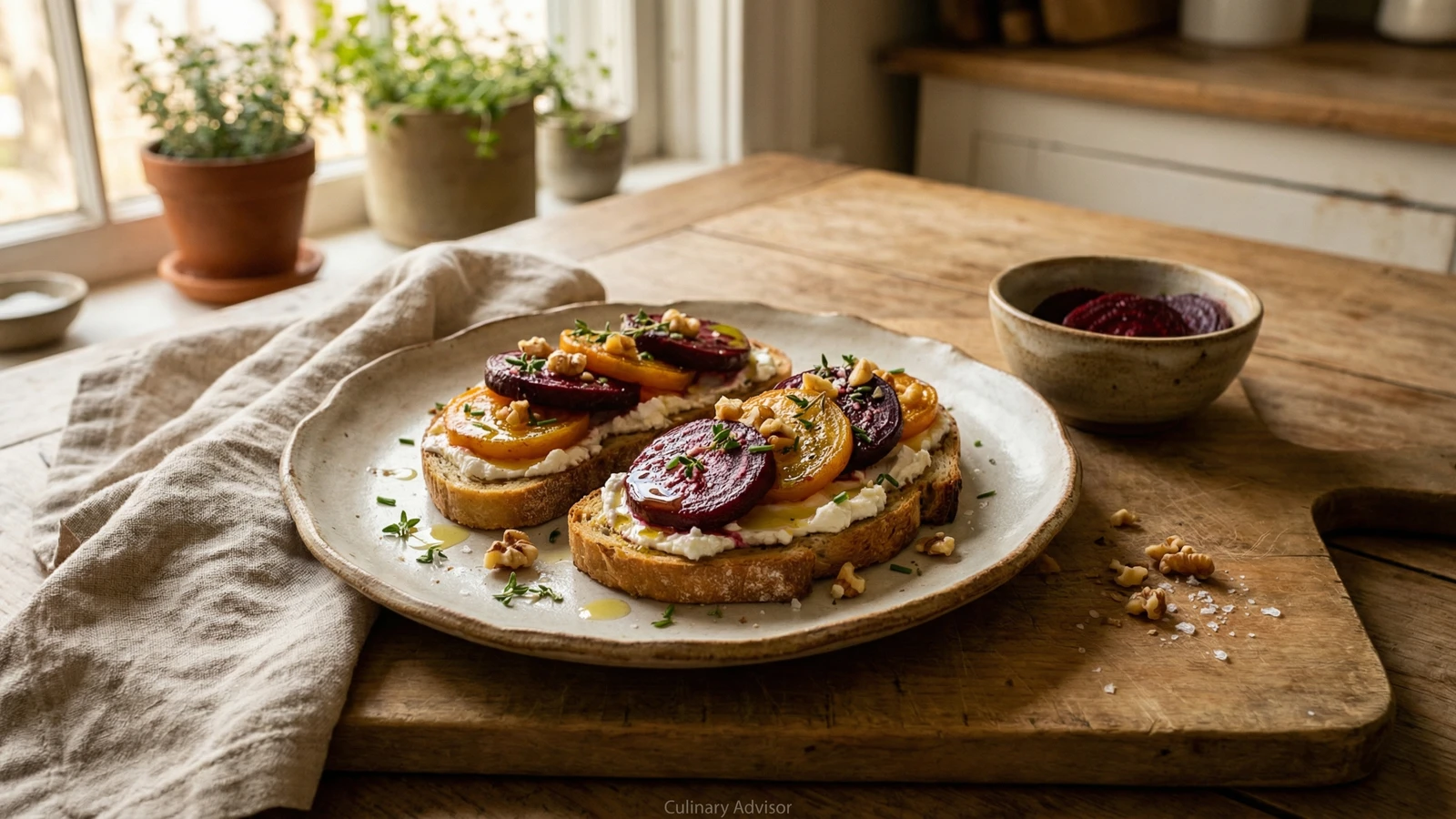
Roasted Beet Tartine with Goat Cheese
Created by Chef Ally
Earthy roasted beets layered over tangy goat cheese on toasted walnut bread, finished with fresh herbs and a drizzle of good olive oil. Winter produce at its simplest and best.
Beets are winter's quiet treasure. They wait underground while the world turns cold, concentrating their sweetness until you dig them up, brush off the soil, and discover that deep garnet or golden flesh. A good beet, roasted properly, needs almost nothing done to it.
This tartine is a study in restraint. The beets are the point. Roast them until they yield completely, then pair them with fresh goat cheese that is tangy enough to push back against all that earthiness. Toast good bread until it crunches. Add fresh herbs at the end so they keep their aliveness. That is all.
Every meal is a meaningful choice. When you buy beets from a farmer who pulled them from the ground that morning, you taste the difference. The flesh is firmer, sweeter, more alive. Your choices shape the food system, and they shape your dinner too.
The technique, the tradition, and the story behind every dish.
Discover Culinary AdvisorIngredients
medium beets
Quantity
4 (about 1 1/2 pounds)
extra-virgin olive oil
Quantity
3 tablespoons, divided, plus more for finishing
flaky sea salt
Quantity
to taste
black pepper
Quantity
to taste
freshly cracked
walnut bread or country bread
Quantity
4 thick slices
fresh goat cheese
Quantity
6 ounces
at room temperature
fresh thyme leaves
Quantity
1 tablespoon
fresh chives
Quantity
2 tablespoons
finely snipped
honey (optional)
Quantity
1 teaspoon
walnuts
Quantity
1/4 cup
toasted and roughly chopped
| Ingredient | Quantity |
|---|---|
| medium beets | 4 (about 1 1/2 pounds) |
| extra-virgin olive oil | 3 tablespoons, divided, plus more for finishing |
| flaky sea salt | to taste |
| black pepperfreshly cracked | to taste |
| walnut bread or country bread | 4 thick slices |
| fresh goat cheeseat room temperature | 6 ounces |
| fresh thyme leaves | 1 tablespoon |
| fresh chivesfinely snipped | 2 tablespoons |
| honey (optional) | 1 teaspoon |
| walnutstoasted and roughly chopped | 1/4 cup |
Equipment Needed
- •Heavy-duty aluminum foil
- •Rimmed baking sheet
- •Cast iron skillet or broiler for toasting
Instructions
- 1
Choose your beets
Look for beets that feel heavy and firm, with smooth skin and no soft spots. If they still have their greens attached, that is a sign of freshness. Save those greens for sautéing later. Scrub the beets under cold water but do not peel them yet. The skin protects the flesh during roasting and slips off easily afterward.
- 2
Roast until tender
Preheat your oven to 400F. Place whole beets on a large piece of foil, drizzle with two tablespoons of olive oil, and sprinkle with salt. Wrap the foil into a loose but sealed packet. Set it on a baking sheet and roast until a knife slides through the center without resistance, 45 minutes to one hour depending on size. The beets should feel like a ripe avocado when pressed.
Roasting beets whole in foil concentrates their sweetness and keeps them from drying out. Do not skip this step by cutting them smaller. - 3
Peel while warm
Open the foil packet carefully. The steam escaping will carry that deep, earthy beet fragrance. When the beets are cool enough to handle but still warm, rub the skins off with a paper towel. They should slip away easily. If they resist, the beets need more time in the oven.
- 4
Slice the beets
Cut the peeled beets into rounds about a quarter inch thick. If you have different colored beets, keep them separate so they do not stain each other. Season the warm slices with a pinch of flaky salt. Warm food absorbs seasoning better than cold.
- 5
Toast the bread
Brush both sides of your bread slices with the remaining tablespoon of olive oil. Toast in a hot skillet or under the broiler until golden and crisp on the outside but still yielding within. Good bread matters enormously here. If your bread is ordinary, the tartine will be ordinary.
- 6
Spread the cheese
Let the goat cheese sit at room temperature for at least twenty minutes before you begin. Cold cheese resists spreading and tastes muted. Spread a generous layer onto each warm toast, using the back of a spoon to create gentle swoops and valleys.
- 7
Assemble and finish
Shingle the beet slices over the goat cheese, overlapping them slightly. Scatter the thyme leaves and chives over the top. Add the toasted walnuts for crunch. Drizzle with your best olive oil and a thread of honey if you like sweetness against the tangy cheese. Finish with a pinch of flaky salt and freshly cracked pepper.
Add the herbs at the very last moment. Their aliveness fades quickly once they hit warm food. - 8
Serve immediately
Eat these tartines while the bread is still crisp and the beets are still faintly warm. They do not wait well. This is the kind of food that belongs to the moment.
Chef Tips
- •Seek out beets at your farmers market. Ask when they were harvested. A beet that has been in cold storage for weeks cannot compare to one pulled yesterday.
- •Mixing beet colors (red, golden, Chiogga) makes a beautiful tartine, but keep them separate until assembly. Red beets will stain everything they touch.
- •Fresh goat cheese from a local creamery will transform this dish. The tangy, slightly chalky texture of real chèvre is nothing like the processed versions.
- •If walnut bread is hard to find, any good crusty bread with a dense crumb will work. Avoid soft sandwich bread, which cannot support the toppings.
Advance Preparation
- •Beets can be roasted up to three days ahead and stored in the refrigerator. Bring to room temperature before assembling, or warm gently in a skillet.
- •Toast the bread and assemble only when ready to serve. The tartines lose their crunch within minutes.
Frequently Asked Questions
Nutrition Information
1 serving (about 250g)
Where cooking meets culture.
Culinary mentorship, cultural storytelling, and the editorial depth that makes cooking meaningful.
Explore Culinary Advisor