Culinary Advisor
A cooking platform built around craft, culture, and the stories behind what we eat.
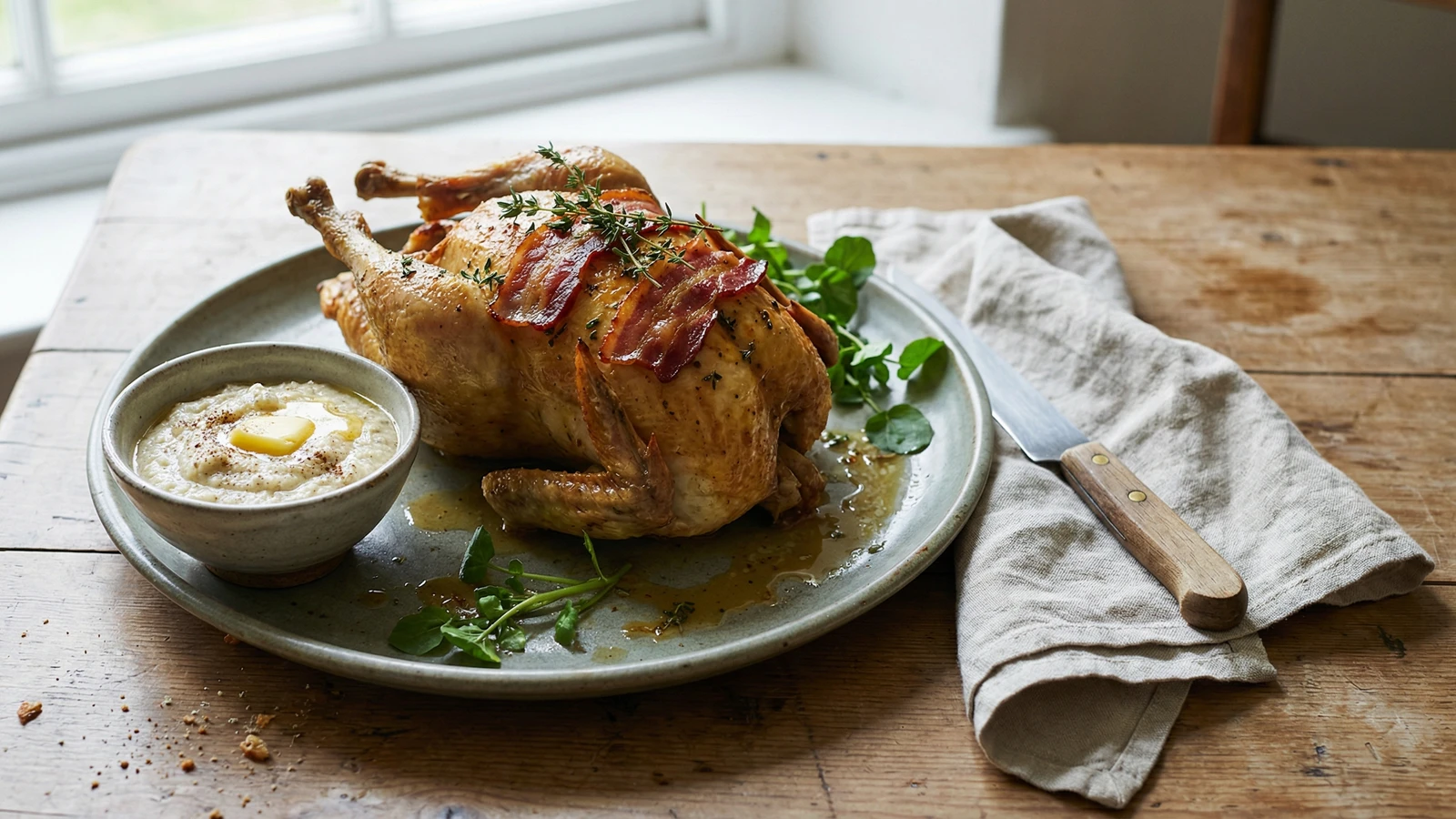
Roast Pheasant with Bacon and Bread Sauce
Created by Chef Thomas
A hen pheasant draped in bacon and roasted until the skin goes golden and the kitchen smells of thyme and game, served with a bread sauce that has no business being as good as it is.
October. The clocks have gone back and the kitchen window is dark by five. This is when pheasant makes sense.
A hen bird is what you want. Smaller than the cock, more tender, less likely to dry out in the oven. Ask your butcher, or find one at the market if you're lucky enough to have a game dealer nearby. The market decides, and in these cold months it decides on something worth cooking. You don't need to do much to a pheasant. A good bird, some butter, a few rashers of bacon draped over the breast. The bacon bastes the meat as it renders, and by the time you take the bird out of the oven the rashers have gone crisp and salty and golden, and the kitchen smells of thyme and roasting game and rendered fat. That's the smell of a proper November evening.
And then there's bread sauce. I know it divides people. Some find it bland, nursery food, something their grandmother made and they've never quite forgiven. They're wrong, or they've only had the bad kind. A properly made bread sauce, the milk infused slowly with onion and cloves and bay until it smells like a cold afternoon, then thickened with good breadcrumbs and finished with butter and nutmeg, is one of the quietly splendid things in British cooking. It does for pheasant what mint sauce does for lamb: it belongs there, and the plate feels wrong without it.
I wrote it down in the notebook years ago. Pheasant, bacon, bread sauce, November, rain. I make it every year and the note hasn't changed. We're only making dinner, but some dinners are worth the notebook.
The technique, the tradition, and the story behind every dish.
Discover Culinary AdvisorIngredients
hen pheasant
Quantity
1, oven-ready
dry-cured streaky bacon
Quantity
6 rashers
unsalted butter (for pheasant)
Quantity
30g
softened
fresh thyme
Quantity
a few sprigs
bay leaf (for pheasant)
Quantity
1
fine sea salt
Quantity
to taste
black pepper
Quantity
to taste
whole milk (for bread sauce)
Quantity
300ml
small onion (for bread sauce)
Quantity
1
peeled and studded with 4 cloves
bay leaf (for bread sauce)
Quantity
1
black peppercorns (for bread sauce)
Quantity
6
fresh white breadcrumbs
Quantity
100g
unsalted butter (for bread sauce)
Quantity
20g
nutmeg
Quantity
freshly grated, to taste
double cream (optional)
Quantity
2 tablespoons
watercress (optional)
Quantity
a handful
to serve
| Ingredient | Quantity |
|---|---|
| hen pheasant | 1, oven-ready |
| dry-cured streaky bacon | 6 rashers |
| unsalted butter (for pheasant)softened | 30g |
| fresh thyme | a few sprigs |
| bay leaf (for pheasant) | 1 |
| fine sea salt | to taste |
| black pepper | to taste |
| whole milk (for bread sauce) | 300ml |
| small onion (for bread sauce)peeled and studded with 4 cloves | 1 |
| bay leaf (for bread sauce) | 1 |
| black peppercorns (for bread sauce) | 6 |
| fresh white breadcrumbs | 100g |
| unsalted butter (for bread sauce) | 20g |
| nutmeg | freshly grated, to taste |
| double cream (optional) | 2 tablespoons |
| watercress (optional)to serve | a handful |
Equipment Needed
- •Roasting tin
- •Small saucepan for bread sauce
- •Carving knife and board
Instructions
- 1
Infuse the milk
Start the bread sauce first. It needs time. Pour the milk into a small saucepan and add the clove-studded onion, the bay leaf, and the peppercorns. Set it over the lowest heat you can manage and bring it to just below a simmer. The surface should barely tremble. Let it sit there for twenty to thirty minutes. The kitchen will start to smell warm, spiced, faintly old-fashioned, like a good memory you can't quite place. Take it off the heat and leave it. The longer it infuses, the better.
Don't let the milk boil. A skin forming on the surface means the heat is too high. You're coaxing flavour out of the onion and cloves, not scalding it out. - 2
Prepare the pheasant
Set the oven to 200C/180C fan. Take the pheasant out of the fridge a good half hour before it goes in the oven. Cold birds cook unevenly. Season the cavity with salt and pepper, then tuck the thyme sprigs, the bay leaf, and half the softened butter inside. Rub the rest of the butter over the breast and legs. Season the outside generously. Now drape the bacon rashers over the breast, slightly overlapping, covering the whole bird from neck to legs. The bacon is doing real work here. Pheasant has almost no fat of its own, and without that blanket of bacon the breast will go dry before the legs are cooked through.
A hen pheasant is what you want for roasting. She's smaller and more tender than the cock bird, and she feeds two generously, three at a push. Ask your butcher or game dealer. - 3
Roast the bird
Place the pheasant in a roasting tin, breast up, and put it in the hot oven. Roast for thirty-five to forty-five minutes. The timing depends on the size of the bird. After about twenty-five minutes, check the bacon. If it's gone golden and crisp, you can lift it off and set it aside so the breast skin can colour underneath. If it still looks pale, leave it a little longer. The bird is done when the juices from the thickest part of the thigh run clear, not pink, and the legs feel loose when you give them a gentle tug. Trust your instincts here. Pheasant wants to be just cooked, not a minute more.
If you have a meat thermometer, 65C in the thickest part of the thigh is what you're after. But a thermometer is a second opinion, not a substitute for knowing what a cooked bird looks and feels like. - 4
Rest the pheasant
Lift the bird out of the roasting tin and set it on a warm plate. Lay the crisp bacon on top. Cover loosely with foil, not tightly, you don't want to steam the skin, and let it rest for ten to fifteen minutes. This is not optional. The juices, which have been driven to the centre by the heat, need time to relax back through the meat. A rested pheasant is juicy. An unested one is dry. The difference is patience.
- 5
Finish the bread sauce
While the bird rests, finish the bread sauce. Fish out the onion, bay leaf, and peppercorns from the infused milk. Set the pan over a gentle heat and stir in the breadcrumbs. They'll absorb the milk quickly, so add them gradually until you have a thick, spoonable consistency. Not stiff. Not pourable. Somewhere between the two. Stir in the butter and a good grating of nutmeg. Add the cream if you like. Season with salt and a little white pepper if you have it. Taste it. It should be gentle, savoury, subtly spiced, the kind of flavour that makes sense only alongside roasted meat.
Make your own breadcrumbs from a day-old white loaf. Tear it into pieces and blitz briefly. You want a mixture of fine and coarse, not powder. The texture matters. - 6
Carve and serve
Carve the pheasant at the table if you can. The breast comes off in two pieces, sliced against the grain. The legs pull away easily from a well-rested bird. Lay the meat on warm plates with the crisp bacon alongside, a generous spoonful of bread sauce, and a scattering of watercress. That's it. No fuss. There are few better feelings than putting a warm plate of something like this in front of someone on a cold evening and watching them settle into it.
Chef Tips
- •The bird is everything. A pheasant from a good game dealer or a butcher who knows his supplier will taste of something: rich, slightly mineral, properly gamey without being rank. Supermarket pheasants exist, and they'll do, but if you can find one that hasn't been frozen and shrink-wrapped, you'll taste the difference in the first mouthful.
- •Don't overcook it. This is the single most important thing. Pheasant has almost no fat, so the margin between juicy and dry is narrow. Pull it from the oven at the first sign of clear juices and rest it properly. A pheasant that sits on the counter for fifteen minutes under loose foil will be more forgiving than one you roast for an extra ten minutes out of nervousness.
- •Bread sauce reheats beautifully, so make it ahead if you want one less thing to think about. It thickens as it cools. Add a splash of milk when you warm it through and it comes back to life. Some people make it the day before and swear it's better. I've never argued with them.
- •Serve this with something simple. Roast potatoes if you want the full Sunday treatment. Game chips if you're feeling traditional. A watercress salad if you want to keep things light. The bird and the bread sauce are the point. Everything else is company.
Advance Preparation
- •The bread sauce milk can be infused up to a day ahead and refrigerated. Strain, reheat gently, and add the breadcrumbs and butter when you're ready to finish.
- •The pheasant can be prepared with butter and bacon, covered, and kept in the fridge for up to a day. Bring it to room temperature for thirty minutes before roasting.
Frequently Asked Questions
Nutrition Information
1 serving (about 330g)
Where cooking meets culture.
Culinary mentorship, cultural storytelling, and the editorial depth that makes cooking meaningful.
Explore Culinary Advisor