Culinary Advisor
A cooking platform built around craft, culture, and the stories behind what we eat.
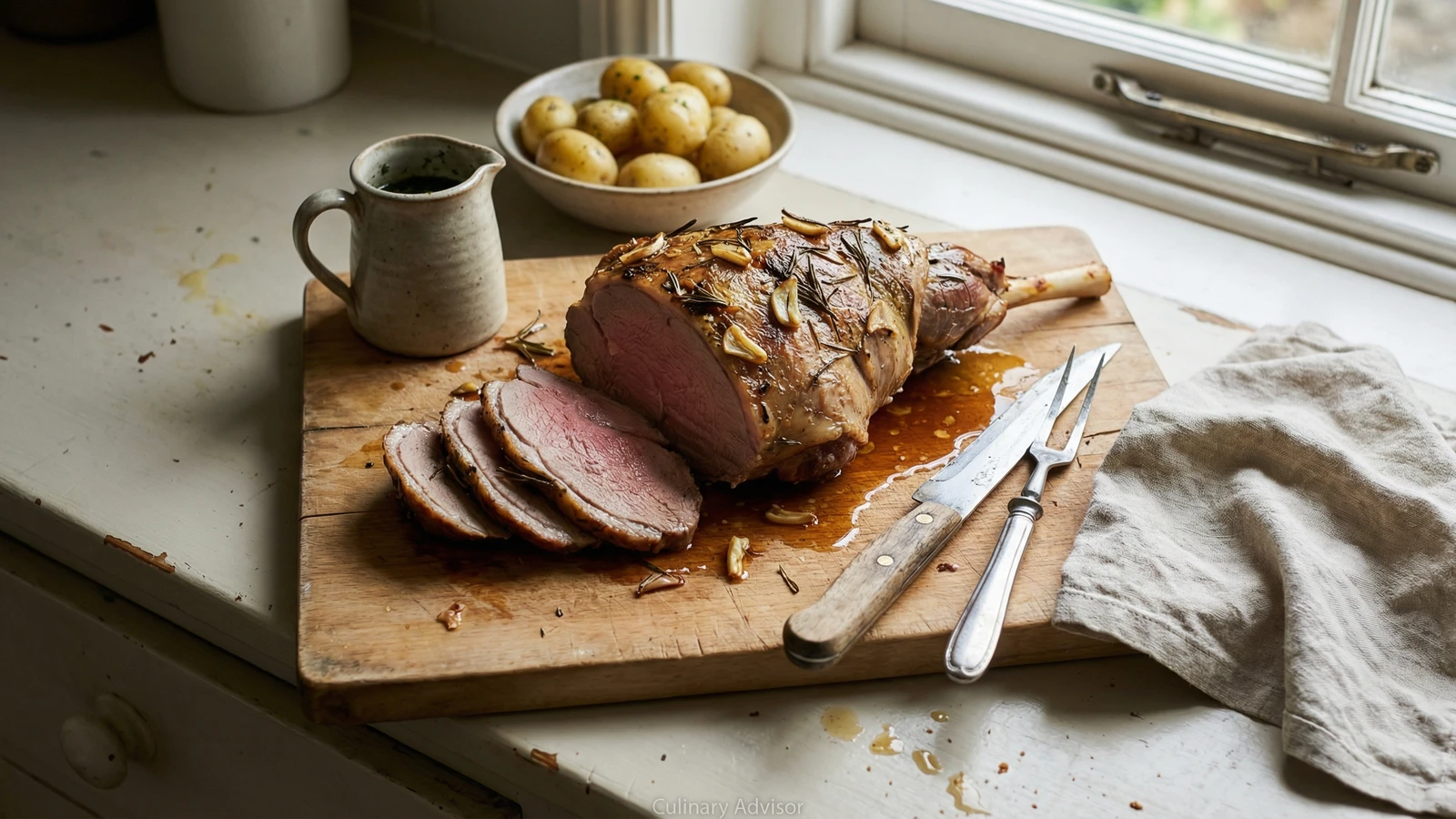
Roast Leg of Lamb with Garlic and Rosemary
Created by Chef Thomas
A bone-in leg of lamb studded with garlic and rosemary, roasted until the fat goes golden and the kitchen smells like the kind of Sunday you'd cancel everything for. Mint sauce, new potatoes, and the quiet satisfaction of doing one thing properly.
The first lamb of spring arrives at the market sometime in late March, and you know it before you see it because the butcher is smiling. A whole leg, bone in, with a good cap of fat and that pale, clean look that only young lamb has. This is the roast that marks the turn of the season. The clocks have gone forward. The garden is waking up. There's rosemary on the bush by the back door that has been growing quietly all winter, waiting for exactly this.
Studding lamb with garlic and rosemary is one of those preparations that looks like technique but is really just common sense. A sharp knife, a few incisions, a sliver of garlic and some rosemary leaves pushed into each one. The aromatics melt into the meat as it roasts, scenting it from the inside. The kitchen fills with that particular smell, fat and herbs and heat, that makes people wander in from other rooms to ask what time lunch is.
I cook this every Easter without exception. The mint sauce is made from scratch, which takes five minutes and bears no resemblance to the bright green vinegar in a jar. The new potatoes, if the timing is right, are the first Jersey Royals of the year, boiled until they yield and tossed in butter. A recipe is a conversation, not a contract, and this one has been refined over thirty years of Sundays until it is exactly what it needs to be and nothing more.
I wrote it down in the notebook years ago. Just a line: lamb, garlic, rosemary, April, the table full. That was enough.
The technique, the tradition, and the story behind every dish.
Discover Culinary AdvisorIngredients
bone-in leg of lamb
Quantity
1, about 2.5kg
garlic
Quantity
6 cloves
peeled and cut into slivers
fresh rosemary
Quantity
4-5 sprigs
leaves stripped
good olive oil
Quantity
a generous glug
fine sea salt
Quantity
to taste
black pepper
Quantity
to taste
freshly ground
new potatoes
Quantity
1kg
scrubbed, halved if large
unsalted butter
Quantity
30g
fresh mint
Quantity
a large bunch
leaves picked and finely chopped
caster sugar
Quantity
2 tablespoons
white wine vinegar
Quantity
3 tablespoons
white wine or water (optional)
Quantity
1 glass
| Ingredient | Quantity |
|---|---|
| bone-in leg of lamb | 1, about 2.5kg |
| garlicpeeled and cut into slivers | 6 cloves |
| fresh rosemaryleaves stripped | 4-5 sprigs |
| good olive oil | a generous glug |
| fine sea salt | to taste |
| black pepperfreshly ground | to taste |
| new potatoesscrubbed, halved if large | 1kg |
| unsalted butter | 30g |
| fresh mintleaves picked and finely chopped | a large bunch |
| caster sugar | 2 tablespoons |
| white wine vinegar | 3 tablespoons |
| white wine or water (optional) | 1 glass |
Equipment Needed
- •Large roasting tin with a rack
- •Sharp carving knife and fork
- •Meat thermometer (optional, but useful)
- •Warm serving platter or wooden carving board
Instructions
- 1
Prepare the lamb
Take the lamb out of the fridge a good hour before you plan to cook it. Cold meat in a hot oven tightens and resists. Room temperature meat relaxes into the heat. While it comes up to temperature, set your oven to 220C/200C fan. With a sharp knife, make deep incisions all over the leg, twenty or so, evenly spaced. Push a sliver of garlic and a few rosemary leaves into each cut. They'll disappear into the meat and scent it from the inside out. Rub the whole leg with olive oil, then be generous with salt and pepper. More salt than you think. The fat needs it.
Ask your butcher to trim any excess fat but leave a good layer on top. That fat bastes the meat as it renders and crisps into something you'll fight over at the table. - 2
Start it hot
Put the lamb on a rack in a roasting tin, or directly in the tin if you haven't got a rack. Into the hot oven for twenty minutes. This initial blast of heat does two things: it starts rendering the fat and it begins to build a crust on the outside that will turn golden and sticky and smell like the reason you invited people for lunch. After twenty minutes, turn the oven down to 180C/160C fan.
- 3
Roast to your liking
For pink lamb, which is how I like it and how I think it wants to be eaten, cook for about twenty minutes per 500g at the lower temperature, plus twenty minutes for the initial blast. For a 2.5kg leg, that's roughly an hour and twenty minutes total. For well done, add another fifteen to twenty minutes per 500g. But honestly, lamb roasted past pink loses something. The meat goes from yielding and blushed to grey and dry, and no amount of gravy will bring it back. Trust your instincts. Press the meat with your finger: soft and springy means rare, firmer but still giving means medium. If it feels like the heel of your hand, you've gone too far.
If you have a meat thermometer, 55-58C in the thickest part gives you pink. But a thermometer is a guide, not a guarantee. Every oven lies. Every joint is different. Press the meat. Look at the juices. Your senses will tell you more than a number. - 4
Rest the lamb
This is the step people skip, and it's the one that matters most. Take the lamb out of the oven, transfer it to a warm platter or board, and cover it loosely with foil. Let it rest for at least twenty minutes, thirty is better. The meat relaxes. The juices, which have been driven to the centre by the heat, redistribute through the whole joint. A rested leg of lamb carves cleanly and gives you slices that are evenly pink, juicy, and tender. A leg carved straight from the oven bleeds all over the board and the meat clenches. Patience here is the difference between good and wonderful.
Don't worry about it going cold. A 2.5kg joint holds its heat like a small radiator. Thirty minutes under foil and it will still be properly warm when you carve. - 5
Make the mint sauce
While the lamb rests, make the mint sauce. Pile the chopped mint leaves on a board, scatter the sugar over them, and chop them together until the sugar dissolves into the mint and everything turns dark green and fragrant. Scrape this into a small bowl or jug. Add the vinegar and a tablespoon or two of boiling water. Stir. Taste it. The balance should be sharp, sweet, and fresh, each quality pulling against the others. Adjust with more sugar or vinegar until it's right. This is nothing like the stuff from a jar. The first time you make it, you'll wonder why you ever bought it.
- 6
Cook the new potatoes
Put the new potatoes in a pan of well-salted water. Bring to the boil and cook until a knife slips through without resistance, about fifteen to twenty minutes depending on their size. Drain them, return to the pan, and toss with butter and a pinch of salt. They should be glossy and steaming and smell of the earth they came from. If you can get Jersey Royals, this is their moment.
- 7
Make a simple gravy
While the potatoes cook, set the roasting tin over a medium heat on the hob. Pour off most of the fat, leaving the sticky, dark residue on the bottom. This is where the flavour lives. Pour in a glass of white wine or water and scrape up all those caramelised bits with a wooden spoon. Let it bubble and reduce by half. It won't be a thick gravy. It's more of a savoury juice, thin and intense, which is all a good piece of lamb really needs. Season and strain into a warm jug.
- 8
Carve and serve
Carve the lamb at the table if you can. There's something about bringing the whole joint to the board in front of people that turns dinner into an occasion. Cut along the bone, then across the grain in thick slices. The inside should be pink and yielding, the fat golden and crisp. Serve with the buttered new potatoes, the mint sauce in a jug so people can help themselves, and the gravy alongside. There are few better feelings than putting this plate in front of someone on a spring Sunday.
Chef Tips
- •Buy the best lamb you can afford. British lamb, from a butcher who can tell you where it came from, will taste like the hillside it grazed on. Supermarket lamb will give you dinner, but it won't give you that. This is not the place to economize.
- •Bring the meat to room temperature before roasting. A cold joint straight from the fridge will seize in the heat and cook unevenly, rare in the middle and overdone at the edges. An hour on the counter solves this.
- •Rest it longer than you think. Twenty minutes is minimum. Thirty is better. The resting is where a roast becomes itself. Skip it and you lose half the juice to the cutting board.
- •The mint sauce improves if you make it twenty minutes before serving and let it sit. The sugar softens the vinegar, the mint releases its oils, and the whole thing settles into something balanced and alive.
- •Save the bone. A lamb bone simmered with an onion, a carrot, a stick of celery, and cold water for three or four hours makes a stock that will carry you through a week of soups and braises. It freezes beautifully.
Advance Preparation
- •The lamb can be studded with garlic and rosemary up to a day ahead. Cover and refrigerate, then bring to room temperature for an hour before roasting.
- •Mint sauce can be made an hour or two in advance and left to sit at room temperature. It actually benefits from the wait.
- •New potatoes can be scrubbed and halved ahead of time, kept in cold water until ready to cook.
Frequently Asked Questions
Nutrition Information
1 serving (about 420g)
Where cooking meets culture.
Culinary mentorship, cultural storytelling, and the editorial depth that makes cooking meaningful.
Explore Culinary Advisor