Culinary Advisor
A cooking platform built around craft, culture, and the stories behind what we eat.
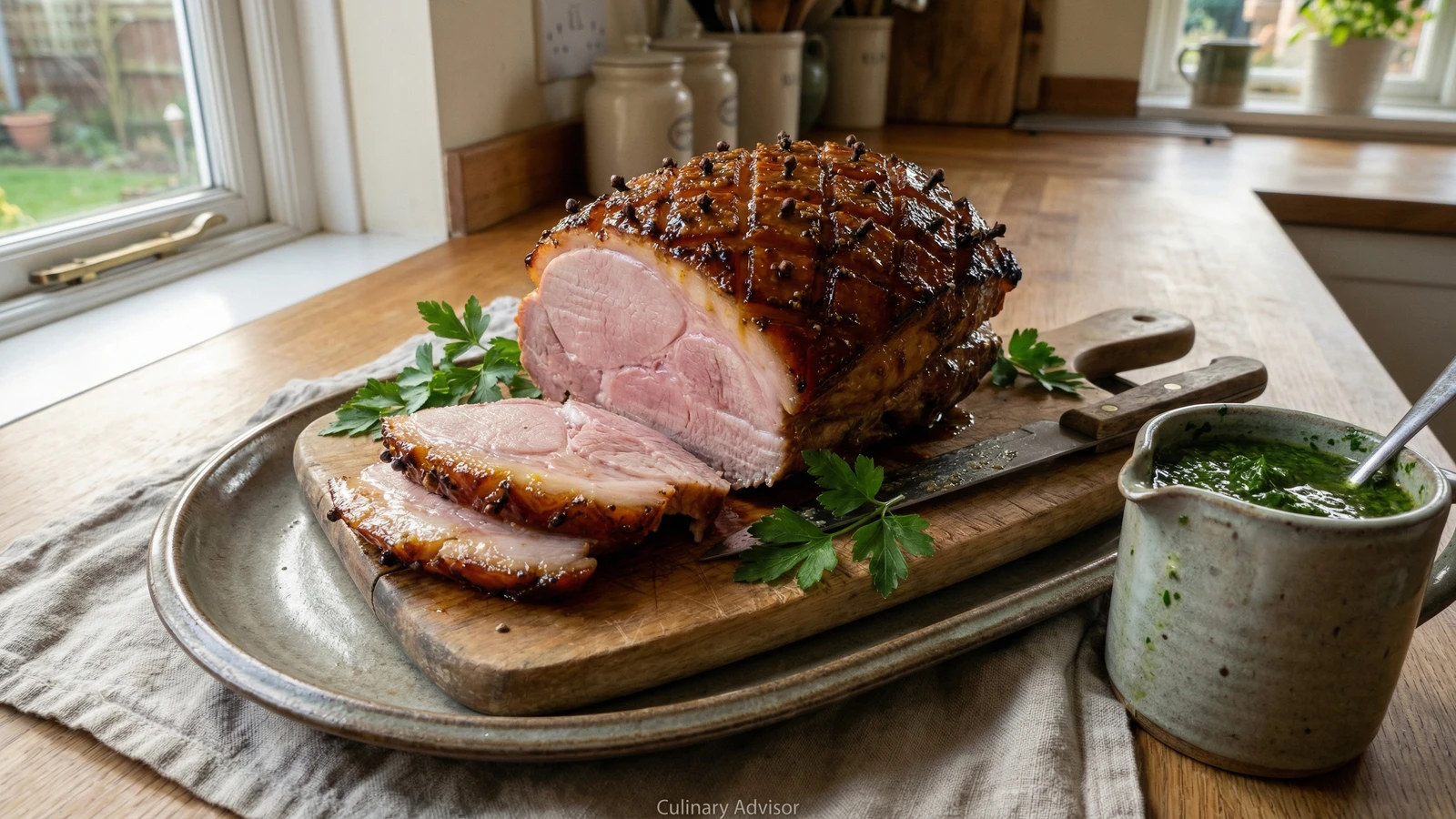
Roast Gammon with Parsley Sauce
Created by Chef Thomas
A simmered and roasted gammon with a mustard glaze, served with a proper parsley sauce made from the cooking liquor. The kind of meal that turns a Sunday into a memory.
The kitchen smells of bay and peppercorn and something slowly giving in. A gammon in a pot of water, ticking away on the back of the stove, is one of the most patient things a kitchen can do. There's no urgency. Just time and heat doing what they've always done, turning a salt-cured joint into something tender and deeply savoury.
This is the older way of doing it, and it's better. Simmer first, then roast. The simmering makes the meat yielding and gentle. The roasting gives you the glaze: mustard and dark sugar bubbling into a sticky, lacquered crust that catches and crisps at the edges. But the real reason for simmering is what it leaves behind. That cooking liquor, pale gold and rich with the flavour of the meat and the aromatics, is the foundation of the parsley sauce. You'd be a fool to pour it away.
Parsley sauce gets a bad reputation, mostly because people have only ever had a bad one. A thin, grey, floury thing from a packet or a school canteen. A proper parsley sauce, made with real butter and the gammon's own liquor and a reckless amount of fresh parsley, is something else entirely. It's rich and savoury and green, and it brings the whole plate together in the way that only a proper sauce can.
I wrote it down in the notebook years ago: gammon, parsley sauce, boiled potatoes, a cold Sunday. That's all it said. That's all it needed to say.
The technique, the tradition, and the story behind every dish.
Discover Culinary AdvisorIngredients
unsmoked gammon joint
Quantity
about 2kg
on the bone if you can get it
onion
Quantity
1
halved
bay leaves
Quantity
2
black peppercorns
Quantity
1 teaspoon
carrots
Quantity
2
halved lengthways
celery
Quantity
2 sticks
halved
English mustard
Quantity
2 tablespoons
dark brown muscovado sugar
Quantity
2 tablespoons
cloves
Quantity
a handful
unsalted butter
Quantity
50g
plain flour
Quantity
50g
reserved cooking liquor
Quantity
500ml
whole milk
Quantity
150ml
flat-leaf parsley
Quantity
a large bunch
finely chopped
fine sea salt
Quantity
to taste
white pepper
Quantity
to taste
lemon juice
Quantity
a squeeze
| Ingredient | Quantity |
|---|---|
| unsmoked gammon jointon the bone if you can get it | about 2kg |
| onionhalved | 1 |
| bay leaves | 2 |
| black peppercorns | 1 teaspoon |
| carrotshalved lengthways | 2 |
| celeryhalved | 2 sticks |
| English mustard | 2 tablespoons |
| dark brown muscovado sugar | 2 tablespoons |
| cloves | a handful |
| unsalted butter | 50g |
| plain flour | 50g |
| reserved cooking liquor | 500ml |
| whole milk | 150ml |
| flat-leaf parsleyfinely chopped | a large bunch |
| fine sea salt | to taste |
| white pepper | to taste |
| lemon juice | a squeeze |
Equipment Needed
- •Large stockpot or pan big enough to submerge the gammon
- •Roasting tin
- •Heavy-bottomed saucepan for the sauce
- •Sharp carving knife
- •Wooden spoon
Instructions
- 1
Soak the gammon
If the gammon is very salty, and your butcher will tell you if it is, soak it overnight in cold water, changing the water once or twice. This draws out the excess cure. If it's a mild cure, you can skip this, but when in doubt, soak it. An oversalted gammon is a hard thing to rescue.
Ask your butcher about the cure. A good butcher will know whether the joint needs soaking. This is one of those conversations worth having. - 2
Simmer the gammon gently
Put the gammon in a large pan and cover it with fresh cold water. Add the halved onion, bay leaves, peppercorns, carrots, and celery. Bring to a gentle simmer. Not a boil. A boil toughens the meat and fills the kitchen with scum. You want lazy bubbles breaking the surface, nothing more. Let it tick away for about twenty minutes per 500g. For a 2kg joint, that's roughly an hour and a half. The meat should feel yielding when you press it but still hold its shape. When it's done, lift it out carefully and set it on a board. Keep the cooking liquor. It's golden and savoury and it becomes half the parsley sauce.
Skim any grey scum from the surface in the first ten minutes. After that it settles down and the liquor starts to turn clear and golden. - 3
Score and glaze
Set the oven to 200C/180C fan. While the gammon is still warm, peel away the skin with a knife, leaving a thick, even layer of fat. Score the fat in a diamond pattern, cutting just deep enough to see the flesh beneath. Press a clove into the centre of each diamond. Mix the mustard and muscovado sugar together into a rough paste and spread it over the scored fat. Be generous. The glaze should be thick enough to form a proper crust.
- 4
Roast until lacquered
Place the gammon in a roasting tin and put it in the hot oven for twenty-five to thirty minutes. Watch it. The sugar will bubble and darken, the mustard will catch at the edges, and the whole thing will turn sticky and lacquered. You want deep amber, not black. If it's darkening too quickly, turn the oven down. When it's done, the kitchen will smell of smoke and sweetness and something that makes people wander in to ask what's for dinner. Rest the gammon for at least fifteen minutes before carving. It needs the time.
Resting isn't optional. A rested joint carves cleanly and stays juicy. A rushed one shreds and weeps its juices onto the board. - 5
Make the parsley sauce
While the gammon roasts, make the sauce. Melt the butter in a saucepan over a medium heat. When it foams, add the flour and stir it in with a wooden spoon. Cook this paste for a minute or two, stirring constantly, until it smells biscuity and has lost its raw, floury taste. Now add the cooking liquor a ladleful at a time, stirring well after each addition. The sauce will seize up at first, then loosen, then thicken smoothly. It takes patience and a steady hand but it isn't difficult. Add the milk gradually until you have a sauce with the consistency of double cream, loose enough to pour but thick enough to coat the back of a spoon. Let it simmer gently for five minutes to cook out any remaining flouriness.
- 6
Finish with parsley
Take the sauce off the heat. Stir in the chopped parsley. More than you think you need. The sauce should be properly green, not white with flecks. Season with salt (carefully, the cooking liquor is already savoury), white pepper, and a squeeze of lemon to sharpen it. Taste it. The parsley should be bright and grassy against the richness of the liquor. If it tastes flat, it needs more lemon. If it tastes thin, it needs more time on the heat. Pour it into a warm jug and bring it to the table alongside the carved gammon.
Chef Tips
- •Buy your gammon from a butcher, not a supermarket. Ask for unsmoked, on the bone if possible. The bone adds flavour to the cooking liquor and helps the joint hold its shape. A good gammon, properly cured, will smell clean and sweet, not aggressively salty.
- •Don't throw away the cooking liquor. Strain it and keep whatever you don't use for the sauce. It makes an extraordinary base for pea soup, or for cooking lentils, or for braising vegetables later in the week. It's liquid gold.
- •The parsley must be fresh and it must be generous. A timid scattering won't do. You want the sauce visibly, unapologetically green. Flat-leaf has more flavour than curly, but curly gives a better colour. Use whichever you can find.
- •Cold gammon the next day, sliced thin with pickles and mustard, is one of the better things you can have for lunch. This is a joint that keeps giving.
Advance Preparation
- •The gammon can be simmered up to a day ahead and refrigerated in its cooking liquor. Lift it out, glaze it, and roast when ready. The liquor improves overnight.
- •The parsley sauce is best made fresh, but the base (butter, flour, cooking liquor) can be prepared ahead and reheated gently. Stir in the parsley and lemon just before serving, so the green stays bright.
- •A whole roasted gammon keeps well in the fridge for up to five days, wrapped in foil. It's arguably better cold than hot.
Frequently Asked Questions
Nutrition Information
1 serving (about 320g)
Where cooking meets culture.
Culinary mentorship, cultural storytelling, and the editorial depth that makes cooking meaningful.
Explore Culinary Advisor