Culinary Advisor
A cooking platform built around craft, culture, and the stories behind what we eat.
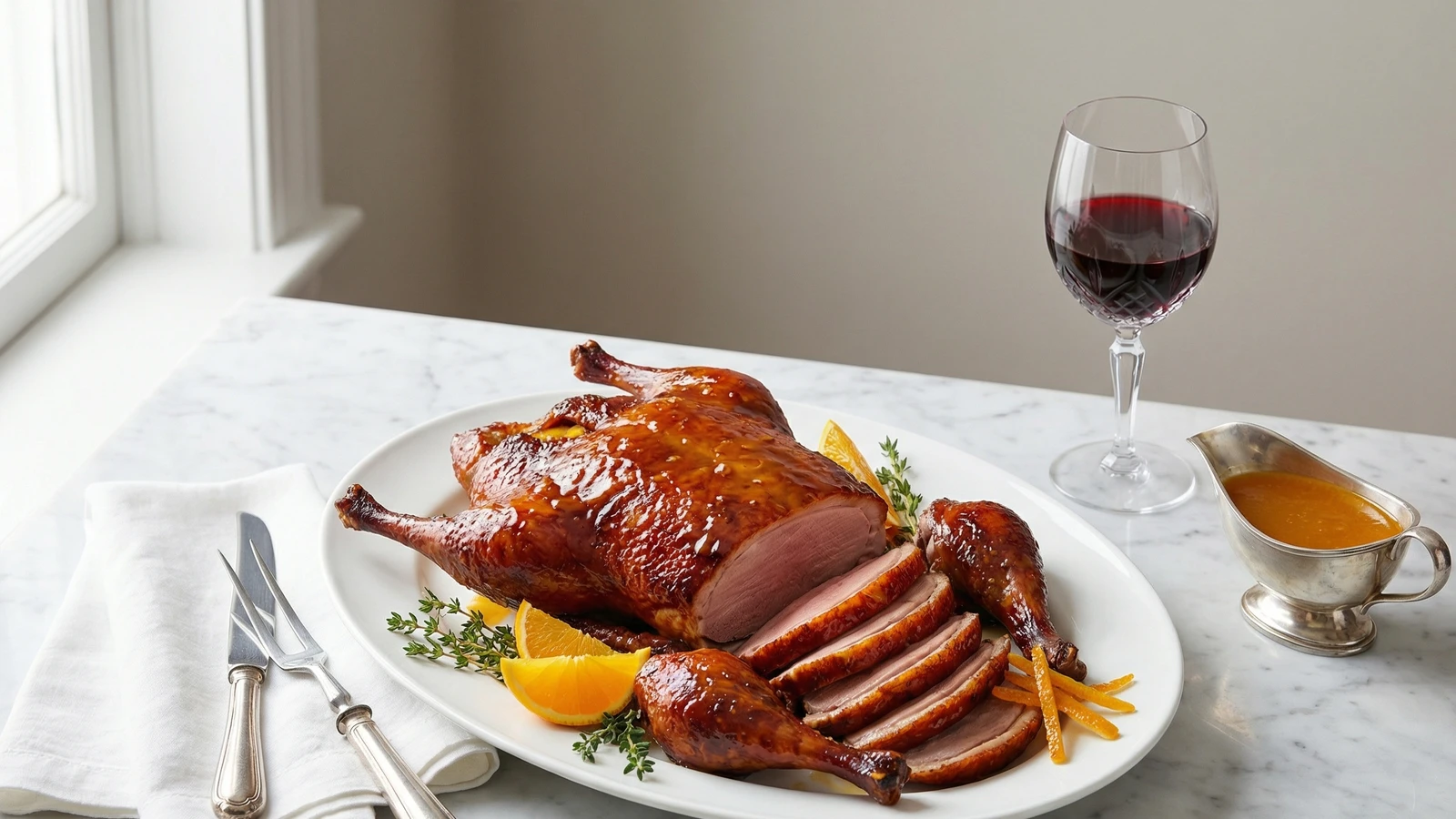
Roast Duck with Orange Glaze
Created by
A whole duck roasted until the skin crackles and gleams with a bittersweet orange glaze, the kind of showstopper that makes smaller gatherings feel like an occasion worth remembering.
Canard à l'orange arrived in America wearing a tuxedo. French chefs brought it to hotel dining rooms in the 1950s, where it became synonymous with continental sophistication. But strip away the white tablecloths and the price tag, and what remains is honest technique: a well-rendered bird and a sauce that balances sweet against bitter. This is food that belongs on your holiday table.
The duck itself does most of the work. Unlike turkey, which requires vigilant basting and prayers against dryness, duck carries its own insurance policy in the form of subcutaneous fat. Score the skin properly, roast at the right temperatures, and that fat renders out slowly, basting the meat from within while the skin transforms into something magnificent. Crackling. Lacquered. The color of polished mahogany.
The orange glaze follows the gastrique method: caramelized sugar cut with vinegar, then softened with fresh citrus and a splash of Grand Marnier for depth. It's not sweet in the cloying American sense. The bitterness of the orange peel and the acid from the vinegar keep everything in balance. Your guests will taste complexity, not sugar.
I've served this at Christmas dinners for decades. It feeds four to six people generously, making it perfect for intimate gatherings where turkey would be absurd overkill. The advance preparation is forgiving. The presentation is spectacular. And unlike that twenty-pound bird your aunt insists upon, this one actually tastes like something.
The technique, the tradition, and the story behind every dish.
Discover Culinary AdvisorIngredients
whole Pekin duck, giblets removed
Quantity
1 (5-6 pounds)
kosher salt
Quantity
2 tablespoons
freshly ground black pepper
Quantity
1 teaspoon
large navel oranges
Quantity
4
granulated sugar
Quantity
1/2 cup
red wine vinegar
Quantity
1/4 cup
duck or chicken stock
Quantity
1 cup
Grand Marnier
Quantity
3 tablespoons
unsalted butter, cold
Quantity
2 tablespoons
shallots
Quantity
2
minced
fresh thyme
Quantity
4 sprigs
garlic
Quantity
1 head
halved crosswise
| Ingredient | Quantity |
|---|---|
| whole Pekin duck, giblets removed | 1 (5-6 pounds) |
| kosher salt | 2 tablespoons |
| freshly ground black pepper | 1 teaspoon |
| large navel oranges | 4 |
| granulated sugar | 1/2 cup |
| red wine vinegar | 1/4 cup |
| duck or chicken stock | 1 cup |
| Grand Marnier | 3 tablespoons |
| unsalted butter, cold | 2 tablespoons |
| shallotsminced | 2 |
| fresh thyme | 4 sprigs |
| garlichalved crosswise | 1 head |
Equipment Needed
- •Large roasting pan with rack
- •Instant-read thermometer
- •Medium heavy-bottomed saucepan
- •Fine-mesh strainer
- •Basting brush
- •Sharp carving knife
Instructions
- 1
Prepare and dry the duck
Remove the duck from its packaging and pull out the neck and giblets from the cavity. Save these for stock if you're ambitious. Pat the entire bird thoroughly dry with paper towels, inside and out. Using a sharp knife, score the skin in a crosshatch pattern across the breast and legs, cutting through the fat but not into the meat beneath. The cuts should be about an inch apart. This allows the fat to render properly during roasting.
Feel for where the fat layer ends and the meat begins. Your knife should glide through fat, then stop. If you see red, you've gone too far. - 2
Season and air-dry
Season the duck generously inside and out with the kosher salt and black pepper, rubbing it into the scored skin. Place the duck breast-side up on a rack set over a rimmed baking sheet. Refrigerate uncovered for at least 8 hours, preferably 24. This crucial step dries the skin, concentrating flavor and ensuring crispness. The bird will look slightly desiccated. This is exactly what you want.
- 3
Prepare the citrus
Using a vegetable peeler, remove the zest from two oranges in wide strips, avoiding the bitter white pith. Juice all four oranges; you should have about one cup. Cut one of the juiced orange halves into quarters for stuffing the cavity. Set aside the zest, juice, and orange pieces separately.
- 4
Begin roasting
Remove the duck from the refrigerator 45 minutes before cooking. Preheat your oven to 425°F. Stuff the cavity with the halved garlic head, thyme sprigs, and quartered orange pieces. Place the duck breast-side up on a rack in a roasting pan. Roast for 30 minutes at this high temperature. The kitchen will fill with the smell of rendering fat. You'll hear it sizzling. This initial blast starts the skin crisping.
- 5
Lower heat and continue roasting
Reduce the oven temperature to 350°F. Continue roasting for approximately 1 hour and 45 minutes longer, removing the pan every 30 minutes to carefully spoon off the accumulated fat into a heatproof container. The duck is done when the leg joint moves freely, the juices run clear when you pierce the thigh, and an instant-read thermometer inserted into the thickest part of the thigh reads 165°F. The skin should be deeply golden and tight as a drum.
Save every drop of that rendered duck fat. Strained and refrigerated, it keeps for months. Use it for the most extraordinary roasted potatoes you've ever tasted. - 6
Make the gastrique
While the duck roasts, prepare the sauce base. In a medium saucepan, combine the sugar with two tablespoons of water. Cook over medium heat without stirring, swirling the pan occasionally, until the sugar turns a deep amber color, about 8 minutes. Watch it carefully; caramel goes from perfect to burnt in seconds. The moment it reaches the color of dark honey, remove from heat and carefully add the red wine vinegar. It will sputter and steam violently. This is normal. Return to low heat and stir until the hardened caramel dissolves completely.
- 7
Build the orange sauce
Add the minced shallots to the gastrique and cook until softened, about 2 minutes. Pour in the reserved orange juice and the stock. Add the strips of orange zest. Bring to a simmer and cook until reduced by half, approximately 15 minutes. The sauce should coat the back of a spoon lightly. Strain through a fine-mesh sieve into a clean saucepan, pressing on the solids. Keep warm over the lowest heat.
- 8
Glaze the duck
When the duck reaches temperature, brush it generously with about a quarter cup of the orange sauce. Return to the oven for 5 minutes. Brush again. Repeat twice more, building up a lacquered finish. The skin will gleam with a burnished, slightly sticky coating. Remove from the oven and transfer the duck to a cutting board. Let it rest for 15 minutes. This resting period is not optional; it allows the juices to redistribute throughout the meat.
- 9
Finish the sauce
While the duck rests, finish the sauce. Reheat gently if needed. Remove from heat and stir in the Grand Marnier. Swirl in the cold butter one tablespoon at a time, moving the pan in circles until each piece is incorporated. The butter emulsifies the sauce, giving it body and sheen. Taste for seasoning; you may want a pinch of salt. The sauce should be bittersweet, aromatic, and just thick enough to nap the meat.
- 10
Carve and serve
Remove the leg quarters first by cutting through the skin where the leg meets the body, then popping the thigh joint and slicing through. Carve the breast meat in long, thin slices, keeping the crispy skin attached. Arrange on a warmed platter. Spoon the orange sauce around the meat, not over the crispy skin. Garnish with fresh orange segments if desired. Serve immediately with something simple: roasted potatoes, braised greens, or a bitter salad to cut the richness.
Chef Tips
- •Seek out Pekin duck, sometimes labeled Long Island duck in American markets. It has excellent fat coverage and predictable sizing. Muscovy duck is leaner and requires different timing.
- •The air-drying step transforms good duck into great duck. If pressed for time, you can reduce it to 8 hours, but 24 hours produces superior skin. Plan accordingly.
- •This dish pairs beautifully with a Côtes du Rhône or a good Pinot Noir with some age. The wine should have enough structure to stand up to the richness without competing with the orange.
- •If you can't find Grand Marnier, Cointreau or another quality orange liqueur will work. Avoid the bottom-shelf triple sec; its harsh sweetness will unbalance the sauce.
- •The carved duck waits for no one. Have your side dishes ready before you begin carving. This is not a dish that improves while sitting on the counter.
Advance Preparation
- •The duck can be scored, seasoned, and refrigerated uncovered up to 48 hours ahead. Longer drying produces crispier skin.
- •The gastrique and orange sauce base (before adding butter) can be made up to 3 days ahead and refrigerated. Reheat gently and finish with butter just before serving.
- •Orange zest strips can be prepared and refrigerated in a sealed container for up to 1 week.
- •For a stress-free Christmas dinner, roast the duck earlier in the day. Let it cool to room temperature, then reheat in a 375°F oven for 15 minutes to re-crisp the skin while you warm the sauce. The results are nearly as good as fresh from the oven.
Frequently Asked Questions
Nutrition Information
1 serving (about 365g)
Where cooking meets culture.
Culinary mentorship, cultural storytelling, and the editorial depth that makes cooking meaningful.
Explore Culinary Advisor