Culinary Advisor
A cooking platform built around craft, culture, and the stories behind what we eat.
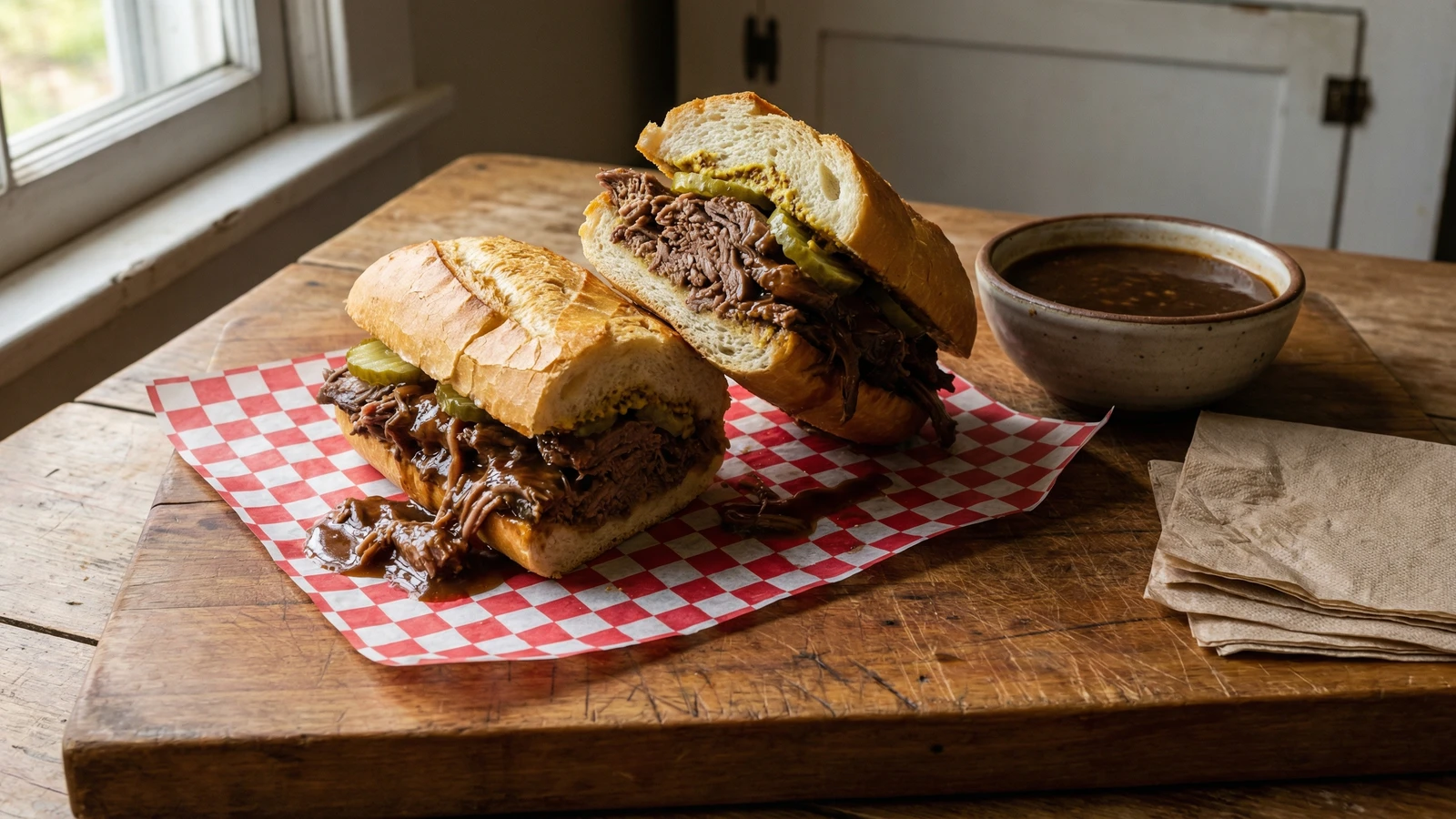
Roast Beef Debris Po' Boy
Created by Chef Remy
Slow-braised chuck roast shredded into its own mahogany gravy, piled high on crusty New Orleans French bread that shatters when you bite through to the tender, savory beef swimming beneath.
The debris po' boy is the soul of New Orleans lunch counters. That word, debris, refers to the bits and shreds of beef that fall into the gravy during hours of slow cooking. It's the good stuff. The treasure at the bottom of the roasting pan that cooks used to fight over before someone got smart and built a whole sandwich around it.
My grandmother Evangeline made her version every Sunday after church. She'd put that roast in the oven before we left and the whole house would smell like heaven when we walked back through the door. The meat so tender it fell apart when you looked at it wrong. The gravy dark as coffee and rich enough to make a grown man weep. She'd pile it on bread she'd picked up from the bakery that morning, and we'd stand at the counter eating over the sink because there was no way to keep it neat.
At Lagniappe, we serve this sandwich dressed with just a smear of Creole mustard and some pickles. Nothing more. The beef and gravy do all the talking. You want that French bread to soak up the debris but still have enough backbone to hold together for the last bite. That's the balance you're chasing here: tender meat, rich gravy, bread that cooperates but doesn't surrender.
The technique, the tradition, and the story behind every dish.
Discover Culinary AdvisorIngredients
boneless beef chuck roast
Quantity
3-4 pounds
Cajun seasoning
Quantity
2 tablespoons
kosher salt
Quantity
1 tablespoon
black pepper
Quantity
1 teaspoon
freshly ground
vegetable oil
Quantity
3 tablespoons
yellow onions
Quantity
2 large
sliced thin
green bell pepper
Quantity
1 large
sliced thin
celery stalks
Quantity
4
sliced
garlic cloves
Quantity
6
minced
tomato paste
Quantity
2 tablespoons
all-purpose flour
Quantity
1/4 cup
beef stock
Quantity
3 cups
water
Quantity
1 cup
bay leaves
Quantity
2
dried thyme
Quantity
1 teaspoon
Worcestershire sauce
Quantity
1 teaspoon
New Orleans-style French bread
Quantity
6 pieces (8-10 inches each)
Creole mustard
Quantity
for serving
dill pickle slices
Quantity
for serving
| Ingredient | Quantity |
|---|---|
| boneless beef chuck roast | 3-4 pounds |
| Cajun seasoning | 2 tablespoons |
| kosher salt | 1 tablespoon |
| black pepperfreshly ground | 1 teaspoon |
| vegetable oil | 3 tablespoons |
| yellow onionssliced thin | 2 large |
| green bell peppersliced thin | 1 large |
| celery stalkssliced | 4 |
| garlic clovesminced | 6 |
| tomato paste | 2 tablespoons |
| all-purpose flour | 1/4 cup |
| beef stock | 3 cups |
| water | 1 cup |
| bay leaves | 2 |
| dried thyme | 1 teaspoon |
| Worcestershire sauce | 1 teaspoon |
| New Orleans-style French bread | 6 pieces (8-10 inches each) |
| Creole mustard | for serving |
| dill pickle slices | for serving |
Equipment Needed
- •Large Dutch oven with lid (5-7 quart)
- •Heavy-bottomed skillet or griddle for toasting bread
- •Two sturdy forks for shredding
Instructions
- 1
Season the roast
Pat the chuck roast dry with paper towels. Combine the Cajun seasoning, salt, and black pepper in a small bowl. Rub this mixture all over the meat, pressing it into every surface and crevice. Don't be shy. This is your first layer of flavor, and it needs to penetrate. Let the seasoned roast sit at room temperature for thirty minutes while you prep your vegetables.
A dry surface means better browning. Wet meat steams instead of sears, and you lose all that flavor development. - 2
Sear the beef
Heat the oil in a large Dutch oven over high heat until it shimmers and just begins to smoke. Carefully lower the roast into the pot. You should hear an aggressive sizzle. If you don't, your pot isn't hot enough. Sear without moving for four to five minutes until a dark brown crust forms. Flip and repeat on all sides. This takes about fifteen minutes total. The crust should look almost black in spots. That's flavor you're building. Transfer the roast to a plate.
- 3
Build the trinity base
Reduce heat to medium. Add the sliced onions, bell pepper, and celery to the pot. There will be brown bits stuck to the bottom. Good. That's fond, and it's gold. Stir the vegetables, scraping up those browned bits as you go. Season with a pinch of salt. Cook, stirring occasionally, until the onions turn soft and golden, about ten minutes. The vegetables should look wilted and smell sweet.
The holy trinity (onion, celery, bell pepper) is the backbone of Cajun cooking. Treat it with respect. Don't rush this step. - 4
Add garlic and tomato paste
Push the vegetables to the edges of the pot and add the minced garlic to the center. Let it sizzle for thirty seconds until fragrant. Add the tomato paste and stir everything together, coating the vegetables. Cook for two minutes, letting the tomato paste darken slightly. This concentrates its flavor and removes the raw, tinny taste.
- 5
Create the gravy base
Sprinkle the flour over the vegetables and stir constantly for two minutes. The flour will absorb the fat and begin to toast. You're making a quick roux here, nothing fancy, just enough to thicken your gravy later. Pour in the beef stock and water, stirring vigorously to prevent lumps. Add the bay leaves, thyme, and Worcestershire sauce. Bring to a simmer.
- 6
Braise low and slow
Return the seared roast to the pot, nestling it into the liquid. The liquid should come about halfway up the sides of the meat. Cover with a tight-fitting lid and transfer to a 300°F oven. Let it braise undisturbed for three to three and a half hours. You'll know it's ready when a fork slides into the meat with no resistance and the beef wants to fall apart at the slightest pressure.
Resist the urge to check constantly. Every time you lift that lid, you lose heat and steam. Trust the process. - 7
Shred the debris
Transfer the roast to a cutting board. Remove and discard the bay leaves from the pot. Using two forks, shred the beef into rough chunks and strands. Don't make it too fine. You want variety in texture. Some pieces should be bite-sized chunks, others long shreds. Return all the meat to the pot, stirring it into the gravy. This is your debris: tender beef swimming in rich, beefy gravy with all those softened vegetables.
- 8
Adjust and simmer
Set the pot over medium-low heat. Taste the debris gravy and adjust seasoning. It likely needs more salt and pepper. The gravy should be thick enough to coat the meat but loose enough to soak into bread. If it's too thick, add a splash of water. If too thin, simmer uncovered for ten minutes. When the last bite tastes as good as the first, you've done it right.
- 9
Prepare the bread
Split each piece of French bread lengthwise, leaving one edge attached like a hinge. If you want the bread toasted (I do), place it cut-side down on a hot griddle or under the broiler for one minute until just golden. The outside should shatter when you press it, but the inside stays pillowy and soft. That contrast matters.
- 10
Build the po' boy
Spread Creole mustard on the bottom half of each bread. Using a slotted spoon, pile a generous amount of debris onto the bread. Then spoon some of the gravy over the top. Not too much or you'll have soup. Just enough to soak into the bread without destroying it. Add pickle slices if you like. Close the sandwich, press gently, and serve immediately. Have plenty of napkins ready. This is not a neat sandwich, and it shouldn't be.
Chef Tips
- •Look for a chuck roast with good marbling. Those fat veins melt during braising and keep the meat moist while enriching the gravy. Lean cuts make dry, sad debris.
- •Real New Orleans French bread has a thin, crispy crust and cottony interior. If you can't find it, a good quality baguette works, but avoid anything too dense or chewy.
- •At Lagniappe, we always make extra gravy. It keeps in the refrigerator for a week and improves with time. Reheat gently and you've got debris for days.
- •Some folks add a splash of hot sauce to their sandwich. I won't stop you, but taste the debris first. It should have enough flavor on its own.
Advance Preparation
- •The debris can be made up to three days ahead and refrigerated in its gravy. The flavor deepens overnight. Reheat gently over medium-low, adding a splash of water if the gravy has thickened too much.
- •Shredded debris with gravy freezes beautifully for up to three months. Thaw overnight in the refrigerator before reheating.
Frequently Asked Questions
Nutrition Information
1 serving (about 450g)
Where cooking meets culture.
Culinary mentorship, cultural storytelling, and the editorial depth that makes cooking meaningful.
Explore Culinary Advisor