Culinary Advisor
A cooking platform built around craft, culture, and the stories behind what we eat.
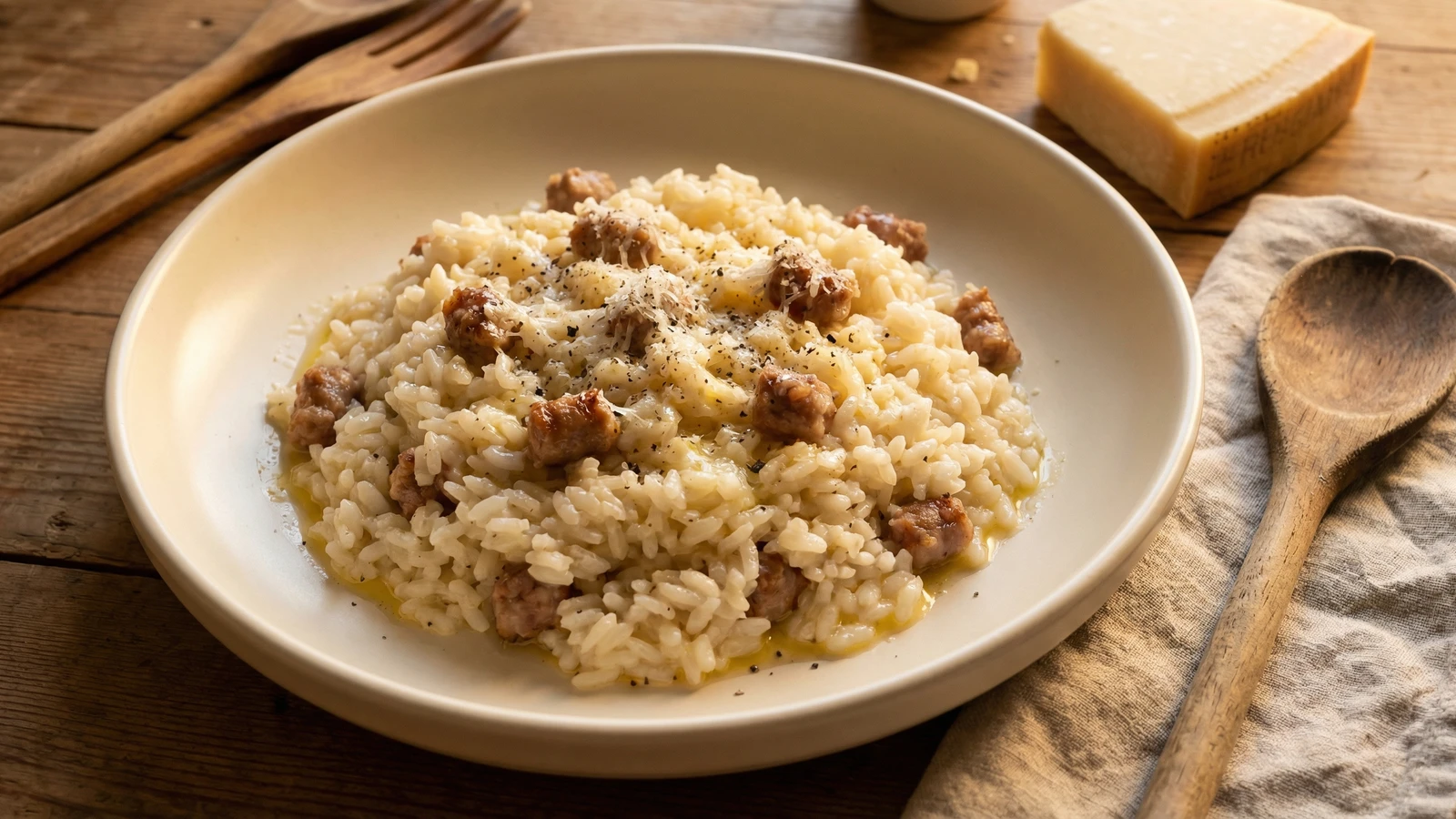
Risotto alla Pilota
Created by Chef Graziella
The rice workers' risotto from Mantua, where the grain absorbs its liquid undisturbed and pork sausage joins only at the finish. This is not the risotto Americans think they know.
Forget what you think you know about risotto. The stirring, the ladling, the constant attention: that is Milan. This is Mantua, and in Mantua, they do things differently. The piloti, the men who worked the rice mills along the Po Valley, needed food that could cook while they worked. They could not stand at a stove stirring. So they developed a method where the rice absorbs measured liquid in a covered pot, undisturbed, while they continued their labor.
The result is drier, the grains more distinct, the texture closer to a pilaf than to the creamy wave of risotto all'onda. Americans hear 'risotto' and imagine one thing. This proves, once again, that Italian cooking does not exist as a single cuisine. There are regional traditions, and they are as different from each other as France is from Spain.
The sausage here is not cooked with the rice. It is browned separately, crumbled fine, and folded in at the end with butter and cheese. The meat flavors the finished dish without releasing its fat into the cooking liquid. This distinction matters. When someone tells you all risotto is the same, you may now correct them.
Risotto alla pilota takes its name from the piloti, workers in the rice-husking mills of the Mantuan lowlands who prepared this dish between shifts. The technique emerged from necessity: a method that required no tending allowed the men to work while their dinner cooked. The dish remains specific to the province of Mantua; cross into neighboring Verona or Cremona, and you will not find it.
The technique, the tradition, and the story behind every dish.
Discover Culinary AdvisorIngredients
Vialone Nano rice
Quantity
1 1/2 cups
meat broth
Quantity
3 cups
heated to boiling
fresh Italian pork sausage
Quantity
8 ounces
casings removed
unsalted butter
Quantity
4 tablespoons
divided
Parmigiano-Reggiano
Quantity
1/2 cup, plus more for serving
freshly grated
kosher salt
Quantity
to taste
black pepper
Quantity
to taste
freshly ground
| Ingredient | Quantity |
|---|---|
| Vialone Nano rice | 1 1/2 cups |
| meat brothheated to boiling | 3 cups |
| fresh Italian pork sausagecasings removed | 8 ounces |
| unsalted butterdivided | 4 tablespoons |
| Parmigiano-Reggianofreshly grated | 1/2 cup, plus more for serving |
| kosher salt | to taste |
| black pepperfreshly ground | to taste |
Equipment Needed
- •Heavy 3-quart pot with tight-fitting lid
- •Small skillet for sausage
- •Wooden spoon
- •Heat diffuser (if your stove runs hot)
Instructions
- 1
Prepare the sausage
In a small skillet, melt one tablespoon of butter over medium heat. Crumble the sausage meat into the pan, breaking it into very small pieces with a wooden spoon. Cook until the meat is browned and cooked through, about 8 minutes. The pieces should be no larger than a pea. Set aside off the heat.
- 2
Toast the rice
In a heavy-bottomed pot with a tight-fitting lid, melt two tablespoons of butter over medium heat. Add the rice and stir to coat every grain with the fat. Toast for two minutes, stirring constantly. The grains should become slightly translucent at the edges but must not color. Listen: you should hear a faint crackling sound as the starch toasts.
Vialone Nano is essential. This variety, grown in the Veneto and Lombardy, absorbs liquid more gradually than Arborio and holds its shape. The finished dish depends on this characteristic. - 3
Add the broth
Pour the boiling broth over the rice all at once. The liquid should bubble vigorously on contact. Stir once, only once, to distribute the rice evenly. Add a pinch of salt. The liquid should cover the rice by about half an inch.
- 4
Cook without stirring
Cover the pot tightly and reduce the heat to the lowest possible setting. The rice will absorb the liquid slowly over 15 to 18 minutes. Do not lift the lid. Do not stir. Do not check. Trust the process. The piloti did not have time to fuss, and neither should you.
If your lowest burner setting still seems too high, use a heat diffuser. The rice must cook gently, absorbing liquid without scorching on the bottom. - 5
Check for doneness
After 15 minutes, lift the lid and check. The liquid should be absorbed and the rice tender but with a firm center. If liquid remains, cover and cook three minutes more. If the rice is still too firm but the liquid is gone, add two tablespoons of hot water, cover, and continue. The grains should be distinct, not creamy.
- 6
Rest the rice
Remove the pot from heat and let it stand, covered, for five minutes. This allows the starches to settle and the texture to stabilize. Patience here yields dividends.
- 7
Fold in the finish
Uncover the pot. Add the remaining tablespoon of butter, the grated Parmigiano-Reggiano, and the browned sausage with any fat from the pan. Fold gently with a wooden spoon, lifting from the bottom to distribute without crushing the grains. Taste for salt. Add pepper generously. The finished risotto should be drier than Milanese style, the grains separate, the sausage distributed throughout.
The Mantuan term for this final mixing is fare il buco: 'to make the hole.' You push the rice aside, add the butter and cheese to the center, then fold everything together. The motion preserves the grain structure. - 8
Serve immediately
Spoon onto warm plates and serve at once with additional Parmigiano-Reggiano at the table. This risotto waits for no one. Once plated, the texture begins to change. Call your family to the table before you finish folding in the cheese.
Chef Tips
- •The traditional sausage of Mantua is salamella mantovana or pistum, a coarse-ground fresh pork sausage seasoned simply with salt, pepper, and garlic. Any good-quality fresh Italian sausage without fennel will serve. Sweet sausage, not hot.
- •Some Mantuan cooks add a piece of bone marrow to the pot with the rice, letting it melt and enrich the dish. If you have marrow bones, roast one first and scoop the soft marrow into the rice before covering. This is not required, but it is traditional.
- •The ratio of liquid to rice is fixed: twice the volume of liquid to rice. Measure precisely. This is not the gradual addition of Milanese risotto. You commit to the proportion at the start.
- •Leftover risotto alla pilota can be formed into cakes and fried in butter until golden. This is how Mantuan home cooks use what remains.
Advance Preparation
- •The sausage can be browned several hours ahead and held at room temperature. Rewarm briefly before folding into the rice.
- •This risotto does not hold well. Unlike dishes that improve overnight, risotto alla pilota must be served immediately. Plan your timing so the rice finishes as guests sit down.
- •Have your broth hot and ready before you begin toasting the rice. Once you start, the process moves quickly.
Frequently Asked Questions
Nutrition Information
1 serving (about 225g)
Where cooking meets culture.
Culinary mentorship, cultural storytelling, and the editorial depth that makes cooking meaningful.
Explore Culinary Advisor