Culinary Advisor
A cooking platform built around craft, culture, and the stories behind what we eat.
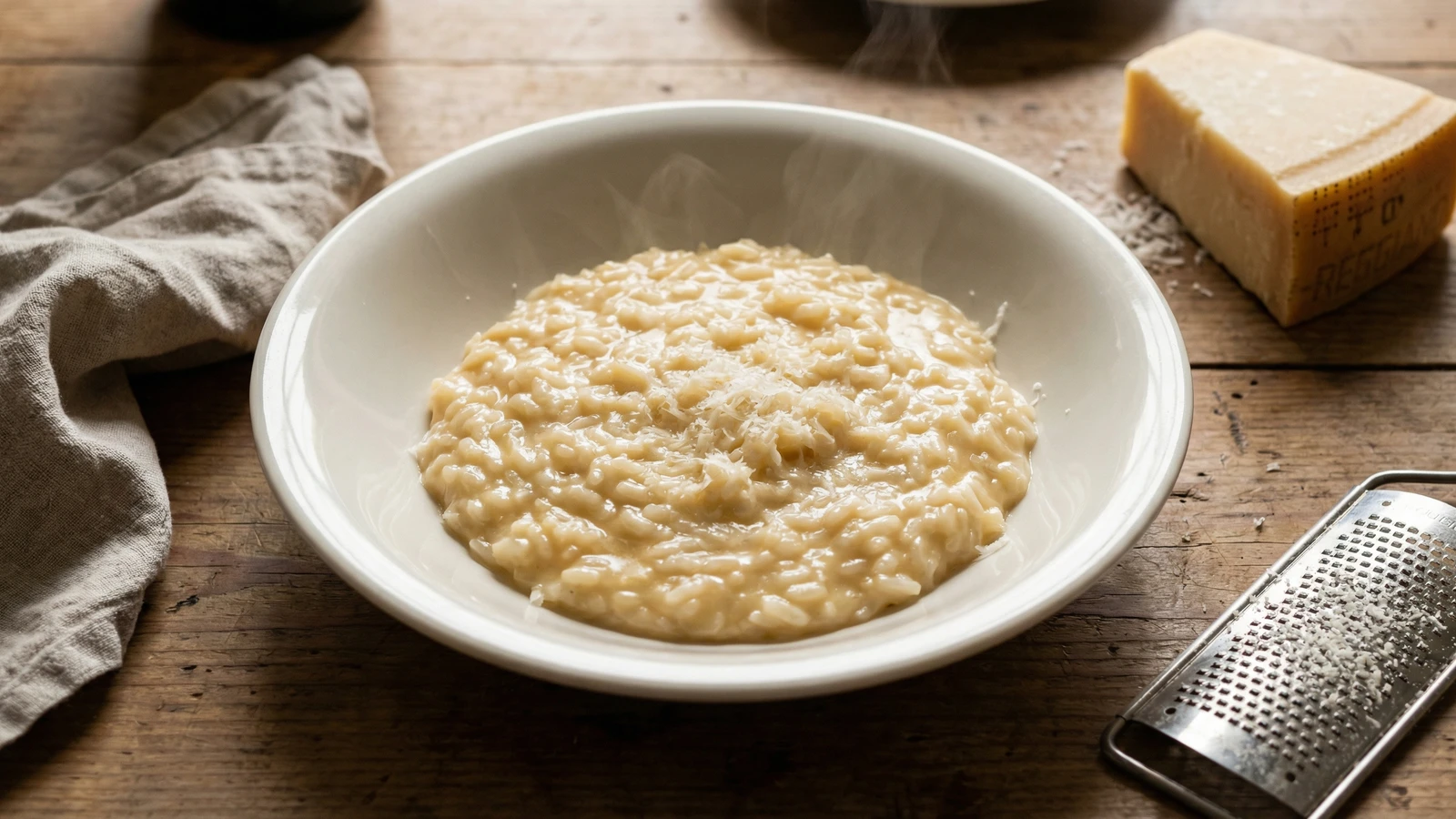
Risotto al Parmigiano-Reggiano
Created by Chef Graziella
The risotto of Emilia-Romagna stripped to its essence: rice, broth, butter, and the king of cheeses. No distractions. No hiding places. Just technique and restraint creating something profound.
This is the risotto that teaches you everything. There is no saffron to dazzle, no mushrooms to distract, no seafood to impress. There is only rice, broth, butter, and Parmigiano-Reggiano. Four ingredients. If you cannot make this well, you cannot make any risotto well.
The technique is not difficult, but it demands your attention. You cannot walk away. You cannot answer the telephone. For twenty minutes, you stand at the stove, adding broth one ladleful at a time, stirring, watching, listening to the rice absorb the liquid. This is the rhythm of risotto. Italians have done this for generations without complaint.
What you keep out is as significant as what you put in. There is no cream in proper risotto. The creaminess comes from the starch released by the rice and from the mantecatura, the vigorous stirring with cold butter and cheese at the end. Americans add cream because they do not understand this. They think more richness means better flavor. The opposite is true.
The finished risotto should flow like a wave when you shake the pan. Italians call this all'onda. If your risotto sits in a stiff mound, you have failed. Add more broth. Learn to recognize when the rice is ready.
Risotto alla parmigiana traces its origins to the rice paddies of the Po Valley, where Arborio and Carnaroli rice have been cultivated since the 15th century. The combination with Parmigiano-Reggiano was inevitable: both are products of Emilia-Romagna, born from the same agricultural traditions and appearing together on tables for centuries before anyone thought to write it down.
The technique, the tradition, and the story behind every dish.
Discover Culinary AdvisorIngredients
homemade meat broth or chicken broth
Quantity
6 cups
unsalted butter
Quantity
4 tablespoons
divided, cold
yellow onion
Quantity
1 small
minced very fine
Carnaroli rice
Quantity
1 1/2 cups
dry white wine
Quantity
1/2 cup
at room temperature
Parmigiano-Reggiano
Quantity
1 cup (about 3 ounces)
freshly grated, plus more for serving
kosher salt
Quantity
to taste
| Ingredient | Quantity |
|---|---|
| homemade meat broth or chicken broth | 6 cups |
| unsalted butterdivided, cold | 4 tablespoons |
| yellow onionminced very fine | 1 small |
| Carnaroli rice | 1 1/2 cups |
| dry white wineat room temperature | 1/2 cup |
| Parmigiano-Reggianofreshly grated, plus more for serving | 1 cup (about 3 ounces) |
| kosher salt | to taste |
Equipment Needed
- •Heavy-bottomed 4-quart saucepan or braiser
- •Medium saucepan for broth
- •Wooden spoon
- •Ladle
Instructions
- 1
Heat the broth
Pour the broth into a saucepan and bring it to a gentle simmer. Keep it hot throughout the cooking process. Cold broth added to hot rice stops the cooking and produces gummy, unevenly cooked grains. This is not negotiable.
Homemade broth makes superior risotto. If using commercial broth, choose one with no added salt and taste as you go. The Parmigiano adds considerable salt at the end. - 2
Cook the onion
In a heavy-bottomed saucepan or braiser, melt 2 tablespoons of the butter over medium-low heat. Add the minced onion and cook slowly, stirring occasionally, until it is completely soft and translucent but has taken on no color whatsoever. This takes 8 to 10 minutes. Patience here determines the foundation of your risotto.
The onion must be minced very fine, almost to a paste. Large pieces create unpleasant texture in the finished dish. A food processor pulsed briefly works well. - 3
Toast the rice
Add the rice to the softened onion and stir constantly for 2 minutes. Every grain must be coated with the butter and become hot. The rice will turn from translucent to opaque at the edges, with a pearly white center visible in each grain. You will hear it begin to click against the pan. This toasting creates the structure that allows proper absorption.
- 4
Add the wine
Pour in the wine all at once. It will sizzle and steam. Stir continuously until the wine has been completely absorbed and you can no longer smell raw alcohol. The pan should be nearly dry before you proceed. This takes 1 to 2 minutes.
- 5
Add broth gradually
Begin adding the hot broth one ladleful at a time, about 3/4 cup per addition. Stir frequently, not constantly, but attentively. Wait until each addition is nearly absorbed before adding the next. The rice should always be moist but never swimming. You will hear the liquid being absorbed: the sound changes from wet bubbling to a thicker, stickier noise. Continue for 16 to 18 minutes.
Taste the rice after 15 minutes. It should be tender with the slightest resistance at the center, not chalky, not mushy. Carnaroli is more forgiving than Arborio and holds its texture longer. - 6
Test for doneness
The rice is ready when it is tender throughout but retains a gentle bite at the very center. Bite a grain. If you feel a hard core, continue cooking. If it is uniformly soft with no resistance, you have gone too far. The risotto should be loose enough to spread slowly when spooned onto a plate.
- 7
Perform the mantecatura
Remove the pan from heat. Add the remaining 2 tablespoons cold butter, cut into pieces, and all of the grated Parmigiano. Beat vigorously with a wooden spoon for 30 seconds to 1 minute. The risotto will become creamy, glossy, and cohesive. This is the mantecatura, and it creates the characteristic texture. Taste and add salt if needed. The cheese is salty, so taste first.
The butter must be cold. Cold butter emulsifies into the starch rather than separating into grease. This is basic physics, and ignoring it produces greasy risotto. - 8
Serve immediately
Spoon the risotto onto warmed plates. Shake each plate gently. The risotto should flow like a wave, settling into a flat pool rather than holding a mound. This is all'onda. Serve immediately with additional Parmigiano at the table. Risotto waits for no one. Once it is ready, your guests must be seated and ready to eat.
Chef Tips
- •Carnaroli rice is superior to Arborio for risotto. It releases starch more gradually and maintains its structure longer, giving you a wider window of perfection. Seek it out at Italian grocers or order it online.
- •The Parmigiano-Reggiano must be freshly grated from a wedge. Pre-grated cheese contains anti-caking agents that prevent proper melting. Buy a piece stamped with the consortium's mark and grate it yourself.
- •Your broth determines your risotto. Insipid broth produces insipid risotto. If you must use commercial broth, add a Parmigiano rind while heating it to build depth.
- •Do not add cream. I say this knowing some will ignore me. The creaminess of proper risotto comes from technique, not from dairy. Cream makes it heavy and masks the clean flavor of the cheese.
Advance Preparation
- •Risotto cannot be made ahead. It begins to stiffen within minutes of leaving the heat. Your guests must be ready when the risotto is ready, not the reverse.
- •You may prepare the broth days in advance and refrigerate it. Homemade broth improves after a day or two.
- •Grate the Parmigiano and mince the onion up to several hours ahead. Store the cheese covered at room temperature, the onion refrigerated.
Frequently Asked Questions
Nutrition Information
1 serving (about 280g)
Where cooking meets culture.
Culinary mentorship, cultural storytelling, and the editorial depth that makes cooking meaningful.
Explore Culinary Advisor