Culinary Advisor
A cooking platform built around craft, culture, and the stories behind what we eat.
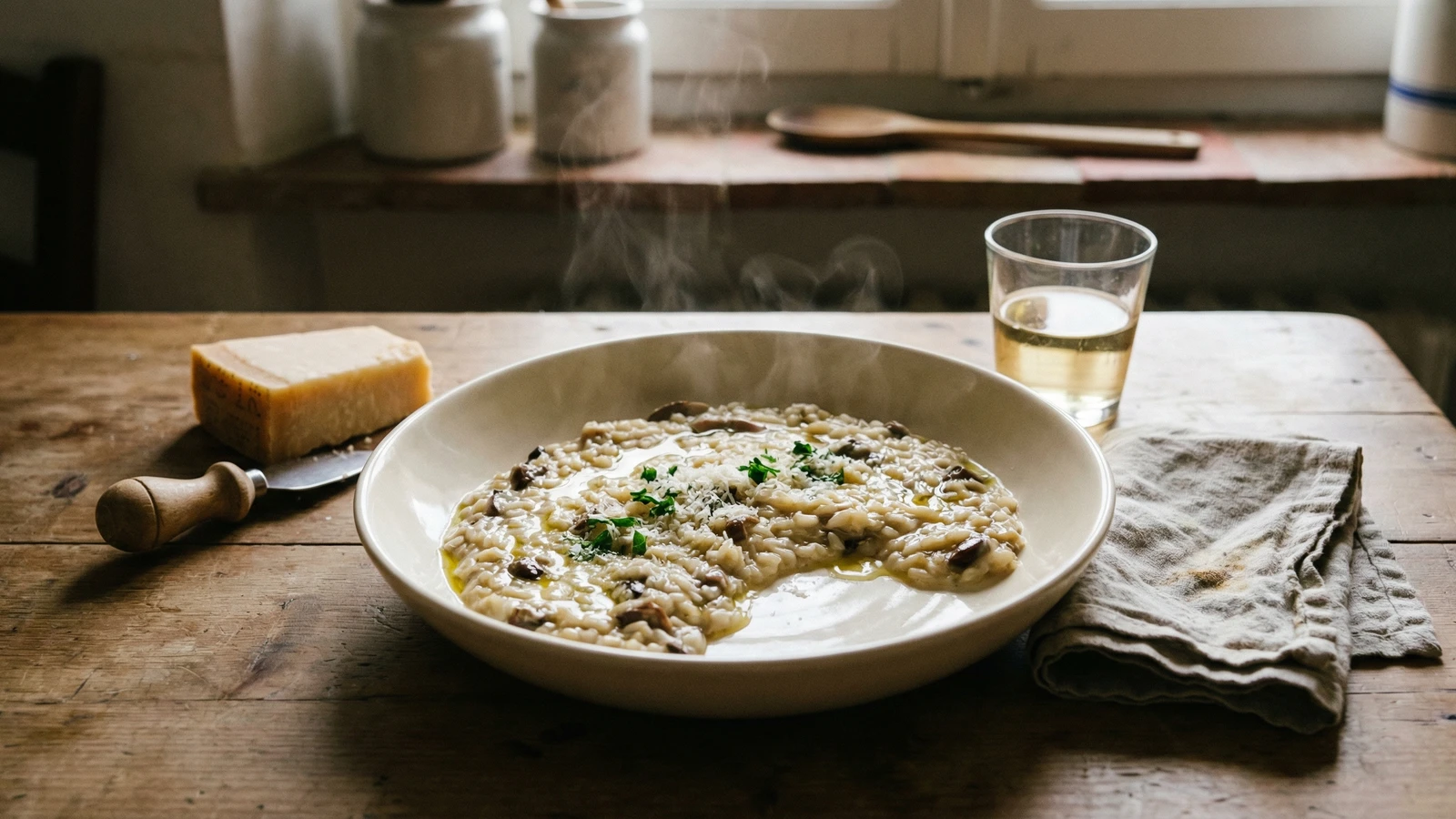
Risotto ai Funghi Porcini
Created by Chef Graziella
Dried porcini reconstituted in warm water, their soaking liquid hoarded like treasure, the rice coaxed to creaminess through patience alone. This is risotto as it should be made.
Risotto is not rice boiled in broth. It is a transformation, the gradual coaxing of starch from grain into sauce through heat, liquid, and constant attention. The rice does not merely absorb the broth. It releases part of itself into the cooking liquid, creating a creaminess that Americans try to achieve by adding cream. They are missing the point. Properly made risotto needs no cream. The technique creates the texture.
Porcini mushrooms are the aristocrats of the funghi kingdom, and dried porcini concentrate that nobility into something almost impossibly intense. Fresh porcini are magnificent if you can find them, but dried porcini bring a depth that fresh cannot match. The soaking liquid becomes as important as the mushrooms themselves. Strain it carefully and treat it with respect.
This is Northern Italian cooking at its most demanding and most rewarding. The rice traditions of Lombardy and Piedmont require attention. You cannot multitask while making risotto. You stand at the stove, you stir, you watch, you wait. The dish rewards your patience with something that cannot be replicated any other way.
Risotto developed in the rice paddies of the Po Valley, where short-grain rice has been cultivated since the 15th century. The Milanese claim risotto as their own, but the technique spread throughout Lombardy, Piedmont, and Veneto, each region developing distinctive variations. Porcini, gathered wild in the mountain forests, transformed a humble grain into something worthy of celebration.
The technique, the tradition, and the story behind every dish.
Discover Culinary AdvisorIngredients
dried porcini mushrooms
Quantity
1 ounce
meat broth or chicken broth
Quantity
4 cups
homemade preferred
unsalted butter
Quantity
4 tablespoons
divided
extra virgin olive oil
Quantity
2 tablespoons
yellow onion
Quantity
1/2 medium
diced very fine
Carnaroli or Arborio rice
Quantity
1 1/2 cups
dry white wine
Quantity
1/2 cup
Parmigiano-Reggiano
Quantity
1/2 cup
freshly grated, plus more for serving
flat-leaf Italian parsley
Quantity
2 tablespoons
chopped fine
kosher salt
Quantity
to taste
black pepper
Quantity
to taste
freshly ground
| Ingredient | Quantity |
|---|---|
| dried porcini mushrooms | 1 ounce |
| meat broth or chicken brothhomemade preferred | 4 cups |
| unsalted butterdivided | 4 tablespoons |
| extra virgin olive oil | 2 tablespoons |
| yellow oniondiced very fine | 1/2 medium |
| Carnaroli or Arborio rice | 1 1/2 cups |
| dry white wine | 1/2 cup |
| Parmigiano-Reggianofreshly grated, plus more for serving | 1/2 cup |
| flat-leaf Italian parsleychopped fine | 2 tablespoons |
| kosher salt | to taste |
| black pepperfreshly ground | to taste |
Equipment Needed
- •Heavy 12-inch wide saucepan or braiser
- •Medium saucepan for broth
- •Fine-mesh sieve
- •Wooden spoon or silicone spatula
Instructions
- 1
Reconstitute the porcini
Place the dried porcini in a bowl and cover with two cups of warm water. Let them soak for at least 30 minutes. The mushrooms should become soft and pliable. Lift them from the liquid gently, squeezing excess moisture back into the bowl. Rinse the mushrooms under cold water to remove any grit. Chop them coarse. Strain the soaking liquid through a fine-mesh sieve lined with paper towel. This liquid is gold. It contains all the concentrated essence of the forest.
Dried porcini from Italy are worth seeking out. The packets sold in American supermarkets often contain inferior mushrooms from China. Read the label. The flavor difference is significant. - 2
Prepare the broth
Combine the meat broth with the strained porcini soaking liquid in a saucepan. Bring to a gentle simmer and keep it warm over low heat throughout the cooking process. The broth must be hot when it meets the rice. Cold broth shocks the starch and prevents the proper release that creates risotto's creaminess.
- 3
Cook the soffritto
In a heavy wide saucepan or braiser, melt two tablespoons of the butter with the olive oil over medium heat. When the butter foam subsides, add the diced onion. Cook slowly, stirring occasionally, until the onion becomes completely soft and translucent, about 10 minutes. The onion must not color. If it begins to brown at the edges, reduce the heat immediately.
- 4
Toast the rice
Add the rice to the pan all at once. Stir it constantly for two minutes, coating every grain with the hot fat. This toasts the exterior starch and creates the foundation for proper texture. The grains should become translucent at the edges while remaining opaque at the center. You will hear a faint clicking sound as the rice moves in the pan. This tells you the heat is correct.
- 5
Add the wine
Pour in the white wine and stir constantly until it evaporates completely. You should hear it sizzle against the hot pan. When you can no longer smell raw alcohol and the pan looks nearly dry, you may proceed. Not before.
- 6
Add the mushrooms
Stir in the chopped reconstituted porcini. Let them cook with the rice for one minute, releasing their fragrance into the soffritto. The kitchen should smell of autumn woods.
- 7
Add broth gradually
Begin adding the warm broth one ladleful at a time. After each addition, stir the rice gently but steadily until the liquid is nearly absorbed. The rice should never swim in broth, nor should it dry out completely. When the surface of the rice no longer looks wet and the grains begin to stick slightly, add the next ladleful. This process takes approximately 18 to 20 minutes. There are no shortcuts.
Risotto demands attention. You cannot walk away, check your telephone, or have long conversations. Stand at the stove. Watch the rice. This is meditation disguised as cooking. - 8
Test for doneness
After 18 minutes, taste a grain. It should be tender but retain a barely perceptible firmness at the very center. Italians call this all'onda, when the risotto flows like a wave when you shake the pan. The consistency should be loose and creamy, not stiff like rice pudding. If the rice is still too firm, continue adding broth and stirring.
- 9
Finish with mantecatura
Remove the pan from heat. Add the remaining two tablespoons of cold butter, cut into pieces, and the grated Parmigiano-Reggiano. Stir vigorously for 30 seconds. This step, the mantecatura, creates the silken texture that defines proper risotto. The butter and cheese emulsify with the starchy cooking liquid to form a cream that exists nowhere else in cooking. Season with salt and pepper. Stir in the parsley.
The butter must be cold. Cold butter emulsifies properly. Room temperature butter simply melts and greases the rice. This is science, not preference. - 10
Serve immediately
Spoon the risotto onto warm plates, spreading it gently so it flows across the surface in a thin layer. Risotto waits for no one. Once plated, invite your guests to put off talking and start eating. In two minutes the rice will have absorbed its sauce and turned stodgy. This is the nature of risotto. Accept it and plan accordingly.
Chef Tips
- •Carnaroli rice holds its shape better than Arborio and produces superior risotto. Seek it out from Italian importers. The price difference is modest and the improvement is not.
- •Never rinse risotto rice. The exterior starch is precisely what creates the creamy consistency. Washing it away defeats the purpose.
- •Your broth matters enormously. Homemade meat broth gives depth that no commercial product can match. If you must use store-bought, choose low-sodium and taste it first. Adjust your final seasoning accordingly.
- •The pan matters. Use a wide heavy-bottomed pan that conducts heat evenly. Thin pans create hot spots that scorch the rice.
- •If you happen upon fresh porcini, slice them thick and sauté them separately in butter until golden. Add them at the end to preserve their texture. But always include dried porcini as well. The two together create something neither achieves alone.
Advance Preparation
- •Porcini can be reconstituted several hours ahead. Keep them and their strained liquid refrigerated until needed.
- •The broth can be made days ahead and refrigerated, or months ahead and frozen.
- •Risotto itself cannot be made ahead. It is served the moment it is finished. This is not negotiable.
Frequently Asked Questions
Nutrition Information
1 serving (about 270g)
Where cooking meets culture.
Culinary mentorship, cultural storytelling, and the editorial depth that makes cooking meaningful.
Explore Culinary Advisor