Culinary Advisor
A cooking platform built around craft, culture, and the stories behind what we eat.
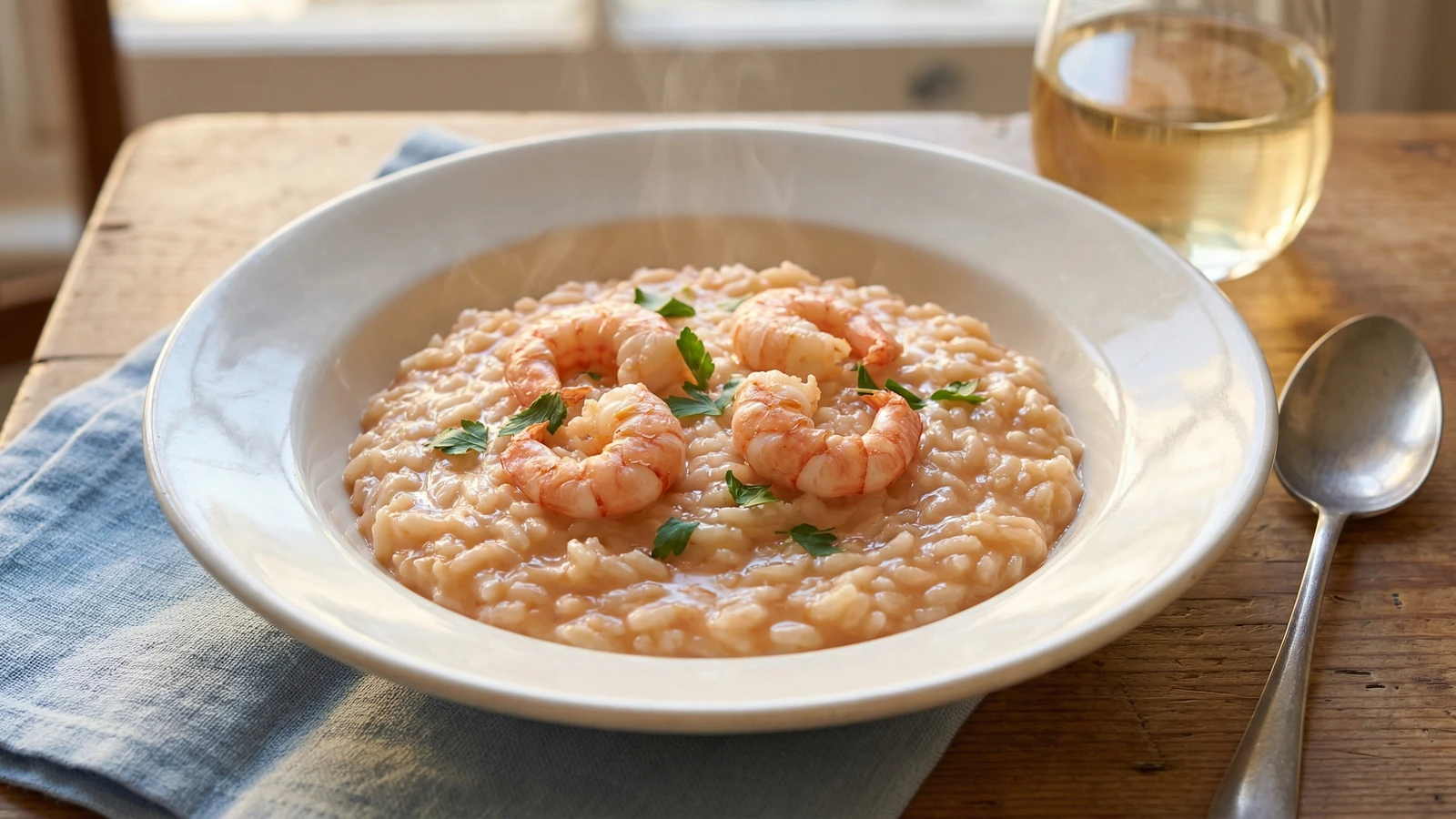
Risotto agli Scampi
Created by Chef Graziella
The elegant risotto of the Venetian lagoon, where sweet Adriatic langoustines need nothing more than properly made rice and the broth from their own shells to become something magnificent.
Scampi are not shrimp. This is the first thing Americans must understand. Scampi are langoustines, slender creatures with delicate claws and flesh so sweet it borders on floral. In Venice, fishermen have pulled them from the Adriatic for centuries, and Venetian cooks learned long ago that such ingredients require restraint, not elaboration.
The technique here differs from risotto alla Milanese. Venetians prefer their risotto all'onda, flowing like a wave when you shake the pan. It should spread gently across the plate, not sit in a stiff mound. This looser consistency requires confidence and timing. You must know when to stop adding broth, when to pull the pan from heat, when the rice has surrendered just enough of its starch.
The shells are not waste. They are treasure. You will simmer them with aromatics to create a broth that carries the essence of the sea into every grain of rice. The scampi themselves cook for mere minutes at the end. Overcook them by thirty seconds and you have rubber. This demands your attention. Put down your phone. Watch the pan.
Venice's dominion over Adriatic trade routes brought scampi to the tables of doges and merchants alike, though the dish we know today emerged from the simpler kitchens of fishing families in the lagoon. The technique of making broth from shellfish shells, stretching precious protein through the rice, reflects the frugality beneath Venetian opulence.
The technique, the tradition, and the story behind every dish.
Discover Culinary AdvisorIngredients
whole langoustines (scampi)
Quantity
1 1/2 pounds, about 12 medium
water
Quantity
6 cups
dry white wine
Quantity
1/2 cup, divided
carrot
Quantity
1 small
cut into chunks
celery stalk
Quantity
1
cut into chunks
bay leaf
Quantity
1
black peppercorns
Quantity
3
unsalted butter
Quantity
5 tablespoons, divided
extra virgin olive oil
Quantity
2 tablespoons
shallot
Quantity
1 small
minced fine
Carnaroli or Vialone Nano rice
Quantity
1 1/2 cups
flat-leaf parsley
Quantity
2 tablespoons
chopped fine
kosher salt
Quantity
to taste
white pepper
Quantity
to taste
freshly ground
| Ingredient | Quantity |
|---|---|
| whole langoustines (scampi) | 1 1/2 pounds, about 12 medium |
| water | 6 cups |
| dry white wine | 1/2 cup, divided |
| carrotcut into chunks | 1 small |
| celery stalkcut into chunks | 1 |
| bay leaf | 1 |
| black peppercorns | 3 |
| unsalted butter | 5 tablespoons, divided |
| extra virgin olive oil | 2 tablespoons |
| shallotminced fine | 1 small |
| Carnaroli or Vialone Nano rice | 1 1/2 cups |
| flat-leaf parsleychopped fine | 2 tablespoons |
| kosher salt | to taste |
| white pepperfreshly ground | to taste |
Equipment Needed
- •Heavy 12-inch braiser or wide sauté pan
- •Medium saucepan for broth
- •Fine-mesh strainer
- •Kitchen shears
- •Small sauté pan for scampi
Instructions
- 1
Prepare the scampi
Twist the heads from the langoustines and set aside. Using kitchen shears, cut along the underside of each tail shell and carefully extract the meat in one piece. Devein if necessary. Place the tail meat on a plate, cover, and refrigerate. Reserve all shells and heads.
The heads contain the most flavor. Do not discard them. They are the foundation of your broth. - 2
Make the shellfish broth
In a medium saucepan, combine the reserved shells and heads with the water, half the wine, carrot, celery, bay leaf, and peppercorns. Bring to a simmer over medium heat. Cook uncovered for 25 minutes, pressing the shells occasionally with a wooden spoon to extract their essence. Strain through a fine-mesh sieve, pressing firmly on the solids. You should have about 5 cups of coral-tinted broth. Keep warm over low heat.
- 3
Start the soffritto
In a heavy, wide pan or braiser, warm 2 tablespoons of the butter with the olive oil over medium heat. When the butter foam subsides, add the minced shallot. Cook gently, stirring occasionally, until the shallot is soft and translucent but has not taken color. This takes 4 to 5 minutes. Do not rush. Do not brown.
- 4
Toast the rice
Add the rice to the pan and stir thoroughly for 2 minutes. Every grain must be coated with the fat. The rice should become translucent at the edges while remaining opaque at the center. This step creates the foundation for proper texture. You will hear a faint crackling sound. This is correct.
- 5
Add wine and begin cooking
Pour in the remaining wine. Stir constantly until the wine has been completely absorbed and you can no longer smell raw alcohol. The pan should be nearly dry before you proceed.
- 6
Build the risotto
Add a ladleful of warm shellfish broth, enough to barely cover the rice. Stir frequently but not constantly. When the broth is nearly absorbed, add another ladleful. Continue this process, maintaining a gentle simmer. The rice should always be moist but never swimming. This takes approximately 16 to 18 minutes for Carnaroli, slightly less for Vialone Nano.
Venetians use Vialone Nano for seafood risotto. Its smaller grain absorbs liquid quickly and releases starch readily, creating the flowing consistency they prize. Carnaroli works beautifully as well. Arborio is acceptable but less forgiving. - 7
Cook the scampi
When the rice is two minutes from done, remove the scampi meat from the refrigerator. Season lightly with salt. In a separate small pan, melt 1 tablespoon of butter over medium-high heat. When it foams, add the scampi tails in a single layer. Cook 45 seconds per side, no more. The flesh should be just opaque, still tender. Remove immediately. Overcooked scampi are an insult to the fisherman who caught them.
- 8
Finish the risotto
When the rice is tender but retains a whisper of resistance at the core, remove the pan from heat. The risotto should be slightly looser than you want it, as it will continue to absorb liquid. Add the remaining 2 tablespoons of cold butter, cut into pieces. Stir vigorously, shaking the pan, until the butter is incorporated and the risotto becomes creamy and flows like a wave when you tilt the pan. This is the mantecatura. Season with salt and white pepper.
- 9
Plate and serve immediately
Spoon the risotto onto warmed plates, allowing it to spread naturally into a gentle pool. Arrange the seared scampi tails on top. Scatter the parsley over all. Bring the plates to the table at once. Once the pasta is sauced, serve it promptly, inviting your guests and family to put off talking and start eating. Risotto waits for no one.
Chef Tips
- •Seek out true langoustines from your fishmonger. They resemble small lobsters with long, slender claws. Large shrimp can substitute in desperation, but the flavor will be less refined, and you must not call the dish risotto agli scampi.
- •White pepper rather than black. The delicate color of this risotto should remain pale coral, not speckled with dark flecks. This is aesthetics serving flavor.
- •No Parmigiano-Reggiano. Cheese has no place in seafood risotto. This is not my opinion. This is how things are done on the Adriatic.
- •If your scampi come with roe (the orange coral in the heads), press it through a fine sieve and stir it into the risotto at the end for deeper color and richer flavor.
Advance Preparation
- •The shellfish broth can be made one day ahead and refrigerated. Reheat before using.
- •Shell the scampi up to 4 hours ahead. Keep the meat tightly covered in the coldest part of your refrigerator.
- •The risotto itself cannot be made ahead. It must be served the moment it reaches perfection. This is the nature of risotto. Accept it.
Frequently Asked Questions
Nutrition Information
1 serving (about 300g)
Where cooking meets culture.
Culinary mentorship, cultural storytelling, and the editorial depth that makes cooking meaningful.
Explore Culinary Advisor