Culinary Advisor
A cooking platform built around craft, culture, and the stories behind what we eat.
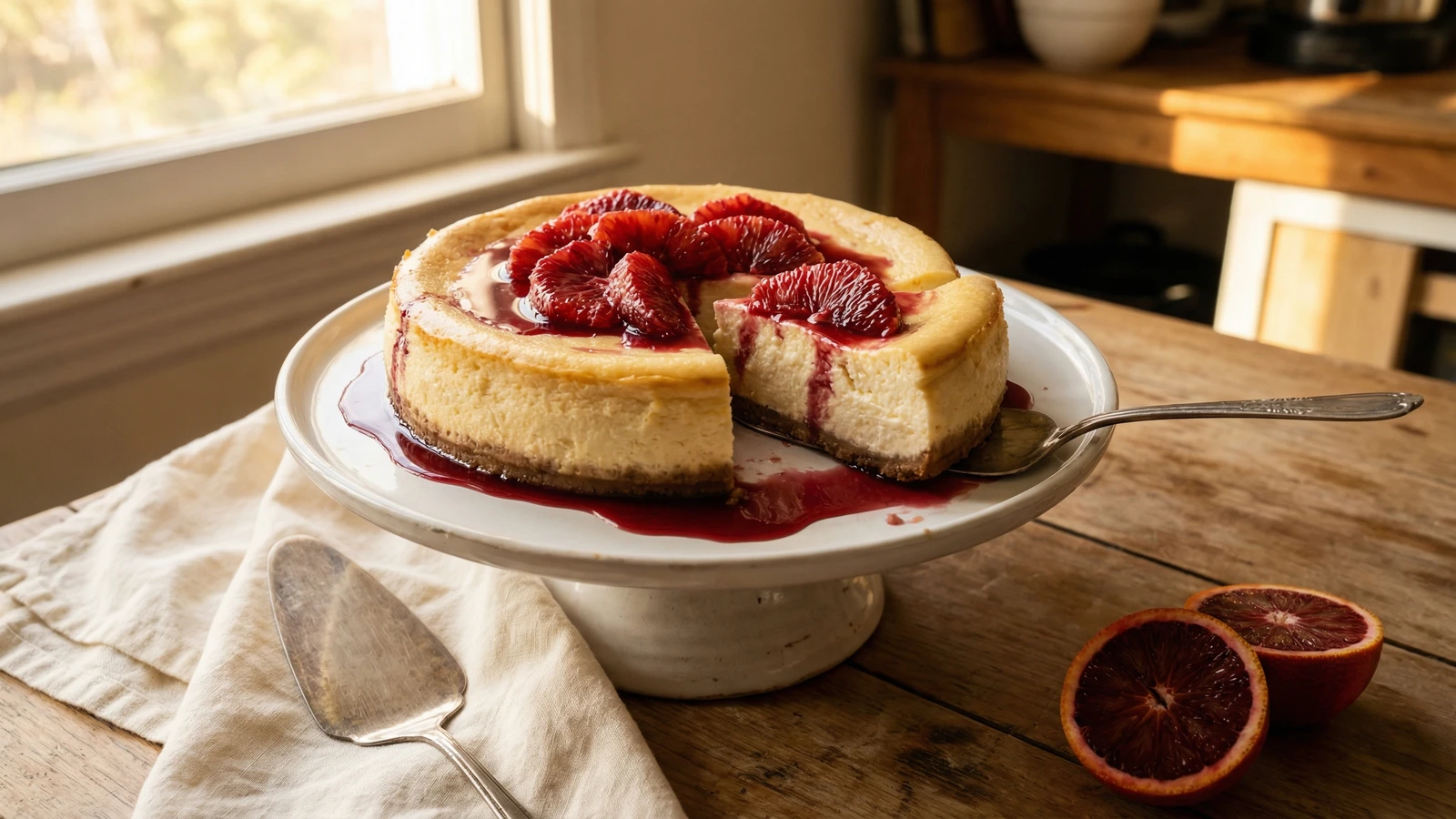
Ricotta Cheesecake with Blood Orange Compote
Created by Chef Ally
A delicate Italian cheesecake with the soft grain of fresh ricotta, barely sweetened and scented with lemon, crowned with jeweled blood orange segments in their own ruby syrup.
Blood oranges arrive in January like a letter from warmer places. Their flesh ranges from blushing pink to deep garnet, and when you slice into one, it feels like a small gift. This is when I make this cheesecake.
Italian ricotta cheesecake is nothing like its dense American cousin. It is lighter, with the soft grain of the cheese still present, barely sweet, tasting of good ricotta and not much else. The whole point is restraint. You need fresh ricotta, preferably from a local dairy, the kind that is still draining when you buy it. Supermarket tubs will work, but they will never sing the way fresh ricotta does.
The compote is simple: blood oranges, a touch of honey, and time. You are not making marmalade. You are coaxing the fruit to release its juices while keeping the segments whole. The ruby syrup pools around the pale cheesecake like stained glass catching winter light.
Every meal is a meaningful choice. When you buy blood oranges from a farmer who grows them, or ricotta from someone who makes it by hand, you are keeping something alive that matters. The dessert tastes better for it, and so does the evening.
The technique, the tradition, and the story behind every dish.
Discover Culinary AdvisorIngredients
fresh whole-milk ricotta cheese
Quantity
2 pounds
granulated sugar
Quantity
1 cup (200g)
large eggs
Quantity
5
at room temperature
pure vanilla extract
Quantity
1 teaspoon
lemon zest
Quantity
from 1 lemon
finely grated
fresh lemon juice (for cheesecake)
Quantity
2 tablespoons
all-purpose flour
Quantity
1/4 cup (30g)
fine sea salt
Quantity
1/4 teaspoon
unsalted butter
Quantity
for the pan
blood oranges
Quantity
6
honey
Quantity
3 tablespoons
preferably local
fresh lemon juice (for compote)
Quantity
1 tablespoon
fine sea salt (for compote)
Quantity
pinch
| Ingredient | Quantity |
|---|---|
| fresh whole-milk ricotta cheese | 2 pounds |
| granulated sugar | 1 cup (200g) |
| large eggsat room temperature | 5 |
| pure vanilla extract | 1 teaspoon |
| lemon zestfinely grated | from 1 lemon |
| fresh lemon juice (for cheesecake) | 2 tablespoons |
| all-purpose flour | 1/4 cup (30g) |
| fine sea salt | 1/4 teaspoon |
| unsalted butter | for the pan |
| blood oranges | 6 |
| honeypreferably local | 3 tablespoons |
| fresh lemon juice (for compote) | 1 tablespoon |
| fine sea salt (for compote) | pinch |
Equipment Needed
- •9-inch springform pan
- •Fine-mesh strainer and cheesecloth
- •Large roasting pan for water bath
- •Citrus zester or microplane
Instructions
- 1
Drain the ricotta
Line a fine-mesh strainer with cheesecloth and set it over a bowl. Spoon the ricotta into the strainer, cover loosely, and refrigerate for at least two hours or overnight. Fresh ricotta holds water, and that water will make your cheesecake weep. You want the cheese to feel drier, more like soft clay than wet curds. This step cannot be rushed.
If your ricotta is very wet, you may lose a quarter cup of liquid or more. This is good. The drier the cheese, the creamier the cake. - 2
Prepare the pan
Butter a nine-inch springform pan generously. Cut a circle of parchment to fit the bottom and press it into the butter. Butter the parchment as well. Wrap the outside of the pan tightly in two layers of aluminum foil, bringing it up the sides. This protects against water bath leaks. Set the wrapped pan aside.
- 3
Make the batter
Preheat your oven to 325 degrees. In a large bowl, whisk the drained ricotta with the sugar until the sugar dissolves and the mixture feels smooth, about two minutes by hand. Add the eggs one at a time, stirring gently after each addition. You are not trying to incorporate air. You want a smooth, homogeneous mixture that stays dense.
A wooden spoon works better than a whisk here. Whisking introduces air bubbles that crack the surface during baking. - 4
Add flavoring and flour
Stir in the vanilla, lemon zest, and lemon juice. The zest should be very fine so it disappears into the batter. Sift the flour and salt over the mixture and fold gently until no streaks remain. The batter will be pourable but thick, like loose pudding.
- 5
Pour and prepare water bath
Pour the batter into your prepared springform pan. Tap it firmly on the counter twice to release any trapped air. Set the pan in a larger roasting pan. Bring a kettle of water to a boil. Place the roasting pan on the oven rack, then carefully pour hot water into the roasting pan until it reaches halfway up the sides of the springform.
- 6
Bake until barely set
Bake for one hour and ten to fifteen minutes. The cheesecake is done when the edges are set but the center still wobbles like soft custard when you gently shake the pan. The top should be pale with perhaps the faintest golden blush at the edges. It will firm as it cools. Do not wait for the center to set completely or you will have overcooked it.
If the top begins to brown before the center sets, tent loosely with foil for the remaining time. - 7
Cool slowly
Turn off the oven and crack the door open about two inches. Let the cheesecake cool in the water bath for one hour. This gradual cooling prevents cracks. Remove from the water bath, peel away the foil, and refrigerate uncovered until completely cold, at least four hours or overnight.
- 8
Segment the blood oranges
While the cheesecake chills, prepare the compote. Slice off the top and bottom of each blood orange. Stand the fruit on one cut end and slice away the peel and pith in strips, following the curve. Work over a bowl to catch juices. Cut between the membranes to release clean segments, letting them fall into the bowl. Squeeze the membranes over the bowl when finished.
- 9
Make the compote
Warm the honey in a small saucepan over low heat until it thins, about one minute. Add the blood orange segments with all their juice, the tablespoon of lemon juice, and a pinch of salt. Warm gently for two to three minutes, just until the honey dissolves into the juices and the segments are heated through. Do not let it simmer or the segments will break apart. Cool to room temperature. The compote will keep refrigerated for three days.
- 10
Unmold and serve
Run a thin knife around the edge of the chilled cheesecake. Release the springform ring and lift it away. Slide the cake onto a serving plate, leaving the parchment bottom in place or carefully peeling it away. Spoon the blood orange compote over the top, letting the ruby syrup pool and drip down the sides. Serve cold, in thin slices.
Chef Tips
- •The best ricotta for this cake comes from someone who makes it. Ask at your farmers market or Italian deli. Taste it before you buy. It should be sweet, milky, and fresh, never sour or grainy.
- •Blood oranges are at their peak from January through March. If you are making this outside of winter, use Cara Cara oranges or ripe navel oranges. The compote will be sweeter and less dramatic, but still beautiful.
- •This cheesecake improves on the second day. Make it a full day ahead for the best texture and the easiest slicing.
- •A glass of Moscato d'Asti or late-harvest Riesling pairs beautifully, the wine's sweetness matching the citrus without overwhelming the delicate ricotta.
Advance Preparation
- •Ricotta can be drained up to two days ahead, covered and refrigerated.
- •The cheesecake can be baked two days ahead. Keep refrigerated, uncovered for the first four hours, then loosely covered.
- •Blood orange compote holds for three days refrigerated. Bring to room temperature before serving.
Frequently Asked Questions
Nutrition Information
1 serving (about 195g)
Where cooking meets culture.
Culinary mentorship, cultural storytelling, and the editorial depth that makes cooking meaningful.
Explore Culinary Advisor