Culinary Advisor
A cooking platform built around craft, culture, and the stories behind what we eat.
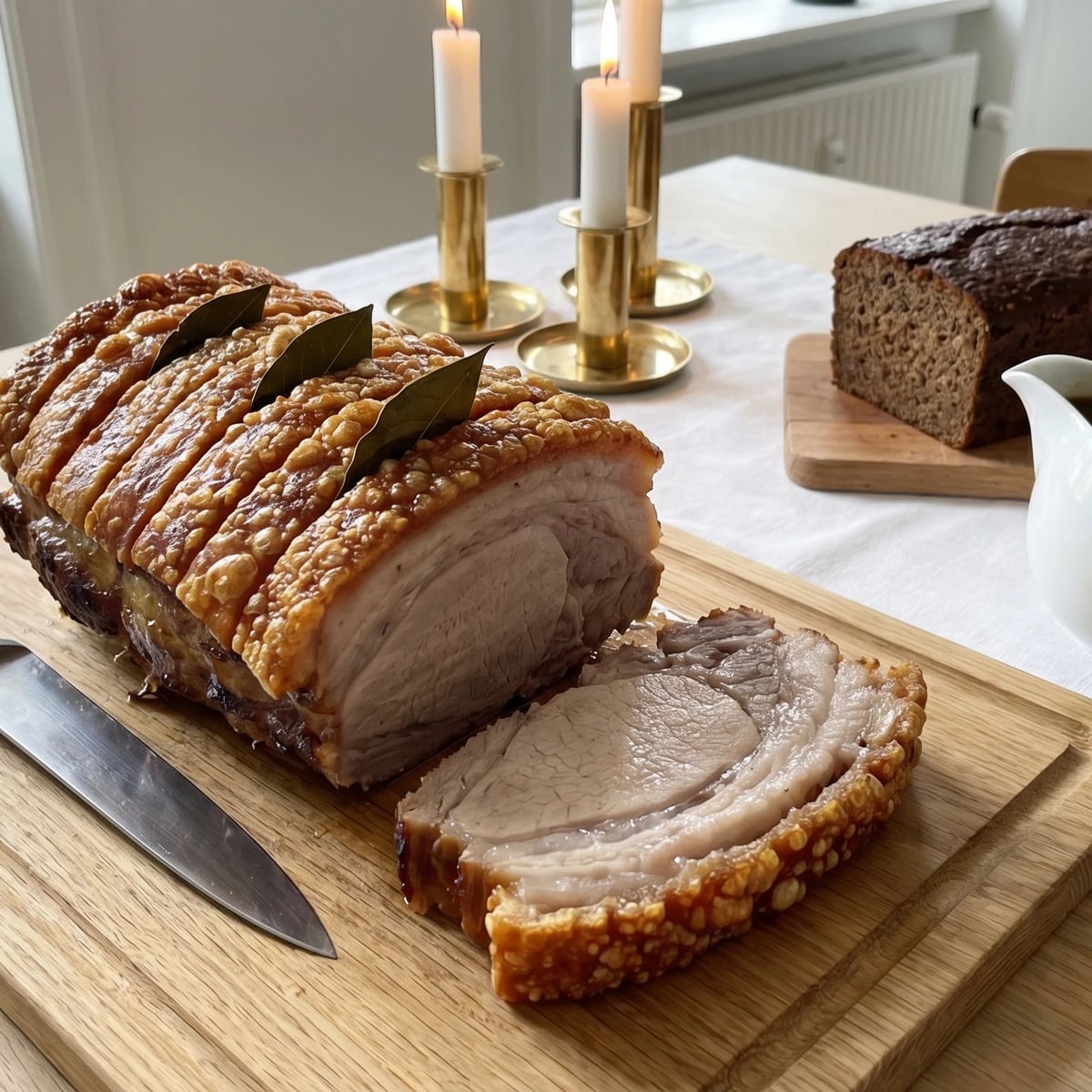
Ribbensteg
Created by Chef Freja
The pork belly roast that holds the center of juleaften. Rind scored tight and salted heavy, roasted hot then slow until the fat surrenders and the svaer pops golden and brittle across the whole surface.
December in Denmark is dark by three in the afternoon. The streets empty early, candles go into every window, and the whole country turns inward toward the kitchen. This is when ribbensteg begins to matter.
Ribbensteg is the roast that holds the center of juleaften, Christmas Eve, the most important meal of the Danish year. This is pork belly with its rind scored in tight parallel lines, packed with coarse salt, studded with bay leaves and cloves, and roasted until the fat melts away beneath the skin and the svaer (the crackling) pops into something golden and brittle that breaks apart under your teeth. The belly cut is fattier than the loin version of flaeskesteg, and that fat is your friend. It bastes the meat from the inside, keeps everything moist through the long roast, and gives you more room to get it right.
Three things decide whether your ribbensteg is good or great, and none of them happen in the oven. The rind must be scored in narrow, even lines without cutting through into the meat. The coarse salt must fill every groove and draw out moisture so the skin dries and blisters. And the bay leaves and cloves must be pressed into the cuts, where they release their oils slowly into the rendering fat. Get these right, and the oven does the rest. I'll walk you through every step, with the reasons behind each one, so that when you stand at your table on juleaften and lift the knife, you'll know exactly what you've done and why it worked.
Ingredients
pork belly
Quantity
2kg
bone-in, rind on, at room temperature
coarse sea salt
Quantity
3 tablespoons
bay leaves
Quantity
8
fresh or dried
| Ingredient | Quantity |
|---|---|
| pork bellybone-in, rind on, at room temperature | 2kg |
| coarse sea salt | 3 tablespoons |
| bay leavesfresh or dried | 8 |