Culinary Advisor
A cooking platform built around craft, culture, and the stories behind what we eat.
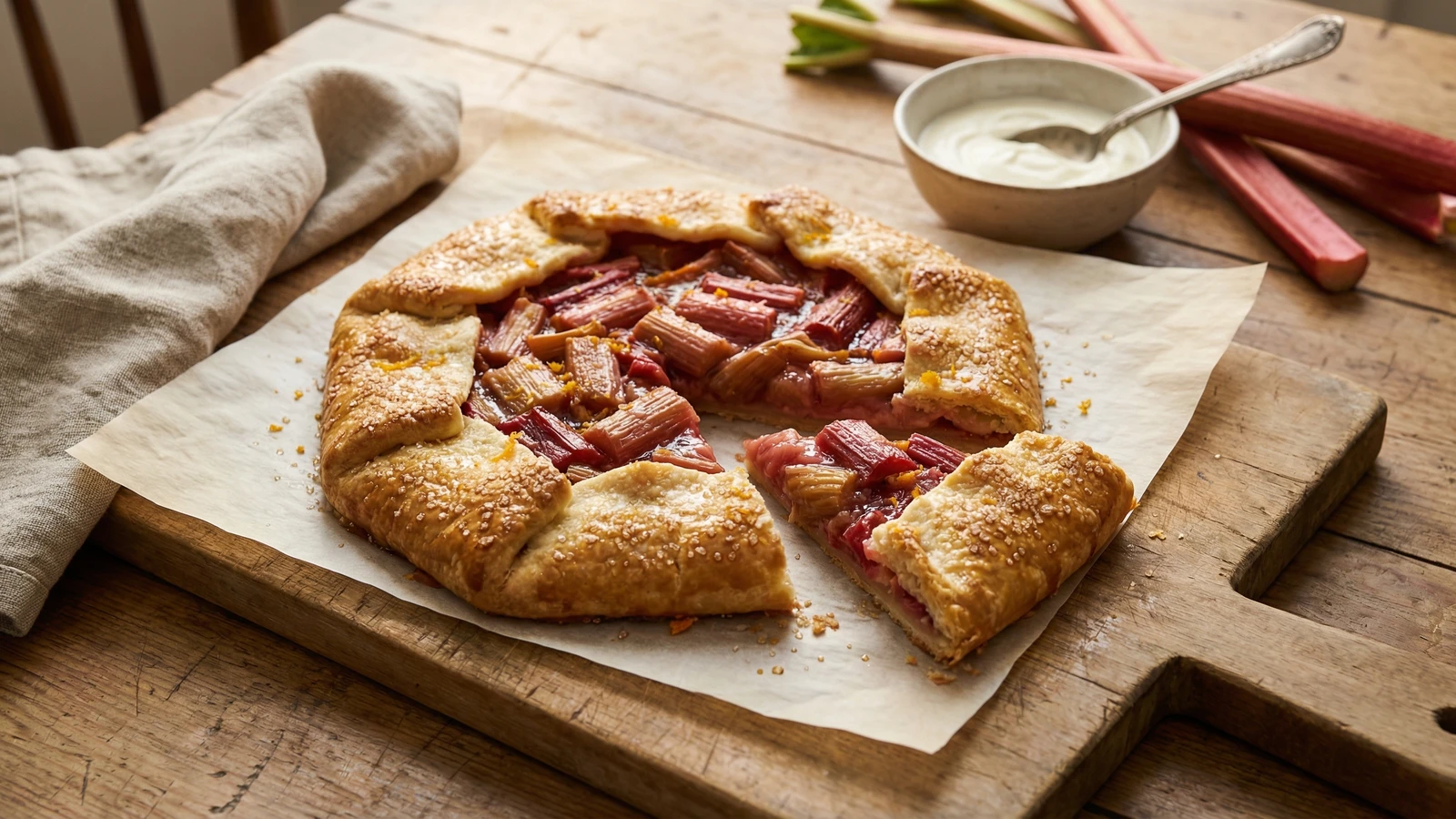
Rhubarb Galette with Orange Zest
Created by Chef Ally
A rustic free-form tart where pink rhubarb stalks collapse into tender, jammy pools against golden butter pastry, brightened with orange zest and finished with a whisper of sugar.
Rhubarb arrives when you need it most. After months of citrus and stored apples, those pink and crimson stalks push through the cold soil, and suddenly the farmers market feels alive again. This is spring's first fruit, technically a vegetable, but we treat it like the treasure it is.
A galette asks almost nothing of you. No special pan, no crimping technique, no anxiety about whether it will release from the tin. You roll the dough, pile on the fruit, fold the edges, and bake. The imperfection is the beauty. Every galette looks handmade because it is.
The orange zest matters here. Rhubarb is bracingly tart, almost aggressive, and the orange rounds those sharp edges without masking the character. A little sugar, a little zest, and the fruit does everything else. This is what I mean when I say perfect ingredients need almost nothing done to them.
Find rhubarb with stalks that are firm and glossy, not limp or browning at the edges. The color can range from pale green to deep crimson. Deeper color often means sweeter, but any fresh stalk will serve you well. Ask your farmer when it was cut. Rhubarb that was in the ground yesterday tastes different from rhubarb that rode in a truck for a week.
The technique, the tradition, and the story behind every dish.
Discover Culinary AdvisorIngredients
all-purpose flour
Quantity
1 1/4 cups (160g)
granulated sugar (for dough)
Quantity
1 tablespoon
fine sea salt
Quantity
1/2 teaspoon
cold unsalted butter
Quantity
1/2 cup (1 stick/113g)
cut into 1/2-inch cubes
ice water
Quantity
4 to 5 tablespoons
fresh rhubarb stalks
Quantity
1 1/2 pounds
granulated sugar (for filling)
Quantity
2/3 cup (130g)
cornstarch
Quantity
2 tablespoons
orange
Quantity
1 large
zested
fine sea salt (for filling)
Quantity
1/4 teaspoon
large egg
Quantity
1
heavy cream or whole milk
Quantity
1 tablespoon
turbinado sugar
Quantity
2 tablespoons
for finishing
| Ingredient | Quantity |
|---|---|
| all-purpose flour | 1 1/4 cups (160g) |
| granulated sugar (for dough) | 1 tablespoon |
| fine sea salt | 1/2 teaspoon |
| cold unsalted buttercut into 1/2-inch cubes | 1/2 cup (1 stick/113g) |
| ice water | 4 to 5 tablespoons |
| fresh rhubarb stalks | 1 1/2 pounds |
| granulated sugar (for filling) | 2/3 cup (130g) |
| cornstarch | 2 tablespoons |
| orangezested | 1 large |
| fine sea salt (for filling) | 1/4 teaspoon |
| large egg | 1 |
| heavy cream or whole milk | 1 tablespoon |
| turbinado sugarfor finishing | 2 tablespoons |
Equipment Needed
- •Large rimmed baking sheet
- •Parchment paper
- •Pastry blender or two forks
- •Microplane or fine grater for zesting
Instructions
- 1
Make the dough
Whisk the flour, one tablespoon sugar, and half teaspoon salt together in a large bowl. Add the cold butter cubes and work them into the flour using your fingertips or a pastry blender. You want irregular pieces ranging from pea-sized to the size of small almonds. This unevenness creates the flaky layers. Drizzle four tablespoons ice water over the mixture and stir with a fork until shaggy clumps form. If the dough feels too dry and will not hold together when you squeeze a handful, add another tablespoon of water.
Cold butter is everything. If your kitchen is warm, freeze the cubes for ten minutes before starting. - 2
Shape and chill
Turn the dough onto a lightly floured surface and gather it into a rough ball. Do not knead. Press it into a flat disk about an inch thick, wrap tightly in plastic, and refrigerate for at least one hour. The dough needs this rest. The gluten relaxes and the butter firms, and both make rolling easier and the finished pastry more tender.
- 3
Prepare the rhubarb
Trim the leaves and any dry ends from the rhubarb stalks. Leaves are not edible, so discard them completely. Cut the stalks on a slight diagonal into pieces about half an inch thick. The angle is not fussy; it simply makes them prettier. Place the pieces in a large bowl.
- 4
Season the filling
Zest the orange directly over the rhubarb so the fragrant oils fall onto the fruit. Add two-thirds cup sugar, cornstarch, and quarter teaspoon salt. Toss gently until every piece is coated. Let this sit while you roll the dough. The sugar will begin drawing out the juices, which the cornstarch will thicken during baking.
Zest only the orange part of the peel. The white pith beneath is bitter and will overpower the filling. - 5
Roll the dough
Preheat your oven to 400 degrees. Remove the dough from the refrigerator and let it soften just enough to roll, about five minutes. On a lightly floured sheet of parchment paper, roll the dough into a rough circle about twelve inches across and an eighth inch thick. Do not worry about making it perfect. Galettes are forgiving. Transfer the parchment with the dough onto a rimmed baking sheet.
- 6
Fill and fold
Mound the rhubarb in the center of the dough, leaving a border of about two inches around the edge. Spread the fruit into an even layer. Fold the edges of the dough up and over the filling, pleating as you go. Each fold should overlap the previous one slightly. The center stays open, showing off the pink and crimson fruit. Press gently to seal the pleats.
- 7
Finish and bake
Beat the egg with the cream in a small bowl. Brush this wash over the exposed pastry edges. The egg gives the crust its golden color and slight sheen. Sprinkle turbinado sugar over the egg wash and a bit over the fruit as well. The coarse crystals catch the light and add crunch. Bake until the crust is deeply golden and the rhubarb is bubbling and tender, forty to forty-five minutes. The juices may run a little onto the parchment. This is fine.
- 8
Cool and serve
Let the galette cool on the baking sheet for at least fifteen minutes. The filling needs time to set, or it will run everywhere when you slice. Serve warm or at room temperature. A spoonful of cold creme fraiche alongside is lovely but not required. The galette speaks for itself.
This tastes best the day it is made. The crust softens overnight, though it remains delicious.
Chef Tips
- •Seek out rhubarb at your farmers market rather than the grocery store. Ask when it was harvested. Stalks cut within the last day or two have an aliveness that older rhubarb lacks.
- •If you can find only green rhubarb, do not despair. The flavor is the same, though the color less dramatic. Toss in a few raspberries or strawberries for rosy color if you like.
- •European-style butter with higher fat content makes the flakiest crust. Look for butter labeled 82 to 84 percent butterfat.
- •The galette is done when you see active bubbling in the center of the filling. Underbaked rhubarb retains an unpleasant stringy texture.
Advance Preparation
- •The dough can be made up to three days ahead and refrigerated, or frozen for up to two months. Thaw overnight in the refrigerator before rolling.
- •The rhubarb filling can be prepared up to four hours ahead and refrigerated. The juices will collect at the bottom; simply stir before using.
Frequently Asked Questions
Nutrition Information
1 serving (about 130g)
Where cooking meets culture.
Culinary mentorship, cultural storytelling, and the editorial depth that makes cooking meaningful.
Explore Culinary Advisor