Culinary Advisor
A cooking platform built around craft, culture, and the stories behind what we eat.
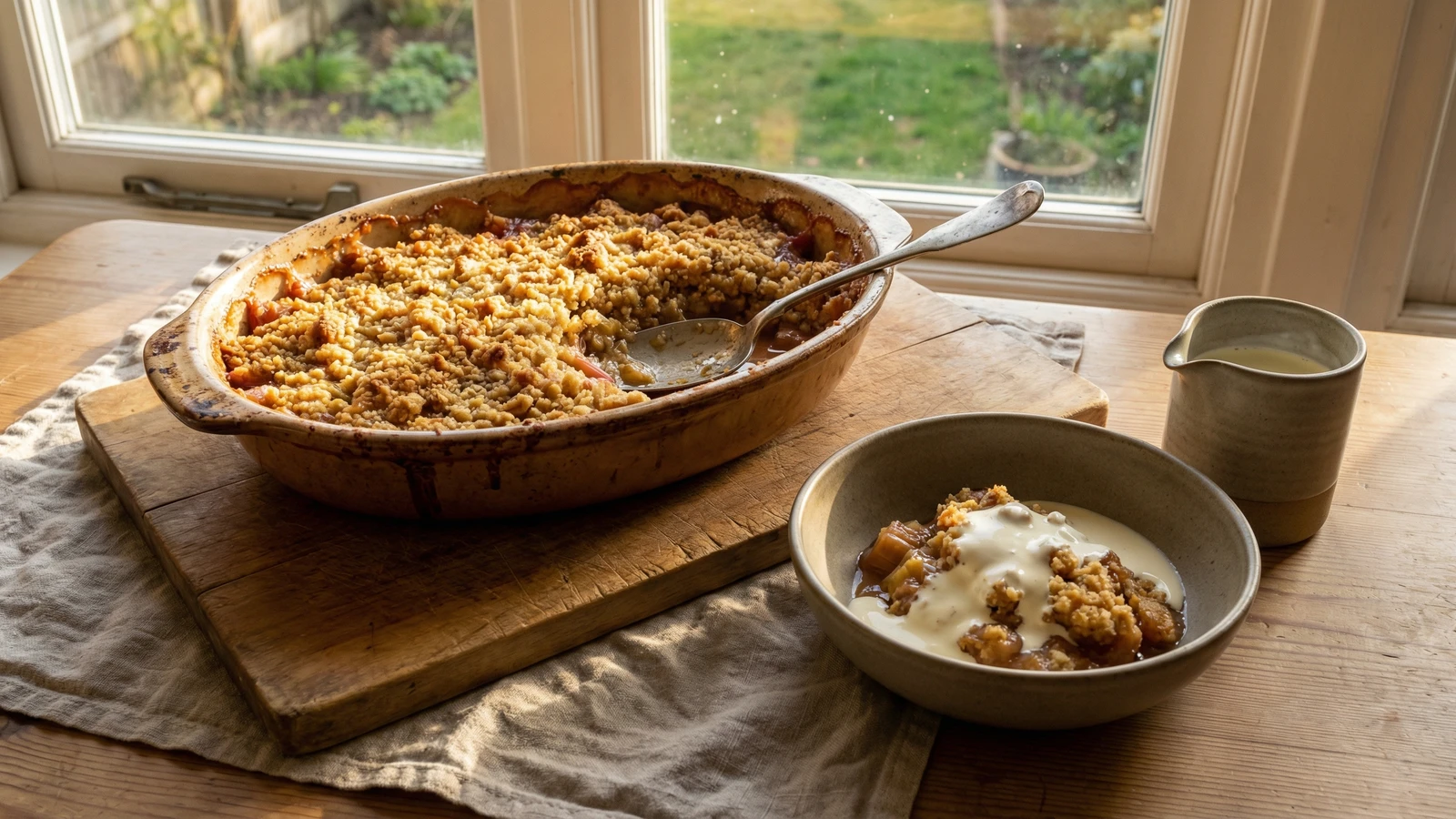
Rhubarb Crumble with Ginger
Created by Chef Thomas
Forced rhubarb baked under a gingered crumble until the juices bubble up pink through the cracks, the kind of pudding that makes a February evening feel like it was going somewhere all along.
February is a lean month. The garden is asleep, the market is a parade of root vegetables and stored apples, and most evenings end with the same question: what, honestly, is for pudding. And then the forced rhubarb arrives, impossible pink stalks grown in the dark of Yorkshire sheds, and suddenly the cold months have a point.
This is the pudding I make more than any other between January and March. Rhubarb, sugar, ginger, and a proper crumble on top. Nothing clever. The ginger matters, though. Rhubarb and ginger belong together the way apples belong with cinnamon. One sharpens the other, and the warmth of the ginger answers the sourness of the fruit like they were waiting to meet. If you've got a jar of stem ginger in the cupboard, a chopped piece and a spoonful of its syrup lift the whole thing. If you haven't, ground ginger alone does the job perfectly well.
The crumble itself is the usual business. Flour, butter, sugar, a handful of oats for texture, rubbed together until it looks like rough breadcrumbs with a few larger pebbles still holding on. Those big lumps are the ones you want. They go dark and craggy at the edges, almost toffee-ish, and they're what separates a crumble worth making from one you won't remember.
I wrote it down in the notebook years ago: "Rhubarb. Ginger. Friday. Rain." It's the whole recipe, really. Everything else is just the how.
The technique, the tradition, and the story behind every dish.
Discover Culinary AdvisorIngredients
forced rhubarb
Quantity
800g
trimmed and cut into 4cm lengths
golden caster sugar
Quantity
100g
ground ginger
Quantity
1 teaspoon
stem ginger in syrup (optional)
Quantity
1 piece
finely chopped
stem ginger syrup (optional)
Quantity
1 tablespoon
orange zest
Quantity
from 1 orange
plain flour
Quantity
200g
cold unsalted butter
Quantity
150g
cubed
light brown soft sugar
Quantity
100g
rolled oats
Quantity
50g
ground ginger (for the crumble)
Quantity
1 teaspoon
fine sea salt
Quantity
pinch
double cream or proper custard
Quantity
to serve
| Ingredient | Quantity |
|---|---|
| forced rhubarbtrimmed and cut into 4cm lengths | 800g |
| golden caster sugar | 100g |
| ground ginger | 1 teaspoon |
| stem ginger in syrup (optional)finely chopped | 1 piece |
| stem ginger syrup (optional) | 1 tablespoon |
| orange zest | from 1 orange |
| plain flour | 200g |
| cold unsalted buttercubed | 150g |
| light brown soft sugar | 100g |
| rolled oats | 50g |
| ground ginger (for the crumble) | 1 teaspoon |
| fine sea salt | pinch |
| double cream or proper custard | to serve |
Equipment Needed
- •Shallow ceramic or enamel baking dish, about 25cm
- •Wide mixing bowl
- •Microplane or fine grater for the orange zest
Instructions
- 1
Heat the oven
Set the oven to 190C/170C fan. A proper, confident heat. You want the crumble to go golden without the fruit turning to mush underneath.
A shallow baking dish is better than a deep one. More surface area means more crumble topping per spoonful, which is the whole reason anyone makes a crumble. - 2
Dress the rhubarb
Tip the rhubarb into a baking dish, something ceramic or enamel, about 25cm across. Scatter over the caster sugar, the teaspoon of ground ginger, the chopped stem ginger if you're using it, a spoonful of its syrup, and the orange zest. Give it a gentle toss with your hands so everything is coated. The rhubarb will look impossibly pink at this point. Don't worry if it seems underdressed. It releases a surprising amount of juice in the oven.
- 3
Make the crumble
In a wide bowl, tip in the flour, the cubed butter, the second teaspoon of ground ginger, and the pinch of salt. Rub the butter into the flour with your fingertips, lifting the mixture as you work so it stays cool. You're after the texture of rough breadcrumbs with a few larger, pebbly bits still holding their shape. Those bigger lumps become the craggy golden bits on top, and they're the best part. Stir through the brown sugar and the oats.
Cold hands, cold butter. If the kitchen is warm and the butter starts to smear rather than crumble, put the bowl in the fridge for ten minutes and come back to it. - 4
Top the rhubarb
Scatter the crumble over the rhubarb in an even, generous layer. Don't press it down. A loose topping gives you those craggy peaks that go dark and sticky at the edges. Leave it a little uneven. This isn't the place for precision.
- 5
Bake until golden
Slide the dish onto the middle shelf and bake for thirty-five to forty minutes. You'll know it's ready when the top is deeply golden, the kitchen smells of caramelized sugar and warm ginger, and the rhubarb juices are bubbling up through the cracks in a deep pink syrup. Trust your nose more than the clock. When it smells ready, it usually is.
- 6
Rest and serve
Let it sit on the side for ten minutes before serving. This isn't optional. Straight from the oven, the juices are lava and the crumble hasn't settled. Ten minutes of patience gives you a pudding you can actually eat. Spoon into warm bowls and pour cold cream over the top, or proper custard if you've made it. The cold cream against the warm fruit is most of the pleasure.
Chef Tips
- •Forced rhubarb is the hero here. The pale, hothouse-grown stalks from Yorkshire are in season from January to March, and they're the pinkest, most tender rhubarb you'll find all year. If you can only get the tougher outdoor rhubarb, it still works, but you may need a touch more sugar to balance its sharpness.
- •Don't skip the resting time after baking. Ten minutes on the side transforms the pudding. The juices thicken slightly, the topping settles, and the whole thing becomes something you can actually eat instead of burning your mouth on. Patience is an ingredient.
- •Cream or custard, not both. Cream is cleaner and lets the ginger sing. Custard is cosier and turns the whole pudding into a hug. Choose based on the evening. On a really cold night, custard wins every time.
- •Leftover crumble for breakfast is one of life's quiet pleasures. Cold, straight from the dish, standing at the counter with a spoon. Nobody needs to know.
Advance Preparation
- •The crumble topping can be made up to three days ahead and kept in an airtight container in the fridge. It can also be frozen for up to a month and used straight from the freezer, adding a few extra minutes to the baking time.
- •The whole pudding can be assembled a few hours ahead and kept in the fridge until you're ready to bake. Take it out twenty minutes before it goes in the oven so the dish isn't fridge-cold.
- •Leftovers keep in the fridge for up to three days. Reheat gently in a low oven, or eat cold for breakfast, which is arguably better.
Frequently Asked Questions
Nutrition Information
1 serving (about 250g)
Where cooking meets culture.
Culinary mentorship, cultural storytelling, and the editorial depth that makes cooking meaningful.
Explore Culinary Advisor