Culinary Advisor
A cooking platform built around craft, culture, and the stories behind what we eat.
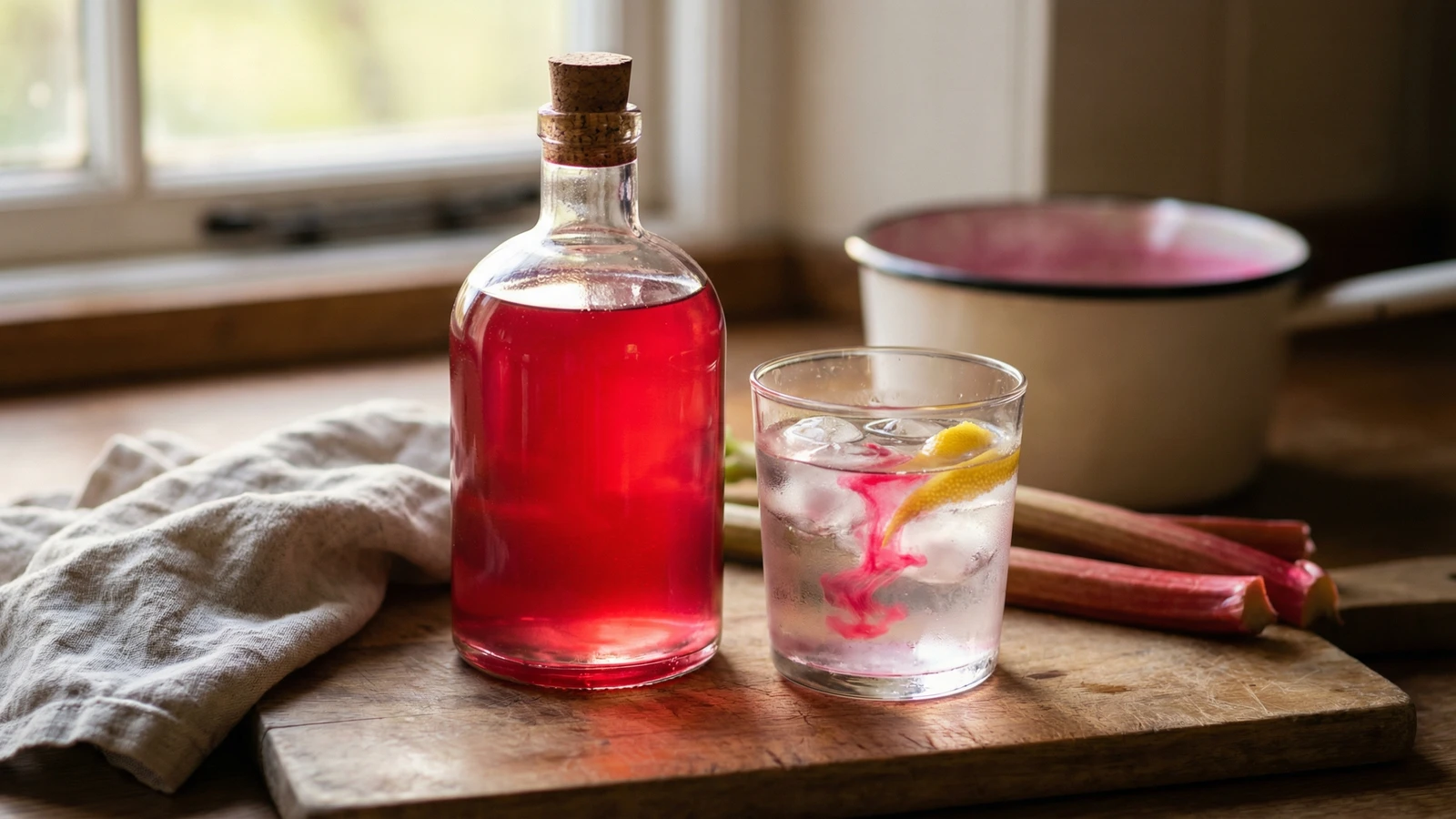
Rhubarb Cordial
Created by Chef Thomas
Forced rhubarb simmered gently with sugar and lemon until it gives up a bright pink syrup, ready in the fridge for a glass of cold water on the first afternoon that feels like spring.
The forced rhubarb turns up in the middle of winter, which is the first kind thing January does. Slender, almost luminous pink stalks, grown in the dark sheds of Yorkshire and harvested by candlelight. It's a ridiculous piece of agriculture and I'm glad it exists.
I bought a bundle on Saturday and didn't know what I wanted to do with it until I was walking home. Then I did. Cordial. A quiet pink syrup to keep in the fridge for the next few weeks, ready for a glass of cold water on a bright afternoon when the garden is finally starting to think about waking up. We're only making dinner, and dinner sometimes wants a drink beside it.
This is the simplest thing. Rhubarb, sugar, a lemon, some water. Simmer it gently until the stalks collapse and give up their colour, strain it through muslin, bottle it. You're done in under an hour and you've got something the colour of stained glass that tastes like the edge of spring every time you pour a splash into a cold tumbler.
I wrote it down in the notebook the first time I made it. 'Rhubarb. Pink. March. Worth it.' That was the whole entry. Some things don't need more than that.
The technique, the tradition, and the story behind every dish.
Discover Culinary AdvisorIngredients
forced rhubarb
Quantity
1kg
trimmed and chopped into 2-3cm pieces
golden caster sugar
Quantity
500g
water
Quantity
500ml
unwaxed lemon
Quantity
1
zest peeled in strips, juice reserved
| Ingredient | Quantity |
|---|---|
| forced rhubarbtrimmed and chopped into 2-3cm pieces | 1kg |
| golden caster sugar | 500g |
| water | 500ml |
| unwaxed lemonzest peeled in strips, juice reserved | 1 |
Equipment Needed
- •Heavy-bottomed saucepan
- •Vegetable peeler
- •Fine sieve
- •Muslin or clean tea towel
- •Sterilized glass bottles (around 1 litre capacity)
Instructions
- 1
Prepare the rhubarb
Trim the ends off the rhubarb and give the stalks a rinse. You don't need to peel forced rhubarb. The skin is tender and holds most of the colour, and the colour is the whole point. Chop into rough 2-3cm lengths. Don't worry about neat cuts. It's all going in the pan and will collapse anyway.
Forced rhubarb is the slender, almost luminous pink sort that turns up from January onwards. The outdoor rhubarb that arrives in April is greener and sharper and makes a quieter, paler cordial. Both are good. They just taste of different weeks. - 2
Into the pan
Put the rhubarb, sugar, and water into a heavy saucepan. Add the strips of lemon zest, taken off in wide ribbons with a peeler rather than grated, because ribbons are easier to fish out later. Set the pan over a medium heat and stir gently until the sugar has dissolved. The pan will start to smell bright and slightly perfumed, halfway between jam and a sweet shop.
- 3
Simmer gently
Bring it to a gentle simmer, then drop the heat low and let it cook for fifteen to twenty minutes. The rhubarb will soften, then slump, then collapse into the liquid, and the water will turn a deep, almost unreal pink. Don't stir too much. Don't let it boil hard. You're coaxing the colour out, not fighting it. When the stalks have given up their shape and the liquid looks like stained glass, it's done.
Trust your nose. When the kitchen smells sweet and tart at the same time, like the edge of a rhubarb crumble, the cordial is ready. - 4
Strain without pressing
Line a sieve with a piece of muslin or a clean tea towel and set it over a bowl. Tip the rhubarb and its liquid into the sieve and leave it to drip through on its own. Don't press the pulp down, however tempting. Pressed pulp makes cloudy cordial, and clarity is part of the pleasure here. Give it an hour. Go and do something else. Read something. Put the kettle on.
- 5
Finish and bottle
Pour the strained cordial back into the cleaned pan. Add the lemon juice, taste, and adjust. It should be sweet but with a clear, clean tartness behind it. Warm it through gently for a minute or two, just enough to marry everything, then take it off the heat. Pour into sterilized bottles while still warm and seal. Let them cool completely before they go into the fridge.
To sterilize bottles, wash them in hot soapy water, rinse, then dry in a low oven at 120C for ten minutes. Fill while both the bottles and the cordial are still warm.
Chef Tips
- •Forced rhubarb is the thing for the colour. That fluorescent pink doesn't come from anywhere else, and it's gone by late March. If you've missed the window, make it with early outdoor rhubarb instead. The cordial will be paler and a touch more grassy, but still very much worth making.
- •The leftover pulp in the muslin isn't rubbish. Stir it through thick yoghurt with a spoonful of honey, or spread it on toast like a loose jam. Waste is a failure of imagination.
- •A generous splash in a glass of cold sparkling wine turns an ordinary Friday into something else entirely. A tall glass with cold water, ice, and a slice of lemon on a warm afternoon is quieter but no less of a pleasure. Both count.
Advance Preparation
- •The cordial keeps in sterilized, sealed bottles in the fridge for up to three weeks. The colour softens slightly over time but the flavour holds.
- •Freezes beautifully in small portions. An ice cube tray is ideal. Pop a cube or two into a glass, top with cold water or sparkling wine, and you've got a ready-made drink with almost no effort.
Frequently Asked Questions
Nutrition Information
1 serving (about 72g)
Where cooking meets culture.
Culinary mentorship, cultural storytelling, and the editorial depth that makes cooking meaningful.
Explore Culinary Advisor