Culinary Advisor
A cooking platform built around craft, culture, and the stories behind what we eat.
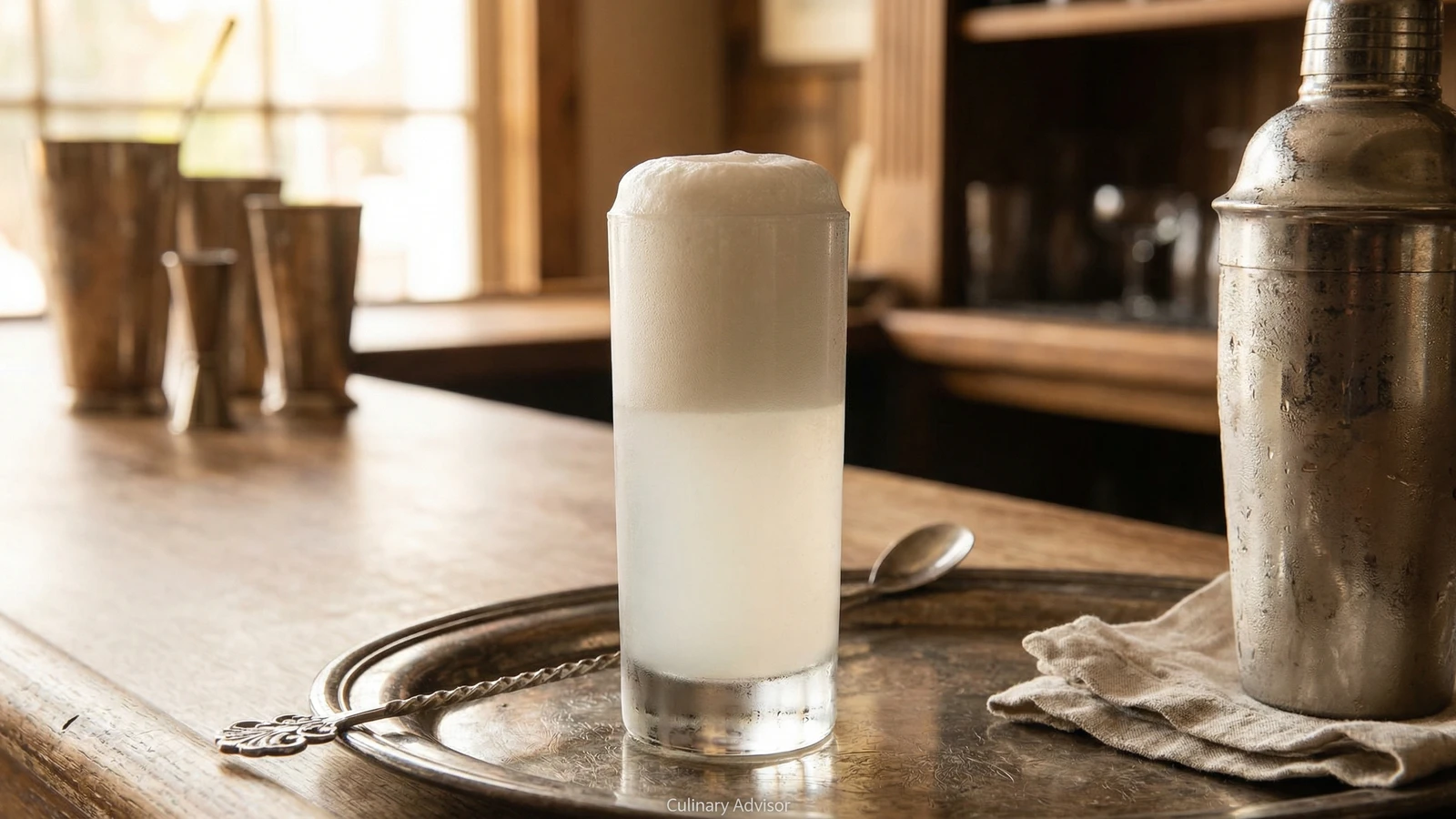
Ramos Gin Fizz
Created by Chef Remy
Henry Ramos's 1888 French Quarter masterpiece, a cloud of gin, cream, and orange blossom foam so impossibly light it rises above the glass, the cocktail that made New Orleans bartenders famous for their endurance and made guests famous for their patience.
This drink nearly broke the bartenders of New Orleans, and they loved every minute of it. When Henry C. Ramos created his gin fizz at the Imperial Cabinet Saloon in 1888, he did not just invent a cocktail. He invented a ritual, a test of stamina, and the most famous foam in American drinking history.
The original recipe called for twelve minutes of continuous shaking. Ramos employed teams of young men, the shaker boys, who would line up behind the bar passing tins down the line until each drink reached its proper consistency. During Mardi Gras, the Imperial Cabinet would have thirty-five shaker boys working at once, arms pumping, ice rattling, the whole bar humming with the rhythm of a drink being born.
At Lagniappe, we serve the Ramos at Sunday brunch, and I have watched guests' faces when that foam rises above the glass for the first time. It is equal parts cocktail and magic trick. The flavor is like nothing else: botanical gin softened by cream, brightened by citrus, haunted by the whisper of orange blossoms. It tastes like New Orleans on a spring morning, when the jasmine is blooming and the air carries the promise of something extraordinary.
I will not lie to you. This drink takes work. But Southern hospitality means giving your guests something worth waiting for, and a proper Ramos Gin Fizz is worth every second of that shake. Your arms will recover. The memory of that first sip will stay with you.
The technique, the tradition, and the story behind every dish.
Discover Culinary AdvisorIngredients
London dry gin
Quantity
2 ounces
heavy cream
Quantity
1 ounce
large egg white
Quantity
1
fresh lemon juice
Quantity
1/2 ounce
fresh lime juice
Quantity
1/2 ounce
simple syrup
Quantity
3/4 ounce
orange blossom water
Quantity
3 drops
chilled club soda
Quantity
2 ounces
| Ingredient | Quantity |
|---|---|
| London dry gin | 2 ounces |
| heavy cream | 1 ounce |
| large egg white | 1 |
| fresh lemon juice | 1/2 ounce |
| fresh lime juice | 1/2 ounce |
| simple syrup | 3/4 ounce |
| orange blossom water | 3 drops |
| chilled club soda | 2 ounces |
Equipment Needed
- •Cocktail shaker with tight seal
- •Fine mesh strainer
- •Jigger for precise measurement
- •Tall Collins or chimney glass (12-14 ounces)
- •Bar spoon for floating soda
Instructions
- 1
Chill your glass
Place a tall, narrow Collins glass in the freezer at least fifteen minutes before you start building your drink. The Ramos needs a cold vessel because that foam is delicate. A warm glass will deflate your work before the first sip. This is not optional. At Lagniappe, we keep a row of glasses in the freezer just for this drink.
A chimney or Collins glass works best. The narrow shape supports the foam column and creates that signature presentation where the foam rises above the rim. - 2
Combine the base ingredients
Add the gin, heavy cream, egg white, lemon juice, lime juice, and simple syrup to your cocktail shaker. Do not add ice yet. The order does not matter here because everything is about to get very well acquainted. Measure precisely on the citrus and simple syrup. This drink lives in balance, and a heavy hand on the sweet or sour will throw off the whole composition.
- 3
Add the orange blossom water
Now add exactly three drops of orange blossom water. Not four. Not a splash. Three drops. This ingredient separates a Ramos from any other fizz, but it will overpower everything if you get generous. The aroma should whisper of orange groves, not shout like a perfume counter. My grandmother Evangeline kept orange blossom water in her pantry for baking, and she taught me that restraint is everything with floral waters.
Orange blossom water loses potency once opened. Store it in a cool, dark place and replace it every six months if you want that ethereal floral note to come through properly. - 4
Dry shake vigorously
Seal your shaker and shake hard without ice for a full two minutes. This is the dry shake, and it is where the magic begins. The egg white needs to emulsify with the cream and citrus, building the foundation for that legendary foam. Your arms will burn. That is how you know you are doing it right. The sound will change from sloshing to a tighter, creamier rhythm as the proteins begin to trap air.
- 5
Add ice and shake again
Open the shaker and add a generous handful of ice cubes. Seal it back up and shake for another eight to twelve minutes. Yes, minutes. Henry Ramos employed teams of shaker boys who would pass the tins down a line, each one shaking until exhausted. The ice chills the mixture while the continued agitation builds that impossibly silky foam. You should hear the ice breaking down into smaller and smaller pieces. When it sounds like sand rattling in the tin, you are close.
No shame in using a stand mixer with a whisk attachment for the dry shake portion. Run it on high for two minutes, then transfer to your shaker with ice. The purists may grumble, but your arms will thank you. - 6
Strain into the glass
Remove your frosted glass from the freezer. Strain the cocktail through a fine mesh strainer into the glass, filling it about three-quarters full. The liquid should look like billowing clouds, pale and thick. Let it rest for thirty seconds. The foam needs a moment to settle and separate from the liquid below, creating distinct layers of froth above and creamy cocktail beneath.
- 7
Float the soda
Pour the chilled club soda slowly down a bar spoon or the inside of the glass. Watch the foam rise like a soufflé, pushing up and over the rim of the glass. This is the moment that makes people gasp. The soda lifts the foam into that signature cloud that hovers an inch or more above the glass. Do not stir. The soda and the cocktail will marry on their own terms.
Use fresh club soda from a newly opened bottle. Flat soda will not give you the lift you need for proper presentation. - 8
Serve immediately
Present the Ramos Gin Fizz without a straw. The proper way to drink it is to sip through the foam, letting the creamy head mingle with the citrus-bright liquid below. Each sip should be a little different as you work your way down. This cocktail waits for no one. The foam is ephemeral, and within ten minutes it will begin its slow collapse. Make it, serve it, drink it. That is the bayou way.
Chef Tips
- •For bridal showers and gatherings, batch the base ingredients without ice and refrigerate up to four hours ahead. When guests arrive, portion into shakers and do your dry shake and wet shake fresh. The foam cannot wait, but the base certainly can.
- •Fresh eggs make better foam. The proteins in older eggs break down and will not hold air as well. If your eggs have been sitting in the refrigerator for weeks, your foam will suffer.
- •A splash of heavy cream on top of the foam after the soda pour adds richness and helps the presentation hold longer. This is my personal adjustment at the restaurant.
- •If making multiple drinks, work in batches of two at most. Three Ramos cocktails in one shaker will not develop proper foam. The physics do not work.
- •Taste your simple syrup before you start. If you make it yourself with equal parts sugar and water, you have rich simple syrup. Store-bought is often standard (two parts sugar to one part water). Adjust your measurement accordingly.
Advance Preparation
- •Chill glasses in the freezer at least 15 minutes before serving, up to 24 hours ahead.
- •Make simple syrup up to two weeks ahead and refrigerate in a sealed container.
- •For parties, pre-measure gin, cream, citrus, and simple syrup into individual portions in small containers. Keep refrigerated until ready to shake. Add egg white and orange blossom water fresh.
- •Club soda must be freshly opened. Do not use leftover soda from yesterday.
Frequently Asked Questions
Nutrition Information
1 serving (about 240g)
Where cooking meets culture.
Culinary mentorship, cultural storytelling, and the editorial depth that makes cooking meaningful.
Explore Culinary Advisor