Culinary Advisor
A cooking platform built around craft, culture, and the stories behind what we eat.
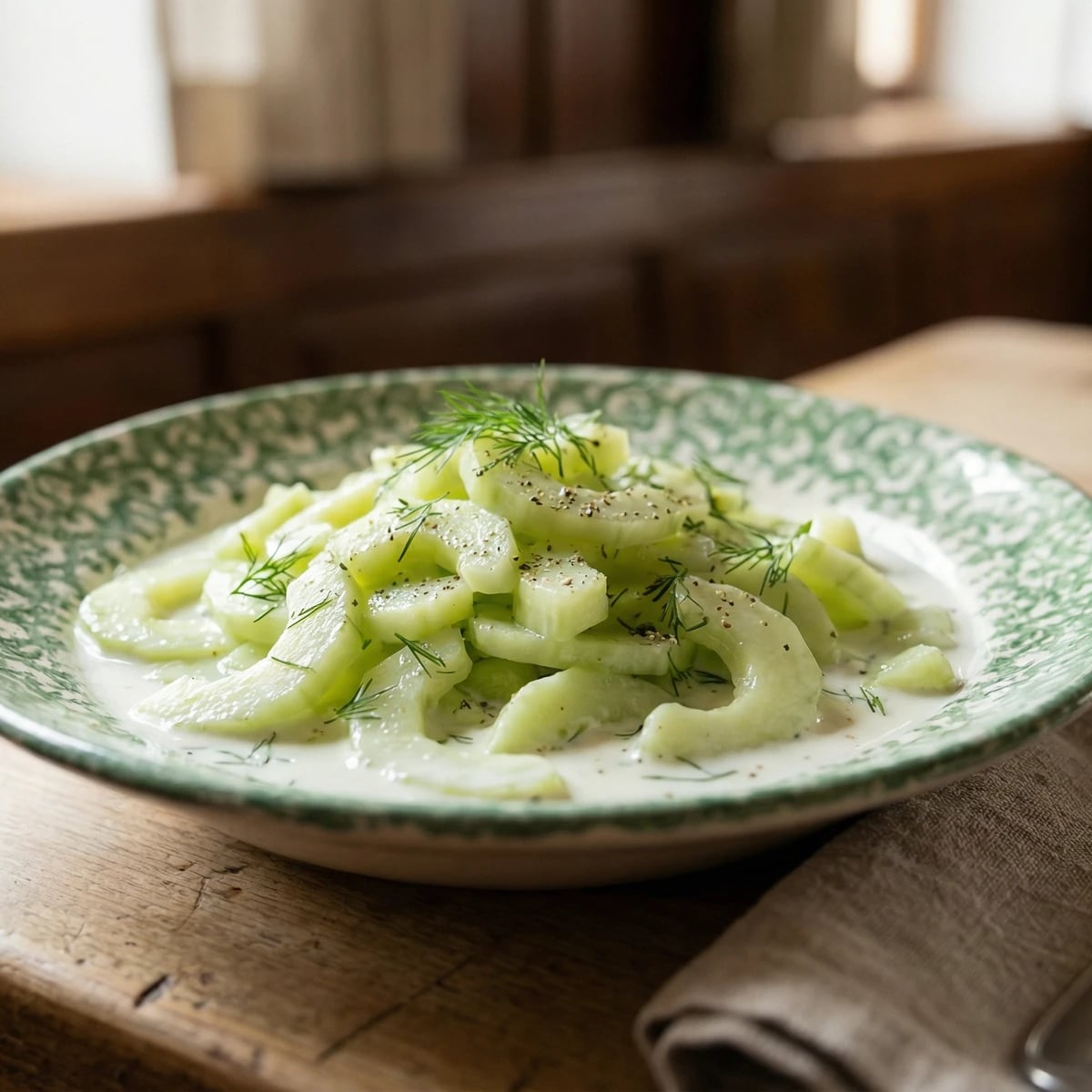
Rahmgurken
Created by Chef Elsa
Warm creamed cucumbers in a silky dill and sour cream sauce with a bright vinegar finish, the Austrian side dish that changes how you think about cucumbers forever.
The first time I served Rahmgurken to a friend from London, she looked at the plate and said, 'You cooked the cucumbers?' As if I'd done something reckless. I told her to taste it. She went quiet for a moment, then asked for the recipe. That's how it goes with Rahmgurken. Nobody believes in it until they try it.
In my grandmother Eva's kitchen in Kent, warm cucumber was never strange. Gretel always said that the Austrian kitchen doesn't waste good vegetables on salads alone. Cucumbers have a delicate sweetness that comes alive when you cook them gently in butter and let them braise in cream. Raw, they're refreshing. Warm, they become something else entirely: tender, almost silky, with a flavor that sits somewhere between melon and summer herbs.
The technique is simple and the ingredients are plain. You peel and salt the cucumbers to draw out excess water, then braise them in a sauce built from butter, a whisper of flour, sour cream, and good white wine vinegar. Fresh dill goes in at the end so it stays bright. The vinegar matters more than you think. Without it, the dish is flat. With it, everything lifts.
Rahmgurken belongs next to Tafelspitz or a plain roasted chicken or a piece of poached fish. It's a Beilage, a side dish, and like all good Austrian Beilagen, it doesn't shout. It sits on the plate quietly and then steals the whole meal. This is good Austrian home cooking at its most honest.
Ingredients
cucumbers
Quantity
1 kg (about 3 large)
firm with small seeds
fine salt (for drawing moisture)
Quantity
1 tablespoon
onion
Quantity
1 medium
finely diced
| Ingredient | Quantity |
|---|---|
| cucumbersfirm with small seeds | 1 kg (about 3 large) |
| fine salt (for drawing moisture) | 1 tablespoon |
| onionfinely diced | 1 medium |