Culinary Advisor
A cooking platform built around craft, culture, and the stories behind what we eat.
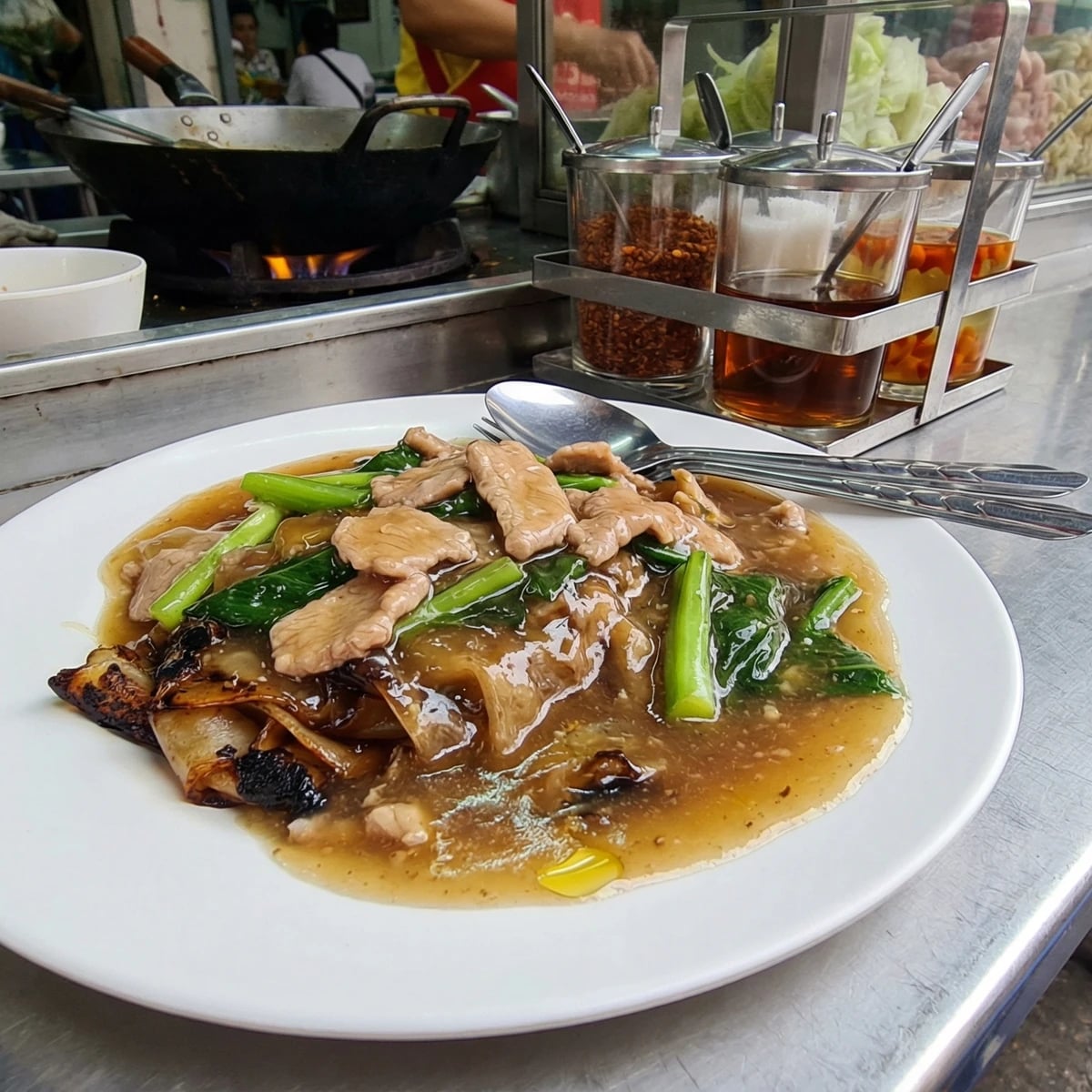
Gravy Noodles (Rad Na)
Created by Chef Fai
Char the noodles until they're almost burnt, dark and smoky from the wok. Then pour the gravy on top. That contrast, crispy meeting silky, salty meeting sweet, is the whole design. Without the char, it's just wet noodles.
Rad na is a technique lesson disguised as a noodle dish. The principle is contrast: crispy against silky, smoky against savory, charred starch against thickened broth. And the entire dish lives or dies on one moment, the thirty seconds your noodles spend in a screaming hot wok with dark soy sauce.
Ajarn always said that Thai cooking is governed by the four pillars: fish sauce for salt, palm sugar for sweet, tropical acids for sour, chili for heat. Rad na follows the system, but it also teaches you something else. Technique is a pillar too. You can have every ingredient measured perfectly and still produce garbage if you skip the char. The noodles must be seared until they're dark, almost burnt on the edges, with a smoky crust that holds up under the weight of the gravy. That's not a nice-to-have. That's the foundation.
This dish is pure Central Thai noodle shop culture. Teochew Chinese roots, sure, but Bangkok made it Thai. The seasoning tells you everything: fish sauce sits next to oyster sauce, tao jiew (fermented soybean sauce) shares space with nam pla. That's the genius of Bangkok street food. It absorbs influence and governs it with Thai principles. The condiment caddy at every kuay tiew shop tells the rest of the story: sugar, chili flakes, fish sauce, prik nam som (chili vinegar). Four jars. The cook gets you eighty percent there. You finish the balance at the table.
I learned rad na watching the noodle vendor outside Khlong Toei market. She'd separate each order's worth of sen yai, slap them into a wok so hot the oil was nearly smoking, toss twice, and have charred noodles on the plate in twenty seconds. Then the gravy, thick as wallpaper paste, loaded with pak kana stems and sliced pork, poured right over the top. Sixty seconds start to finish. No recipe on the wall. Just thirty years of knowing what the wok sounds like when it's ready.
Ingredients
fresh wide rice noodles (sen yai)
Quantity
400g
dark soy sauce (si ew dam)
Quantity
2 tablespoons
for charring the noodles
pork loin
Quantity
200g
sliced thin against the grain
| Ingredient | Quantity |
|---|---|
| fresh wide rice noodles (sen yai) | 400g |
| dark soy sauce (si ew dam)for charring the noodles | 2 tablespoons |
| pork loinsliced thin against the grain | 200g |