Culinary Advisor
A cooking platform built around craft, culture, and the stories behind what we eat.
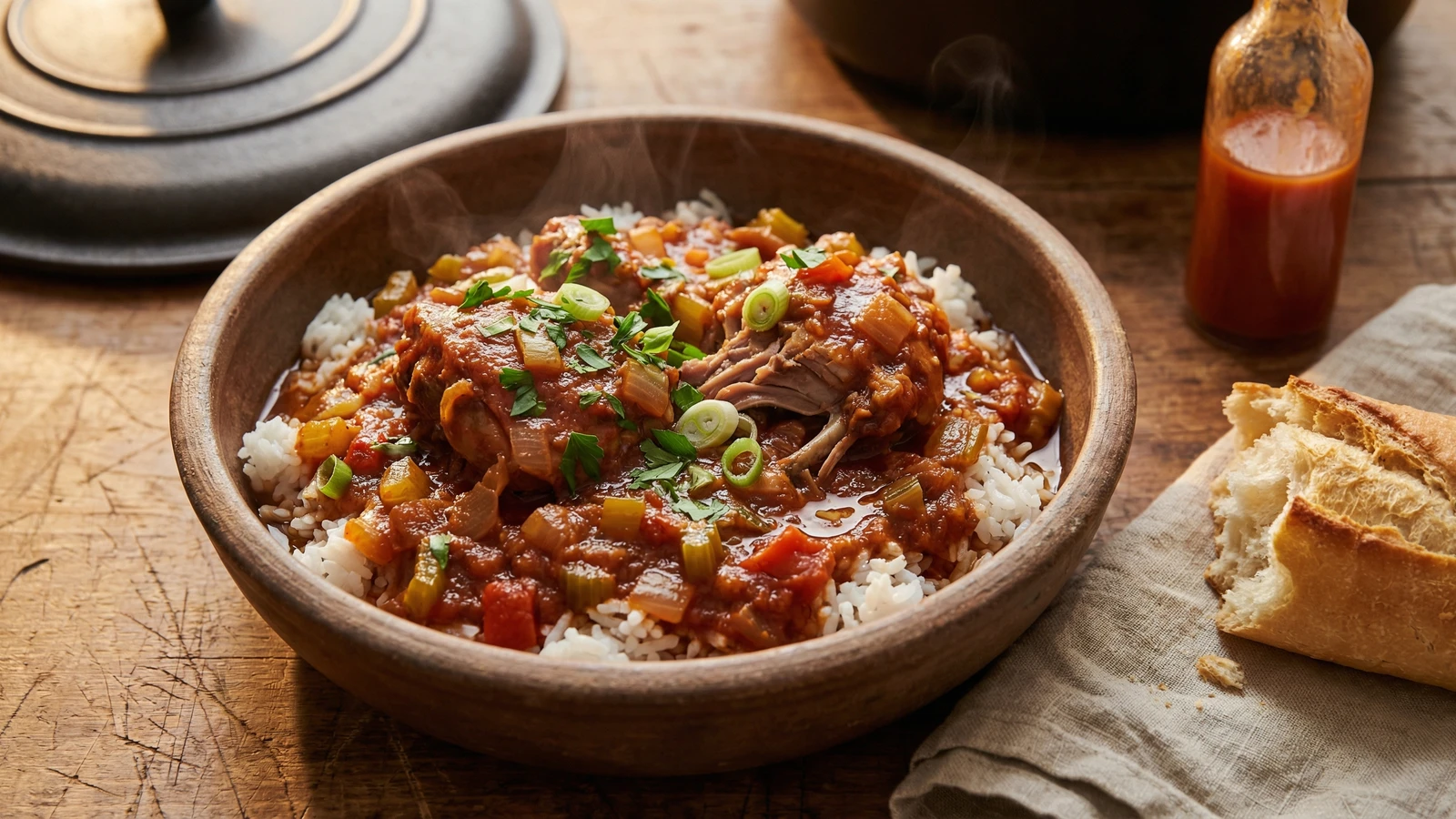
Rabbit Sauce Piquante
Created by Chef Remy
Fork-tender rabbit simmered low and slow in a fiery tomato sauce built on the holy trinity, with layers of cayenne heat that build and bloom, served over steaming rice the way generations of Louisiana cooks have done before us.
Sauce piquante is where Cajun cooking shows its teeth. This isn't gentle food. It's bold, spicy, and unapologetic, the kind of dish that warms you from the inside out and makes you reach for another cold beer. The word piquante means stinging, and that's exactly what this sauce should do: wake up your mouth and keep it interested.
My grandmother Evangeline made this with whatever game my grandfather brought home. Rabbit, squirrel, sometimes turtle when the trapping was good. The protein changes, but the technique stays the same: brown your meat hard, build your sauce with patience, and let everything get acquainted over low heat until the meat falls apart at the suggestion of a fork.
At Lagniappe, we serve rabbit sauce piquante when the weather turns cool. There's something about a bowl of this over rice that makes people settle into their chairs and stay awhile. The heat sneaks up on you. First bite seems almost tame, then the cayenne blooms across your tongue, and by the third spoonful you're reaching for your napkin. That's the bayou way.
Don't be shy with the seasoning here. Season the rabbit before it hits the pan. Season the trinity when it goes in. Taste and adjust at the end. You're building flavor in layers, and each layer matters.
The technique, the tradition, and the story behind every dish.
Discover Culinary AdvisorIngredients
rabbits
Quantity
2 (2 1/2 to 3 pounds each)
cut into serving pieces
Cajun seasoning blend
Quantity
3 tablespoons, divided
vegetable oil
Quantity
1/2 cup
all-purpose flour
Quantity
1/2 cup
yellow onions
Quantity
2 large
diced
celery stalks
Quantity
4
diced
green bell peppers
Quantity
2 large
diced
garlic
Quantity
8 cloves
minced
crushed tomatoes
Quantity
1 can (28 ounces)
diced tomatoes
Quantity
1 can (14.5 ounces)
with juices
tomato paste
Quantity
3 tablespoons
chicken stock
Quantity
3 cups
bay leaves
Quantity
2
dried thyme
Quantity
1 teaspoon
cayenne pepper
Quantity
1 teaspoon, plus more to taste
black pepper
Quantity
1 teaspoon
freshly ground
kosher salt
Quantity
1 teaspoon, plus more to taste
crushed red pepper flakes
Quantity
1/2 teaspoon
Worcestershire sauce
Quantity
1 tablespoon
hot sauce
Quantity
1 tablespoon
Louisiana-style
green onions
Quantity
1/2 cup
sliced, white and green parts
fresh parsley
Quantity
1/4 cup
chopped
white rice
Quantity
for serving
cooked
| Ingredient | Quantity |
|---|---|
| rabbitscut into serving pieces | 2 (2 1/2 to 3 pounds each) |
| Cajun seasoning blend | 3 tablespoons, divided |
| vegetable oil | 1/2 cup |
| all-purpose flour | 1/2 cup |
| yellow onionsdiced | 2 large |
| celery stalksdiced | 4 |
| green bell peppersdiced | 2 large |
| garlicminced | 8 cloves |
| crushed tomatoes | 1 can (28 ounces) |
| diced tomatoeswith juices | 1 can (14.5 ounces) |
| tomato paste | 3 tablespoons |
| chicken stock | 3 cups |
| bay leaves | 2 |
| dried thyme | 1 teaspoon |
| cayenne pepper | 1 teaspoon, plus more to taste |
| black pepperfreshly ground | 1 teaspoon |
| kosher salt | 1 teaspoon, plus more to taste |
| crushed red pepper flakes | 1/2 teaspoon |
| Worcestershire sauce | 1 tablespoon |
| hot sauceLouisiana-style | 1 tablespoon |
| green onionssliced, white and green parts | 1/2 cup |
| fresh parsleychopped | 1/4 cup |
| white ricecooked | for serving |
Equipment Needed
- •Large Dutch oven or heavy-bottomed pot (6-quart minimum)
- •Wooden spoon for stirring
- •Whisk for the roux
- •Meat thermometer (optional)
Instructions
- 1
Season the rabbit generously
Pat the rabbit pieces completely dry with paper towels. Wet meat will not brown, it will steam, and steamed rabbit has no soul. Sprinkle two tablespoons of Cajun seasoning over all the pieces, rubbing it into every surface. Let the meat sit at room temperature for twenty minutes while you prep your vegetables. This gives the seasoning time to penetrate and brings the meat closer to room temperature for more even cooking.
If you can't find rabbit, this sauce piquante works beautifully with chicken thighs and legs. Same technique, same result. But try the rabbit if you can get it. - 2
Brown the rabbit in batches
Heat the oil in a large Dutch oven or heavy-bottomed pot over medium-high heat until it shimmers and a pinch of flour sizzles immediately when dropped in. Working in batches so you don't crowd the pot, brown the rabbit pieces on all sides, about four minutes per side. You want deep golden-brown color, not pale and anemic. The fond (those brown bits stuck to the bottom) is pure flavor waiting to happen. Transfer browned pieces to a plate and repeat until all the rabbit is done.
Crowding the pot drops the temperature and causes steaming instead of browning. Work in two or three batches. Patience here pays off in flavor later. - 3
Build a blond roux
Reduce heat to medium. Add the flour to the hot oil in the pot, whisking constantly. You're making a roux, but not as dark as you'd go for gumbo. Cook this roux to a blond color, about seven to eight minutes of constant stirring. It should smell nutty and look like peanut butter. The tomatoes will add plenty of color and body, so you don't need a dark roux here. If you see black specks, you've burned it. Start over.
A blond roux still has thickening power. Darker rouxs lose that ability but gain flavor. For sauce piquante, you want both, so stop at blond. - 4
Add the holy trinity
Add the onions, celery, and bell peppers to the roux all at once. The pot will sizzle and complain. That's exactly what you want. Stir constantly for the first minute to coat everything in the roux, then continue cooking, stirring often, until the vegetables soften and the onions turn translucent, about ten to twelve minutes. The mixture will go from stiff to loose as the vegetables release their water. Add the remaining tablespoon of Cajun seasoning and stir to combine.
- 5
Bloom the garlic and tomato paste
Push the vegetables to the sides of the pot and add the garlic to the center. Let it sizzle for thirty seconds until fragrant, then stir it into the vegetables. Add the tomato paste and cook for two minutes, stirring constantly. The paste will darken slightly and turn brick red. This blooming step removes the raw, tinny taste and deepens the tomato flavor. Your kitchen should smell like Louisiana right now.
- 6
Build the sauce base
Pour in the crushed tomatoes, diced tomatoes with their juices, and chicken stock. Use a wooden spoon to scrape up all those beautiful brown bits from the bottom of the pot. Add the bay leaves, thyme, cayenne, black pepper, salt, and red pepper flakes. Stir everything together and bring to a simmer. The sauce should be brick red and aromatic, with a gentle heat when you taste it. It will intensify as it cooks.
- 7
Braise the rabbit low and slow
Nestle the browned rabbit pieces into the sauce, making sure they're mostly submerged. If the sauce doesn't cover the meat, add a splash more stock. Reduce heat to low, cover the pot, and let it simmer gently for one and a half to two hours. Check occasionally and stir gently, being careful not to break up the meat. The rabbit is done when it's fork-tender and wants to fall off the bone. The sauce should be thick enough to coat the back of a spoon.
Low and slow is the rule here. If the sauce is bubbling aggressively, your heat is too high. You want lazy bubbles, not a rolling boil. High heat makes tough meat. - 8
Adjust seasoning and finish
Remove the bay leaves. Add the Worcestershire sauce and hot sauce, then stir gently. Now taste. This is the most important step. Does it need more salt? More cayenne? Trust your palate. The heat should build as you eat, not knock you out on the first bite. Add the green onions and half the parsley, stirring to combine. Let everything simmer together for five more minutes so the flavors marry.
- 9
Serve over rice
Ladle the rabbit and plenty of sauce over mounds of hot white rice in deep bowls. Sprinkle the remaining parsley over each serving. Set out extra hot sauce for those who want to push the heat further. Serve with crusty French bread for sopping up every last drop of that spicy, tomatoey goodness. When the last bite is as good as the first, you've done it right.
Chef Tips
- •Ask your butcher to cut the rabbits into serving pieces if you're not comfortable doing it yourself. You want the front legs, hind legs, and saddle cut into two or three pieces each.
- •Sauce piquante is even better the next day after the flavors have had time to deepen and meld. Make it ahead for a dinner party and reheat gently.
- •If you prefer less heat, start with half the cayenne and add more at the end. You can always add spice, but you can't take it away. At Lagniappe, we serve this with fire, but I'd rather you enjoy it at your comfort level.
- •A cold beer is the traditional pairing. Something crisp and light to cut through the richness and cool the heat. Abita Amber or a simple lager works beautifully.
- •Save the rabbit bones and scraps for stock. Rabbit stock is liquid gold for future gumbos and stews.
Advance Preparation
- •The complete sauce piquante can be made up to three days ahead and refrigerated. The flavor improves with time as the spices meld and mellow slightly.
- •Reheat gently over low heat, adding a splash of stock if the sauce has thickened too much.
- •This dish freezes well for up to three months. Thaw overnight in the refrigerator before reheating.
Frequently Asked Questions
Nutrition Information
1 serving (about 550g)
Where cooking meets culture.
Culinary mentorship, cultural storytelling, and the editorial depth that makes cooking meaningful.
Explore Culinary Advisor