Culinary Advisor
A cooking platform built around craft, culture, and the stories behind what we eat.
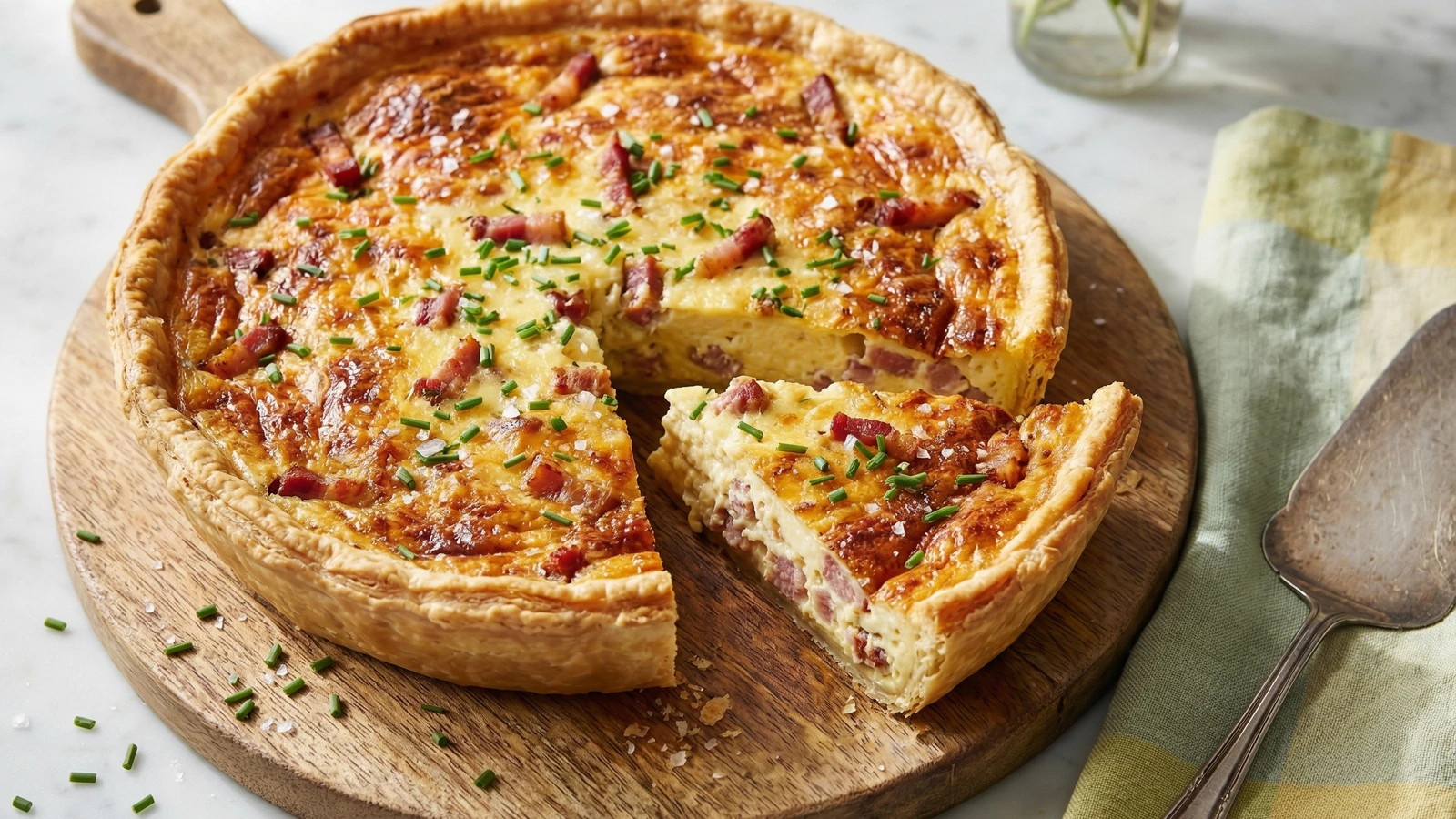
Quiche Lorraine
Created by
A golden custard tart from the Lorraine region, rich with smoky bacon and silky eggs, wrapped in the most honest butter crust you'll ever make. This is the dish that proves French cooking belongs in every American kitchen.
The quiche has suffered greatly in this country. Cafeteria steam tables and frozen food aisles have reduced one of France's most dignified preparations to something barely recognizable. I'm here to restore its honor. A proper Quiche Lorraine, made with care, represents everything good about French home cooking: simple ingredients transformed through technique into something greater than their sum.
This dish originated in the Lorraine region, near the German border, where resourceful cooks combined eggs, cream, and smoked pork belly into a savory custard. The original versions contained no cheese at all. That addition came later, an American improvement I happen to endorse. Gruyère brings a nutty depth that complements the smoky lardons beautifully. The two became inseparable somewhere along the way, and I see no reason to divorce them now.
The secret to a great quiche lives in three places: a properly blind-baked crust that stays crisp beneath the filling, a custard ratio that sets without becoming rubbery, and the patience to let it rest before slicing. Rush any of these and you'll understand why so many people think they don't like quiche. They've simply never had one made correctly.
For Easter gatherings, this dish is ideal. It can be assembled the night before and baked the morning of. It serves beautifully at room temperature, freeing you from the tyranny of last-minute cooking. Your guests will think you've been working for hours. Let them believe it.
The technique, the tradition, and the story behind every dish.
Discover Culinary AdvisorIngredients
all-purpose flour
Quantity
1 1/4 cups
fine sea salt (for crust)
Quantity
1/2 teaspoon
cold unsalted butter
Quantity
8 tablespoons
cubed
ice water
Quantity
3-4 tablespoons
thick-cut bacon or slab bacon
Quantity
8 ounces
cut into 1/4-inch lardons
shallot
Quantity
1 medium
minced
large eggs
Quantity
4
heavy cream
Quantity
1 1/2 cups
whole milk
Quantity
1/2 cup
nutmeg
Quantity
1/4 teaspoon
freshly grated
fine sea salt (for custard)
Quantity
1/2 teaspoon
white pepper
Quantity
1/4 teaspoon
Gruyère cheese
Quantity
1 1/2 cups
grated
fresh chives (optional)
Quantity
1 tablespoon
minced
| Ingredient | Quantity |
|---|---|
| all-purpose flour | 1 1/4 cups |
| fine sea salt (for crust) | 1/2 teaspoon |
| cold unsalted buttercubed | 8 tablespoons |
| ice water | 3-4 tablespoons |
| thick-cut bacon or slab baconcut into 1/4-inch lardons | 8 ounces |
| shallotminced | 1 medium |
| large eggs | 4 |
| heavy cream | 1 1/2 cups |
| whole milk | 1/2 cup |
| nutmegfreshly grated | 1/4 teaspoon |
| fine sea salt (for custard) | 1/2 teaspoon |
| white pepper | 1/4 teaspoon |
| Gruyère cheesegrated | 1 1/2 cups |
| fresh chives (optional)minced | 1 tablespoon |
Equipment Needed
- •9-inch tart pan with removable bottom
- •Pie weights or dried beans
- •Microplane for nutmeg
- •Pastry cutter or two forks
- •Rolling pin
Instructions
- 1
Make the pastry dough
Combine flour and salt in a large bowl. Add the cold butter cubes and work them into the flour using your fingertips or a pastry cutter. You're aiming for pieces the size of small peas, some larger, some smaller. This irregularity is what creates flaky layers. Drizzle in the ice water one tablespoon at a time, tossing with a fork after each addition. Stop when the dough just holds together when you squeeze a handful. It should look shaggy, not smooth.
Cold butter is essential. If your kitchen runs warm, freeze the cubes for 10 minutes before starting. Warm butter means tough crust. - 2
Shape and chill the dough
Turn the dough onto a lightly floured surface and gather it into a rough mound. Press it into a flat disk about an inch thick. This shape makes rolling easier later. Wrap tightly in plastic and refrigerate for at least one hour, or overnight. The gluten needs time to relax. Skip this step and your crust will shrink dramatically in the oven.
- 3
Roll and fit the crust
On a floured surface, roll the chilled dough into a 13-inch circle, rotating it a quarter turn after each pass to ensure even thickness. Drape it over a 9-inch tart pan with removable bottom, easing it into the corners without stretching. Stretched dough rebounds when baked. Trim the excess to about half an inch above the rim, then fold it inward to create reinforced edges. Dock the bottom with fork tines and freeze for 20 minutes.
A tart pan with a removable bottom is essential here. Trying to unmold from a standard pie dish invites disaster. - 4
Blind bake the crust
Preheat your oven to 400°F. Line the frozen crust with parchment paper and fill with pie weights or dried beans, pressing them into the corners. Bake for 20 minutes until the edges turn pale gold. Remove the weights and parchment carefully. Return the crust to the oven for 8 to 10 minutes more, until the bottom looks dry and lightly colored. Small cracks are fine. The custard will seal them. Reduce the oven temperature to 325°F.
- 5
Render the bacon
While the crust bakes, cook the lardons in a cold skillet over medium heat. Starting cold allows the fat to render slowly, producing crisp bacon without burning. Stir occasionally. After 8 to 10 minutes, they should be deeply golden and the kitchen should smell like every good morning you remember. Transfer to a paper towel-lined plate with a slotted spoon, leaving two tablespoons of fat in the pan.
- 6
Cook the shallots
Add the minced shallot to the bacon fat. Cook over medium-low heat, stirring often, until soft and translucent, about 3 minutes. They should not brown. Transfer to the plate with the bacon and let everything cool slightly.
- 7
Prepare the custard
Crack the eggs into a large bowl and whisk until the yolks and whites are fully combined. Add the cream, milk, nutmeg, salt, and white pepper. Whisk again until smooth. White pepper disappears into the custard visually while providing warmth. The mixture should look pale yellow and completely homogeneous. Don't overbeat. You want no foam on top.
Grate the nutmeg fresh. Pre-ground nutmeg tastes like sawdust in comparison. A Microplane and a whole nutmeg take seconds. - 8
Assemble the quiche
Scatter half the Gruyère across the bottom of the warm crust. Distribute the bacon and shallots evenly over the cheese. Add the remaining Gruyère on top. Place the tart pan on a baking sheet (this catches any overflow and makes transport easier). Pour the custard slowly into the crust, filling to just below the rim. Some of the bacon will float. This is correct.
- 9
Bake until just set
Slide the baking sheet into the 325°F oven. Bake for 40 to 45 minutes, rotating once at the halfway point. The quiche is done when the edges are set but the center still jiggles like gelatin when you gently shake the pan. It will look underdone. Trust it. Carryover cooking finishes the job. An overbaked quiche becomes rubbery and weeps liquid. Remove from the oven and let rest in the pan for at least 20 minutes.
- 10
Unmold and serve
Set the tart pan on a wide can or jar and let the outer ring drop away. Transfer the quiche, still on its metal base, to a serving board or platter. Scatter the fresh chives over the top. Slice into wedges using a sharp knife. Quiche Lorraine is best served warm, not hot, when the custard has stabilized and the flavors have had a moment to meld.
Chef Tips
- •Traditional Quiche Lorraine contained no cheese. The addition of Gruyère is an Americanization I endorse wholeheartedly, but if you want absolute authenticity, omit it and increase the cream by a quarter cup.
- •Seek out slab bacon from a butcher and cut your own lardons. The texture and smokiness of hand-cut bacon cannot be replicated by pre-sliced supermarket rashers.
- •Leftover quiche refrigerates beautifully for three days. Reheat individual slices in a 300°F oven for 10 minutes. The microwave turns the crust to cardboard.
- •For large gatherings, this recipe doubles perfectly. Use a 12-inch tart pan and extend the baking time by 10 to 15 minutes.
- •Pair with a chilled Alsatian Riesling or a crisp Crémant. The wine's acidity cuts through the richness of the eggs and cream.
Advance Preparation
- •The pastry dough can be made up to 3 days ahead and refrigerated, or frozen for up to 1 month. Thaw overnight in the refrigerator before rolling.
- •The crust can be blind-baked the day before. Store wrapped at room temperature and crisp in a 350°F oven for 5 minutes before filling.
- •The bacon and shallots can be cooked a day ahead and refrigerated separately.
- •For Easter morning ease, assemble the entire quiche the night before, cover tightly with plastic wrap, and refrigerate unbaked. Add 5 to 8 minutes to the baking time when cooking from cold.
- •A fully baked quiche can be refrigerated for up to 2 days. Bring to room temperature or rewarm gently at 300°F for 15 minutes before serving.
Frequently Asked Questions
Nutrition Information
1 serving (about 150g)
Where cooking meets culture.
Culinary mentorship, cultural storytelling, and the editorial depth that makes cooking meaningful.
Explore Culinary Advisor