Culinary Advisor
A cooking platform built around craft, culture, and the stories behind what we eat.
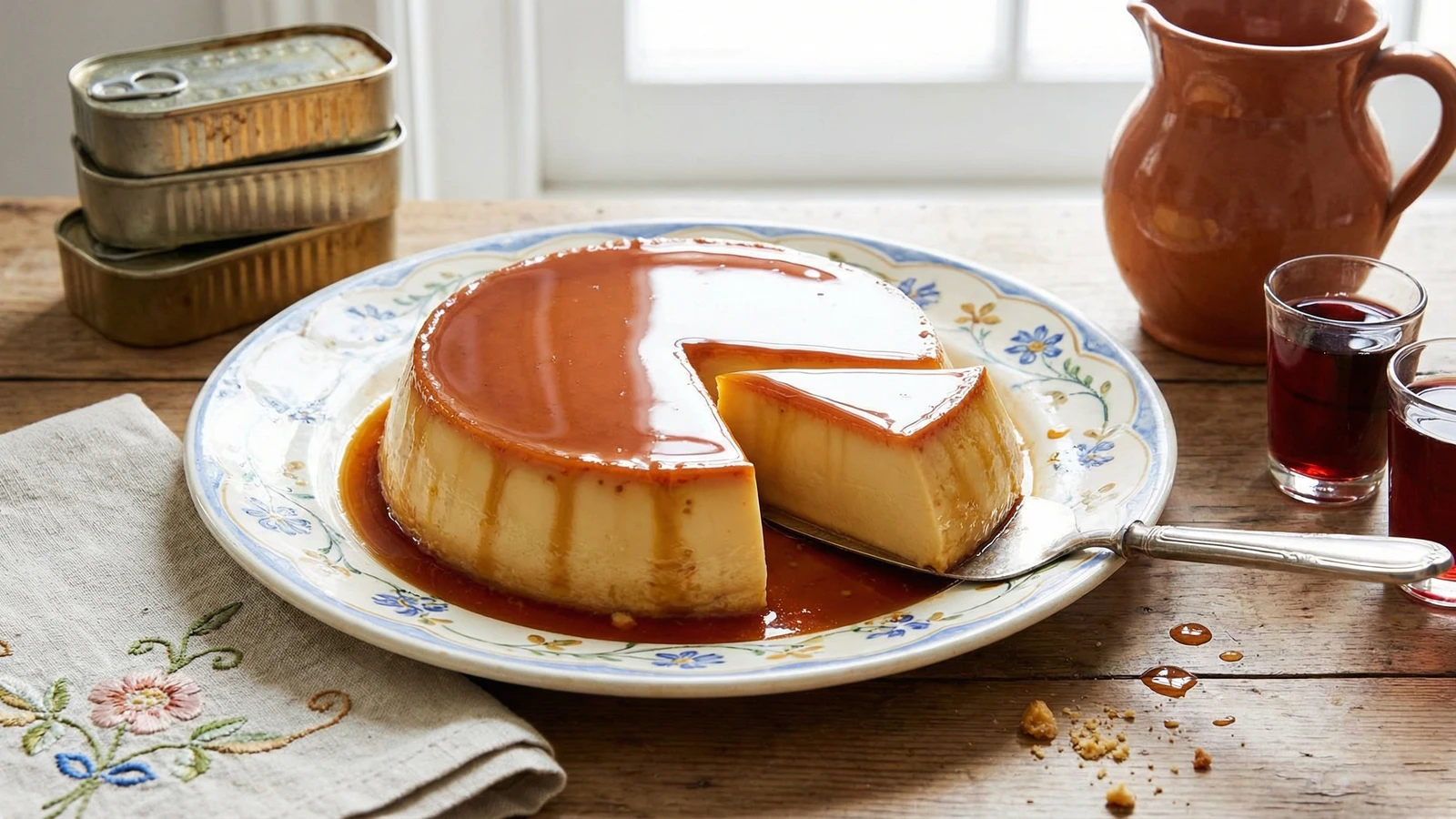
Pudim Flan Português
Created by
The silky caramel custard that has ended every Portuguese Sunday lunch for generations. More yolks, more richness, more memory. This is convent tradition made for home kitchens.
Every Portuguese celebration ends with pudim. Every single one. Baptisms, weddings, Sunday lunch at grandmother's house. The plates are cleared, the conversation slows, and someone brings out the pudim. That moment of reverent silence as it's unmolded, the caramel sliding down like liquid amber. This is the dessert of my childhood.
Our pudim is not the same as Spanish flan. Ours is denser, richer, almost impossible in its silkiness. That's the egg yolks. Portuguese sweets have always been about egg yolks, a tradition born in convents where nuns used egg whites to starch their habits and linens, leaving mountains of yolks for the kitchen. They invented pastéis de nata, ovos moles, toucinho do céu. They invented this pudim.
Avó Leonor made hers in a dented aluminum mold that had belonged to her mother. The caramel was always perfect, that deep amber that tastes of burnt sugar without bitterness. She infused the milk with lemon zest in summer, cinnamon in winter. She never wrote down the recipe because she didn't measure. "Enough eggs until it feels right," she'd say. "Enough sugar until it tastes right." I've spent years translating that into something I can teach.
The technique matters here. Room temperature eggs. Patient caramel. A proper bain-marie. These aren't fussy rules; they're the difference between something decent and something that makes people close their eyes when they taste it. This is the pudim I serve at Mesa da Avó, and it's the pudim I'll teach you now.
Portuguese pudim descends directly from the convent sweet tradition that flourished from the 15th century onward. Convents like Santa Clara in Coimbra and Odivelas near Lisbon became famous for their egg-yolk desserts, born from the surplus created when whites were used for starching religious habits. This version, richer than Spanish flan with its higher yolk-to-white ratio, became the definitive Portuguese celebration dessert by the 19th century.
The technique, the tradition, and the story behind every dish.
Discover Culinary AdvisorIngredients
sugar (for caramel)
Quantity
200g
water
Quantity
2 tablespoons
egg yolks
Quantity
6 large
whole eggs
Quantity
3 large
sugar (for custard)
Quantity
150g
whole milk
Quantity
500ml
heavy cream
Quantity
250ml
pure vanilla extract
Quantity
1 teaspoon
lemon
Quantity
1
zest removed in wide strips
| Ingredient | Quantity |
|---|---|
| sugar (for caramel) | 200g |
| water | 2 tablespoons |
| egg yolks | 6 large |
| whole eggs | 3 large |
| sugar (for custard) | 150g |
| whole milk | 500ml |
| heavy cream | 250ml |
| pure vanilla extract | 1 teaspoon |
| lemonzest removed in wide strips | 1 |
Equipment Needed
- •1.5 liter pudim mold or metal ring pan
- •Heavy-bottomed saucepan for caramel
- •Fine-mesh sieve
- •Deep roasting pan for bain-marie
Instructions
- 1
Make the caramel
Place the 200g sugar and water in a heavy saucepan over medium heat. Do not stir. Let the sugar dissolve and begin to color at the edges. Swirl the pan gently if it colors unevenly. Watch it like a hawk. The caramel will go from pale gold to deep amber to burned in seconds. The moment it reaches the color of aged honey, about 8 to 10 minutes, remove from heat immediately.
Avó Leonor always said: caramel waits for no one. Have your mold ready. The moment you see that amber color, you move. - 2
Coat the mold
Working quickly, pour the hot caramel into a 1.5 liter pudim mold or metal ring pan. Tilt and rotate the mold to coat the bottom and partway up the sides. Use oven mitts; the mold gets hot. Set aside to harden while you make the custard. Don't worry if the coating isn't perfect. The caramel will melt again in the oven and find its way.
- 3
Infuse the milk
Combine the milk, cream, and lemon zest strips in a saucepan. Heat over medium until small bubbles appear at the edges. Don't let it boil. Remove from heat, cover, and let the lemon perfume the milk for 10 minutes. This is the step most people skip, and it's the step that separates good pudim from the kind your grandmother made.
Some families use cinnamon instead of lemon. Some use both. There's no law. Avó Leonor used lemon zest in summer and a cinnamon stick in winter. - 4
Make the custard
Preheat your oven to 160°C (320°F). In a large bowl, whisk the egg yolks, whole eggs, and custard sugar until smooth and pale, about 2 minutes. You want it combined, not frothy. Air bubbles are the enemy of silky pudim. Remove the lemon zest from the milk and discard. Slowly pour the warm milk into the egg mixture, whisking constantly but gently. Stir in the vanilla.
- 5
Strain and pour
Strain the custard through a fine-mesh sieve into the caramel-lined mold. This removes any chalazae, bits of zest, and insurance against scrambled bits. The custard should be perfectly smooth. Pop any bubbles on the surface with a toothpick or blow gently across the top.
- 6
Bake in a water bath
Place the mold in a deep roasting pan. Pour hot water into the pan until it reaches halfway up the sides of the mold. This bain-marie is not optional. Direct heat will give you a grainy, overcooked custard with bubbles. The water bath keeps the temperature gentle and even. Bake until the custard is set around the edges but still has a gentle wobble in the center, 50 to 60 minutes.
The wobble test: tap the side of the mold. If the center jiggles like a wave, it needs more time. If it jiggles like firm gelatin, it's ready. If it doesn't move at all, you've gone too far. - 7
Chill completely
Remove the mold from the water bath and let it cool to room temperature, about 1 hour. Then refrigerate for at least 4 hours, preferably overnight. The pudim needs time to set fully and for the caramel to become liquid again, forming that glossy sauce. Patience. A cozinha é memória, and memory takes time to develop.
- 8
Unmold and serve
Run a thin knife around the edge of the pudim. Place a serving plate with a slight rim over the mold. In one confident motion, flip them together. Lift the mold slowly. The pudim should release with a soft sigh, the caramel cascading down the sides. If it hesitates, tap the bottom of the mold gently. Slice at the table, spooning extra caramel over each portion. This is the dessert that ends every Portuguese celebration. Serve it with the respect it deserves.
Chef Tips
- •Eggs must be at room temperature. Cold eggs will seize when they meet warm milk, giving you scrambled bits no amount of straining can fix. Take them out an hour before you start.
- •The caramel color matters. Pale caramel tastes like candy. Deep amber, the color of aged honey, has complexity, that slight bitterness that balances the sweet custard. But seconds past amber is burned. Stay at the stove.
- •If your pudim won't unmold, set the bottom of the mold in a shallow dish of warm water for 30 seconds. The caramel will soften and release. Don't force it; pudim rewards patience.
- •The overnight rest isn't optional. The texture transforms completely, becoming that dense silkiness that defines Portuguese pudim. Four hours works, but overnight is what Avó Leonor did.
Advance Preparation
- •Pudim must be refrigerated at least 4 hours, but ideally overnight. Plan accordingly.
- •The finished pudim keeps beautifully in the refrigerator for up to 3 days. Keep it in the mold until ready to serve.
- •Take the eggs out 1 hour before starting to bring them to room temperature.
Frequently Asked Questions
Nutrition Information
1 serving (about 165g)
Where cooking meets culture.
Culinary mentorship, cultural storytelling, and the editorial depth that makes cooking meaningful.
Explore Culinary Advisor