Culinary Advisor
A cooking platform built around craft, culture, and the stories behind what we eat.
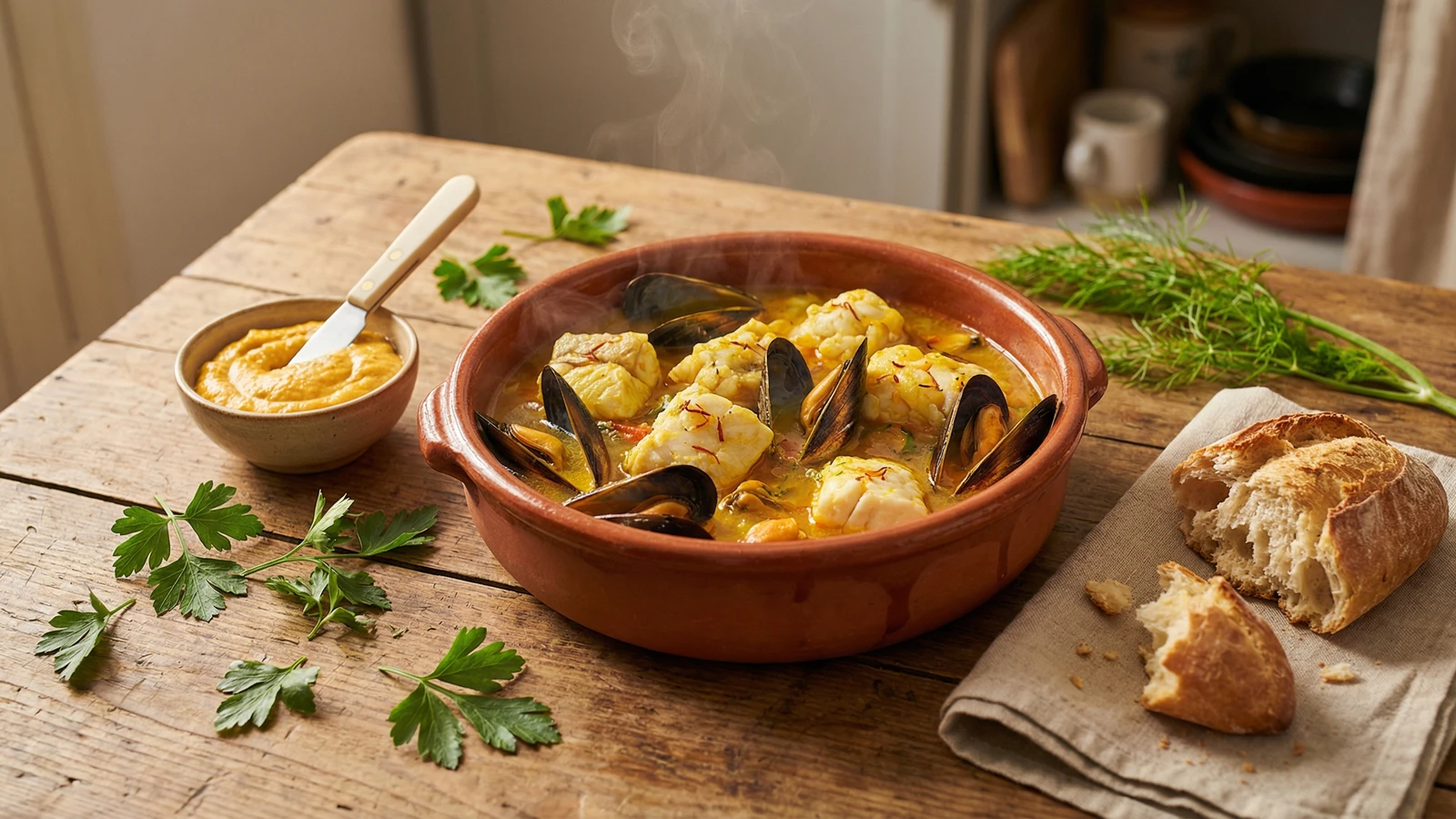
Provençal Fish Stew with Saffron and Rouille
Created by Chef Ally
Fresh fish from a fishmonger you trust, simmered gently in a saffron and tomato broth fragrant with fennel and orange, served with a fiery rouille and bread to soak up every drop.
This is the dish I think of when I remember that meal in Brittany. The fisherman brought the catch that morning. The cook did almost nothing to it. She simmered the fish in a broth scented with saffron and fennel, ladled it into deep bowls, and set out a pot of rouille and good bread. The diners applauded.
A proper fish stew begins at the market. You need fish that was swimming yesterday, fish with clear eyes and flesh that springs back when you press it. Talk to your fishmonger. Tell them what you are making. They will guide you toward what is freshest, what will hold together in a broth, what will give you the best flavor for your money.
The technique here is simple. You build a fragrant base of fennel, tomatoes, and saffron. You add good fish stock, preferably one you have made yourself from bones and heads. Then you slip in the fish and let the broth do the work. The fish poaches gently, absorbing the saffron and releasing its own essence into the liquid. Do not rush this. Do not stir too much. Let things taste of what they are.
The rouille is essential. This garlicky, saffron-tinted sauce spread on crusty bread and floated in the broth transforms each spoonful. Make it by hand with a mortar and pestle if you have one. The texture is better, and there is something right about the labor.
The technique, the tradition, and the story behind every dish.
Discover Culinary AdvisorIngredients
mixed firm white fish
Quantity
2 pounds
cut into 2-inch pieces
mussels or clams (optional)
Quantity
1 pound
scrubbed and debearded
extra-virgin olive oil
Quantity
1/4 cup
fennel bulb
Quantity
1 large
trimmed and thinly sliced, fronds reserved
yellow onion
Quantity
1 large
diced
garlic cloves
Quantity
4
minced
whole San Marzano tomatoes
Quantity
1 can (14 ounces)
crushed by hand
dry white wine
Quantity
1 cup
fish stock
Quantity
6 cups
saffron threads
Quantity
1/2 teaspoon
orange zest strips
Quantity
2 strips, about 3 inches each
fresh thyme
Quantity
2 sprigs
bay leaf
Quantity
1
red pepper flakes
Quantity
1/4 teaspoon
fine sea salt
Quantity
to taste
Pernod or Pastis (optional)
Quantity
2 tablespoons
fresh flat-leaf parsley
Quantity
for serving
chopped
crusty bread
Quantity
for serving
garlic cloves (for rouille)
Quantity
4
fine sea salt (for rouille)
Quantity
1/2 teaspoon
saffron threads (for rouille)
Quantity
pinch
day-old bread (for rouille)
Quantity
1 slice
crust removed, soaked and squeezed dry
egg yolk
Quantity
1 large
at room temperature
cayenne pepper
Quantity
1/4 teaspoon
extra-virgin olive oil (for rouille)
Quantity
3/4 cup
| Ingredient | Quantity |
|---|---|
| mixed firm white fishcut into 2-inch pieces | 2 pounds |
| mussels or clams (optional)scrubbed and debearded | 1 pound |
| extra-virgin olive oil | 1/4 cup |
| fennel bulbtrimmed and thinly sliced, fronds reserved | 1 large |
| yellow oniondiced | 1 large |
| garlic clovesminced | 4 |
| whole San Marzano tomatoescrushed by hand | 1 can (14 ounces) |
| dry white wine | 1 cup |
| fish stock | 6 cups |
| saffron threads | 1/2 teaspoon |
| orange zest strips | 2 strips, about 3 inches each |
| fresh thyme | 2 sprigs |
| bay leaf | 1 |
| red pepper flakes | 1/4 teaspoon |
| fine sea salt | to taste |
| Pernod or Pastis (optional) | 2 tablespoons |
| fresh flat-leaf parsleychopped | for serving |
| crusty bread | for serving |
| garlic cloves (for rouille) | 4 |
| fine sea salt (for rouille) | 1/2 teaspoon |
| saffron threads (for rouille) | pinch |
| day-old bread (for rouille)crust removed, soaked and squeezed dry | 1 slice |
| egg yolkat room temperature | 1 large |
| cayenne pepper | 1/4 teaspoon |
| extra-virgin olive oil (for rouille) | 3/4 cup |
Equipment Needed
- •Large Dutch oven or heavy-bottomed pot (6-quart minimum)
- •Mortar and pestle or food processor
- •Ladle
- •Wide, shallow serving bowls
Instructions
- 1
Make the rouille
Begin with the rouille so the flavors have time to marry. In a mortar, pound the garlic with the salt until you have a smooth paste. Add the saffron and pound again. Add the soaked bread and egg yolk, working everything into a thick paste. Now add the oil drop by drop, stirring constantly with the pestle, just as you would build a mayonnaise. When the sauce begins to thicken and emulsify, you can add the oil in a thin stream. Stir in the cayenne. Taste. The rouille should be pungent with garlic, golden from saffron, and have enough heat to wake you up. Cover and set aside.
If you do not have a mortar and pestle, use a food processor. Pulse the garlic, salt, saffron, and bread first, then add the yolk and drizzle in the oil with the motor running. - 2
Build the aromatic base
Warm the olive oil in a large, heavy pot or Dutch oven over medium heat. Add the fennel and onion. Cook slowly, stirring occasionally, until soft and translucent but not browned, about twelve minutes. The fennel will become sweet and fragrant, releasing its anise perfume. Add the garlic and cook one minute more until you smell it.
- 3
Add tomatoes and wine
Pour in the crushed tomatoes and white wine. Let this simmer for five minutes, scraping up any bits from the bottom of the pot. The wine will reduce slightly and the raw alcohol smell will burn off, leaving only brightness.
- 4
Create the saffron broth
Add the fish stock, saffron threads, orange zest, thyme, bay leaf, and red pepper flakes. Bring to a gentle simmer. Let the broth cook uncovered for twenty minutes. The saffron will bloom, turning the liquid a deep gold, and the flavors will concentrate. Taste and add salt as needed. The broth should taste alive, like the sea and the garden met.
If you do not have homemade fish stock, use a good quality store-bought one. Avoid anything with too much salt or artificial flavor. Better yet, ask your fishmonger for bones and heads and make your own. - 5
Poach the fish
Remove the thyme sprigs, bay leaf, and orange zest. Season the fish pieces with salt. Gently lower them into the simmering broth, spacing them so they are not crowded. If using mussels or clams, add them now, hinge side down. Cover and cook gently for eight to ten minutes. Do not stir. The fish is done when it flakes easily and the shellfish have opened. Discard any that remain closed.
- 6
Finish and serve
Remove the pot from heat. If using Pernod, add it now. It will send up a wave of anise that smells like Marseille in summer. Ladle the stew into warmed bowls, dividing the fish and shellfish evenly. Scatter parsley over each bowl. Serve immediately with crusty bread and the rouille. Show your guests how to spread the rouille on bread, float it in the broth, and let it melt into the liquid.
Warm your bowls in a low oven for a few minutes before serving. The stew stays hot longer, and your guests can linger at the table.
Chef Tips
- •Talk to your fishmonger. Tell them you are making a fish stew and ask what is freshest. The specific varieties matter less than the quality. Firm white fish that holds together in broth is what you need.
- •Make your own fish stock when you can. Save shrimp shells and fish bones in the freezer until you have enough. Simmer with onion, fennel trimmings, white wine, and water for thirty minutes. Strain. This is the foundation of everything.
- •Saffron is expensive because it should be. Buy the threads, not the powder, and look for deep red color. A little goes far. Store it in a dark place.
- •If good fresh tomatoes are in season, use two pounds of ripe ones instead of canned. Peel and seed them first. The stew will taste like summer.
- •This is a dish for passing around the table. Set out extra bread, a bowl of rouille, and let people serve themselves seconds. The communal nature of the meal is part of its meaning.
Advance Preparation
- •The rouille can be made up to two days ahead and refrigerated. Bring to room temperature before serving.
- •The broth base can be prepared through step four up to one day ahead. Refrigerate, then reheat gently before adding the fish.
- •Do not poach the fish until just before serving. It takes only minutes and must be eaten immediately.
Frequently Asked Questions
Nutrition Information
1 serving (about 480g)
Where cooking meets culture.
Culinary mentorship, cultural storytelling, and the editorial depth that makes cooking meaningful.
Explore Culinary Advisor