Culinary Advisor
A cooking platform built around craft, culture, and the stories behind what we eat.
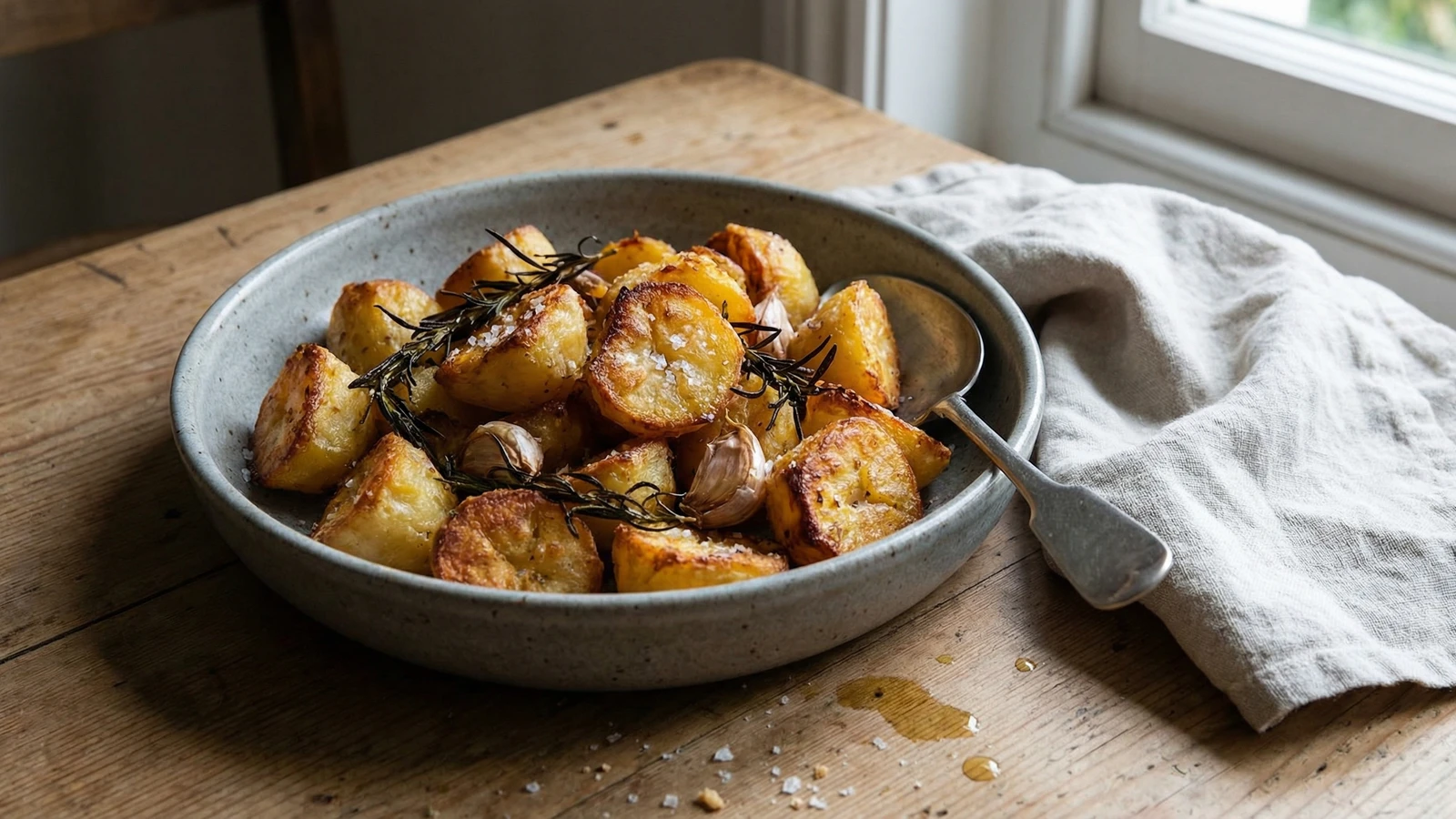
Proper Roast Potatoes
Created by Chef Thomas
Floury potatoes, roughed and roasted in screaming hot fat until the edges go dark and craggy and the inside stays soft as cloud. The side dish that makes the whole plate worth sitting down for.
The smell hits you before you open the oven door. Hot fat, rosemary, something golden and starchy catching at the edges. It smells like a Sunday in winter, like the kitchen of someone who is paying attention.
A roast potato is a simple thing done properly or not at all. Floury potatoes, boiled until the surface goes chalky, roughed up so the edges are ragged and broken, then dropped into fat so hot it spits back at you. That's it. Three steps and some patience. The rest is heat and time and the willingness to leave them alone when every instinct says to open the door and check.
I've made these more times than I could count. The notebook has a single entry from years ago: "Maris Pipers. Goose fat. Shook them properly. Best yet." The method hasn't changed since. A recipe is a conversation, not a contract, but this one barely needs a conversation at all. Get the fat hot. Rough up the edges. Don't crowd the tin. The potatoes will do the rest.
There are few better feelings than putting a dish of these on the table and watching people reach for them before anything else has been served. The crisp exterior gives way to something impossibly soft inside, the kind of contrast that makes you close your eyes for a second. We're only making dinner. But sometimes dinner is the best part of the day.
The technique, the tradition, and the story behind every dish.
Discover Culinary AdvisorIngredients
floury potatoes (Maris Piper or King Edward)
Quantity
1.5kg
peeled and cut into large, rough chunks
goose fat, beef dripping, or olive oil
Quantity
4-5 tablespoons
fine sea salt
Quantity
generous amount, for the cooking water and the potatoes
flaky sea salt
Quantity
to finish
rosemary (optional)
Quantity
a few sprigs
garlic cloves (optional)
Quantity
4, unpeeled
| Ingredient | Quantity |
|---|---|
| floury potatoes (Maris Piper or King Edward)peeled and cut into large, rough chunks | 1.5kg |
| goose fat, beef dripping, or olive oil | 4-5 tablespoons |
| fine sea salt | generous amount, for the cooking water and the potatoes |
| flaky sea salt | to finish |
| rosemary (optional) | a few sprigs |
| garlic cloves (optional) | 4, unpeeled |
Equipment Needed
- •Large roasting tin (heavy, flat-bottomed)
- •Large saucepan
- •Colander
- •Slotted spoon or tongs
Instructions
- 1
Get the oven roaring
Set the oven to 220C/200C fan. Put a large roasting tin in while it heats. The tin needs to be properly hot before anything goes in. This isn't negotiable. A lukewarm tin is where roast potatoes go to become sad, steamed things that nobody reaches for twice.
- 2
Boil the potatoes
Put the potato chunks into a large pan of well-salted cold water. Bring to the boil and cook for ten to twelve minutes, until the edges are soft and a knife slides in easily but the centre still has a little resistance. You're not making mash. You want them cooked enough to fluff up on the outside, not so much that they fall apart in the pan.
Start in cold water, not boiling. This lets the outside cook at the same rate as the inside, which means a thicker starchy layer on the surface. That layer is what turns into the crust. - 3
Rough up the edges
Drain the potatoes in a colander and let them sit for a minute so the surface moisture steams off. Then give the colander a few good shakes. Not gentle. You want the edges battered and roughed, the corners broken, the surface chalky and ragged. Every rough edge is a future crisp bit. Smooth potatoes make smooth roast potatoes, and nobody wants those.
- 4
Into the hot fat
Take the roasting tin from the oven. Add the fat and put it back for two minutes until it shimmers and spits when you flick a drop of water at it. That's the signal. Carefully tip the potatoes into the hot fat. They should hiss and crackle the moment they hit the tin. Turn each one so all sides get coated. Spread them out in a single layer with space between them. Crowded potatoes steam. Spaced potatoes crisp.
If you're using goose fat or dripping, the flavour will be richer and more savoury. Olive oil gives a lighter result and a slightly different character. All three work. Use what you have or what you prefer. - 5
Roast without fussing
Roast for twenty minutes without touching them. Don't open the door. Don't check. Don't turn. Leave them alone. After twenty minutes, open the oven and look: the undersides should be golden and starting to crisp. Turn each one over with a spatula or tongs. If you want rosemary and garlic, tuck the sprigs and unpeeled cloves between the potatoes now. Return to the oven for another twenty-five to thirty minutes, turning once more if you remember.
- 6
Finish and season
They're done when they're deep gold all over, with edges that have gone dark and craggy and a sound, when you tap them with a spoon, that's more knock than thud. Lift them out of the fat with a slotted spoon onto a warm plate. Hit them immediately with flaky salt while they're still glistening. Serve straight away. A roast potato waits for no one.
Chef Tips
- •The potato variety matters more than the fat you use. You need a floury potato: Maris Piper and King Edward are the standard choices in Britain, and they're standard for good reason. A waxy potato will never crisp the same way, no matter what you do to it. The starch is the thing. It's what creates the crust.
- •Get the fat genuinely hot before the potatoes go in. Not warm. Not shimmering. Spitting. If they don't hiss when they hit the tin, take them out and wait longer. That initial sear is what seals the outside and starts the crust forming. Everything else follows from this moment.
- •Don't crowd the tin. Give each potato space, an inch or two between them at least. If they're touching, they'll steam instead of roasting, and a steamed roast potato is a contradiction and a disappointment. Use two tins if you need to. Nobody ever complained about too many roast potatoes.
- •Goose fat is the classic and it gives a depth of flavour that's hard to match. Beef dripping is excellent too, slightly more savoury and robust. Olive oil works if that's what you've got, and the potatoes will still be good, just different. Use what your kitchen has. Your kitchen, your rules.
Advance Preparation
- •The potatoes can be peeled, parboiled, and roughed up several hours ahead. Spread them on a tray and leave them uncovered in the fridge. The dry surface will crisp even better. This is the only shortcut worth taking.
- •Roast potatoes do not reheat well. Make them last and serve them first. Cold roast potatoes have their own quiet charm the next day, eaten standing at the fridge, but they won't crisp up again.
Frequently Asked Questions
Nutrition Information
1 serving (about 250g)
Where cooking meets culture.
Culinary mentorship, cultural storytelling, and the editorial depth that makes cooking meaningful.
Explore Culinary Advisor