Culinary Advisor
A cooking platform built around craft, culture, and the stories behind what we eat.
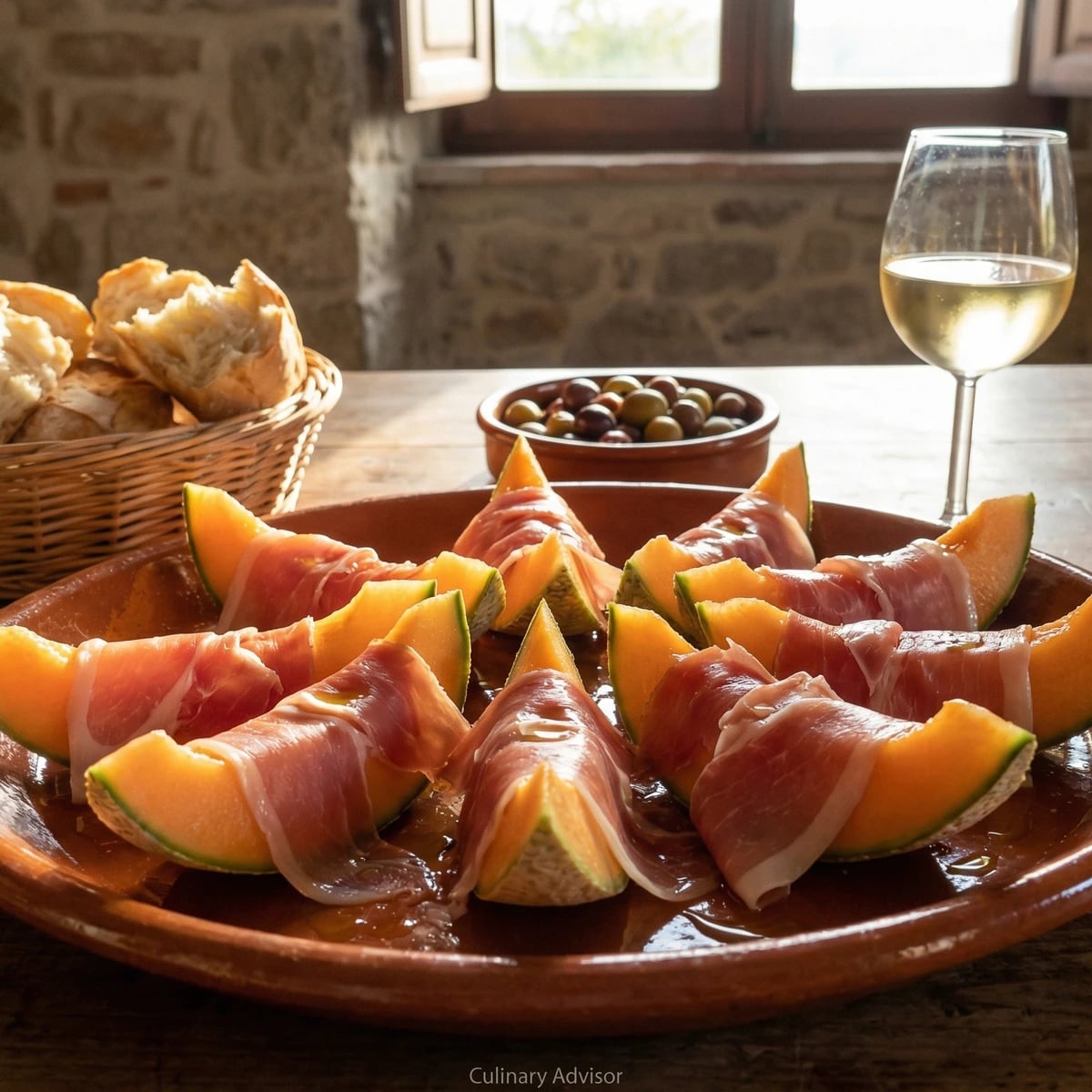
Presunto com Melão
Created by Chef Margarida
Two ingredients. That's all. Presunto from Alentejo's black pigs, melon at the peak of summer ripeness, and the understanding that the best cooking often means doing almost nothing at all.
There's a moment every summer when the melons finally arrive. Sweet, fragrant, heavy with juice. And every summer, I think of my grandmother's kitchen in Évora, the shutters closed against the afternoon heat, a plate of presunto and melon on the table. Nothing else. Just this.
Presunto com melão is not a recipe. It's an act of trust. Trust in the farmer who raised the pig. Trust in the artisan who cured the ham for months, sometimes years. Trust in the sun that ripened the melon. Your job is simply to bring these things together and stay out of the way.
The presunto must be good. Real presunto from Alentejo, from porco preto if you can find it. These black pigs roam the cork oak forests, eating acorns, living as pigs should live. The fat is sweet, almost nutty. The meat melts on your tongue. This is not the same as Spanish jamón, though they're cousins. Presunto has its own character, a little leaner, a little earthier. It tastes like the land it comes from.
At Mesa da Avó, I serve this at the start of summer dinners. People reach for it before they've even sat down. The sweet and the salty, the soft and the silky. It's the dish that proves peasant wisdom: when the ingredients are perfect, the cook's job is to do as little as possible.
Ingredients
presunto (Portuguese dry-cured ham)
Quantity
200g
sliced paper-thin
ripe cantaloupe or orange-fleshed melon
Quantity
1 (about 1 kg)
black pepper (optional)
Quantity
to taste
freshly ground
| Ingredient | Quantity |
|---|---|
| presunto (Portuguese dry-cured ham)sliced paper-thin | 200g |
| ripe cantaloupe or orange-fleshed melon | 1 (about 1 kg) |
| black pepper (optional)freshly ground | to taste |