Culinary Advisor
A cooking platform built around craft, culture, and the stories behind what we eat.
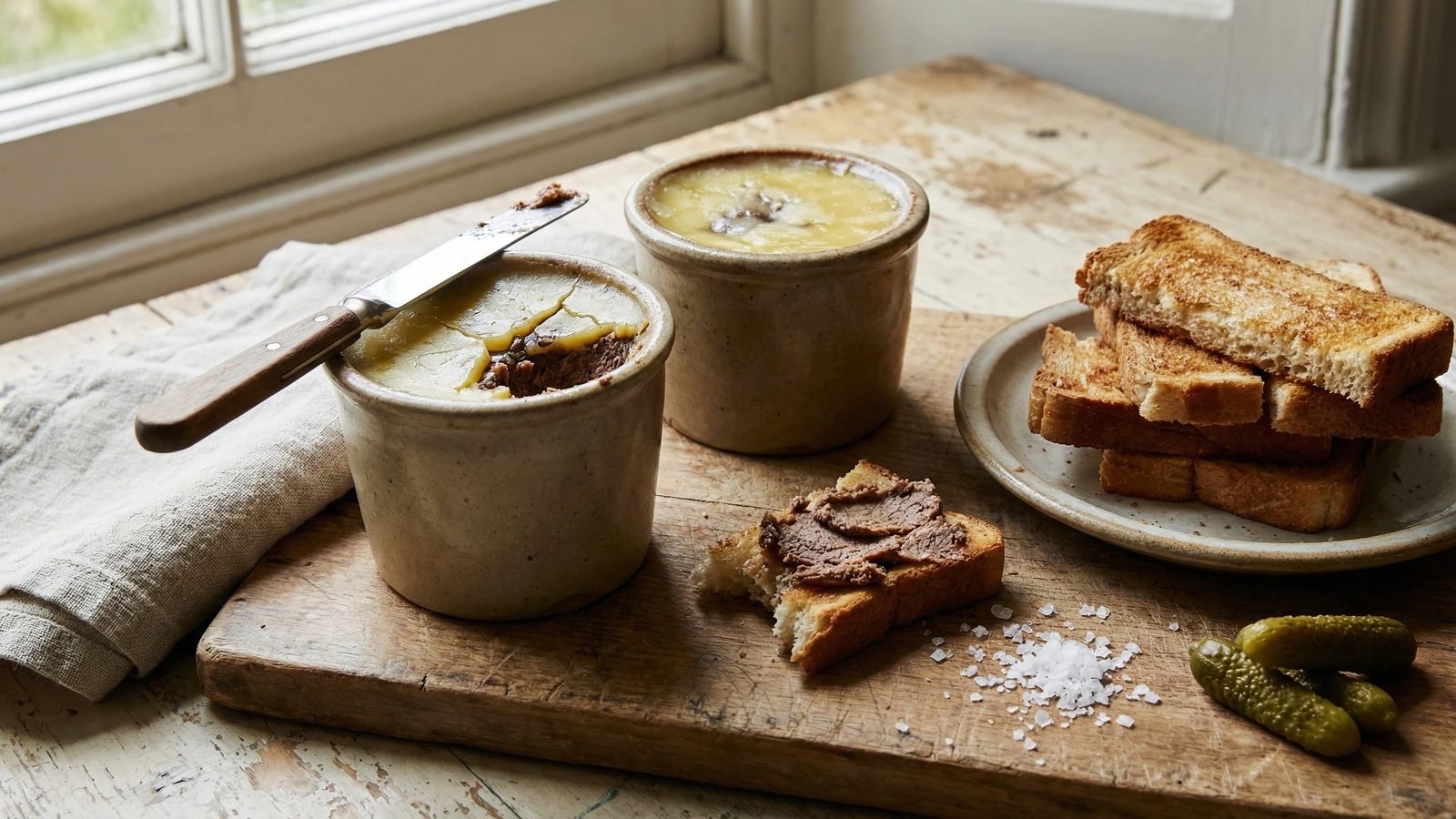
Potted Beef with Mace and Cayenne
Created by Chef Thomas
Beef slow-cooked until it gives up, pounded with butter and the warm ghost of mace, sealed under clarified butter in small pots that keep their secret for days until someone tears off a piece of toast and breaks the seal.
January. The kitchen window is wet with condensation and the light outside is the colour of old pewter. This is potted beef weather. Not the season for salads or anything that asks you to go outside more than once. The kind of day where you put something in the oven, forget about it for three hours, and come back to a house that smells like it's been holding you steady.
Potted meats are older than most things in the British kitchen. Before refrigeration, before tins, before anyone thought to put a sell-by date on anything, this is how you kept meat. You cooked it slowly, pounded it with butter and spice, pressed it into a pot, and sealed it under a layer of clarified butter. The butter kept the air out and the flavour in. It's not a technique that needed improving. It still works.
Mace is the spice here, and it matters. Not nutmeg, though they come from the same fruit. Mace has a warmth that's gentler, sweeter, almost floral, the kind of spice that doesn't announce itself but makes everything around it taste more like itself. The cayenne is a whisper behind it. Enough to notice, not enough to wince. Together they turn slow-cooked beef into something that tastes like it belongs in a different century, spread on toast with a glass of something dark.
I wrote it down in the notebook last winter: "Potted beef. Tuesday. Rain all day. Better than I remembered." I've made it three times since.
The technique, the tradition, and the story behind every dish.
Discover Culinary AdvisorIngredients
beef shin or chuck
Quantity
500g
cut into large chunks
unsalted butter (for pounding)
Quantity
100g
softened
unsalted butter (for sealing)
Quantity
80g
for clarifying
bay leaf
Quantity
1
black peppercorns
Quantity
4
ground mace
Quantity
1/2 teaspoon
cayenne pepper
Quantity
1/4 teaspoon, or to taste
ground nutmeg
Quantity
good pinch
fine sea salt
Quantity
to taste
black pepper
Quantity
to taste
freshly ground
| Ingredient | Quantity |
|---|---|
| beef shin or chuckcut into large chunks | 500g |
| unsalted butter (for pounding)softened | 100g |
| unsalted butter (for sealing)for clarifying | 80g |
| bay leaf | 1 |
| black peppercorns | 4 |
| ground mace | 1/2 teaspoon |
| cayenne pepper | 1/4 teaspoon, or to taste |
| ground nutmeg | good pinch |
| fine sea salt | to taste |
| black pepperfreshly ground | to taste |
Equipment Needed
- •Small ovenproof dish or casserole with a lid
- •Large mortar and pestle, or sturdy mixing bowl and wooden spoon
- •4 ramekins or small stoneware pots (about 150ml each)
- •Small saucepan for clarifying butter
Instructions
- 1
Slow-cook the beef
Set the oven to 140C/120C fan. Put the beef chunks into a small, tight-fitting ovenproof dish or casserole with a lid. Tuck in the bay leaf and peppercorns, season with salt, and add just enough water to come a third of the way up the meat. No more. You're not making a stew. Put the lid on and slide it into the oven for three hours, perhaps a little longer, until the meat is so tender it falls apart when you press it with the back of a spoon. The kitchen will smell deeply savoury by then, the kind of warmth that settles into the walls.
Shin is the better cut here. It has more connective tissue, which breaks down over the long cook into something rich and yielding. Chuck will work, but shin rewards the patience. - 2
Shred and drain
Lift the beef out of the cooking liquid and set it on a board. Discard the bay leaf and peppercorns. Let the meat cool just enough to handle. Pull it apart with two forks, shredding it along the grain into fine threads. Keep a few tablespoons of the cooking liquid. You'll want it.
- 3
Pound with butter and spices
Put the shredded beef into a large mortar or a sturdy mixing bowl. Add the softened butter, the mace, the cayenne, and the nutmeg. Now pound and beat it with a pestle or the back of a wooden spoon until the meat and butter become a rough, spreadable paste. Not smooth. You're not making pâté. You want texture, resistance, the sense that this was once a piece of animal. Add a splash of the reserved cooking liquid if it feels dry. Season with salt and more pepper than you think. Taste it. The spicing should be warm and present but not fierce. The mace should come through first, a sweet, old-fashioned heat, with the cayenne arriving a moment later.
A food processor will do the job faster, but use the pulse button and stop well before it turns smooth. The texture of potted beef should be coarse and fibrous, never a purée. - 4
Pack into pots
Press the mixture firmly into ramekins or small pots, pushing out any air pockets with the back of the spoon. Fill them to about a centimetre below the rim. Smooth the surface flat. Don't be decorative about it. Tap each pot gently on the counter to settle everything.
- 5
Seal with clarified butter
Melt the remaining butter in a small pan over a low heat. Let it foam, then settle. The milk solids will sink to the bottom and the clear golden fat will sit on top. That's your seal. Spoon the clarified butter carefully over each pot, leaving the white sediment behind in the pan. You want a layer about half a centimetre thick, enough to cover the surface completely with no meat showing through. Refrigerate until the butter sets firm and opaque.
The butter seal is not decoration. It's preservation. As long as the layer is unbroken and the pots stay cold, the beef will keep well for over a week. Once you crack the seal, eat it within two days. - 6
Rest and serve
Let the pots chill for at least four hours, overnight is better. The flavours need time to settle and the mace will deepen as it sits. Bring the pots to the table with toast, good toast, made from bread worth eating, and let people spread it themselves. A few cornichons on the side if you have them. Nothing else required.
Chef Tips
- •The quality of the butter matters as much as the beef. You're eating a lot of it here, pounded into the meat and spread over the top. Use the best unsalted butter you can find. You'll taste the difference in every mouthful.
- •Ground mace loses its character quickly once the jar is opened. If yours has been sitting in the back of the cupboard since before you can remember, buy a new tin. Fresh mace smells sweet and faintly orangey. Old mace smells of dust. Trust your nose.
- •This keeps beautifully, which makes it one of the more useful things to have in the fridge. Make it on a Sunday and you've got a week's worth of lunches: toast, potted beef, a few pickled onions, and the satisfying knowledge that you planned ahead without really trying.
- •Serve it at cool room temperature, not straight from the fridge. Cold butter is stiff and the flavours close up. Twenty minutes on the counter is enough for the mace and cayenne to come alive again.
Advance Preparation
- •Potted beef must be made at least four hours ahead for the butter seal to set and the flavours to develop. Overnight is better. Two days is better still.
- •With the butter seal intact and refrigerated, the pots will keep for up to ten days. Once the seal is broken, eat within two days.
- •The slow-cooked beef can be prepared a day ahead and refrigerated before pounding with butter and spices. Bring it to room temperature before proceeding.
Frequently Asked Questions
Nutrition Information
1 serving (about 85g)
Where cooking meets culture.
Culinary mentorship, cultural storytelling, and the editorial depth that makes cooking meaningful.
Explore Culinary Advisor