Culinary Advisor
A cooking platform built around craft, culture, and the stories behind what we eat.
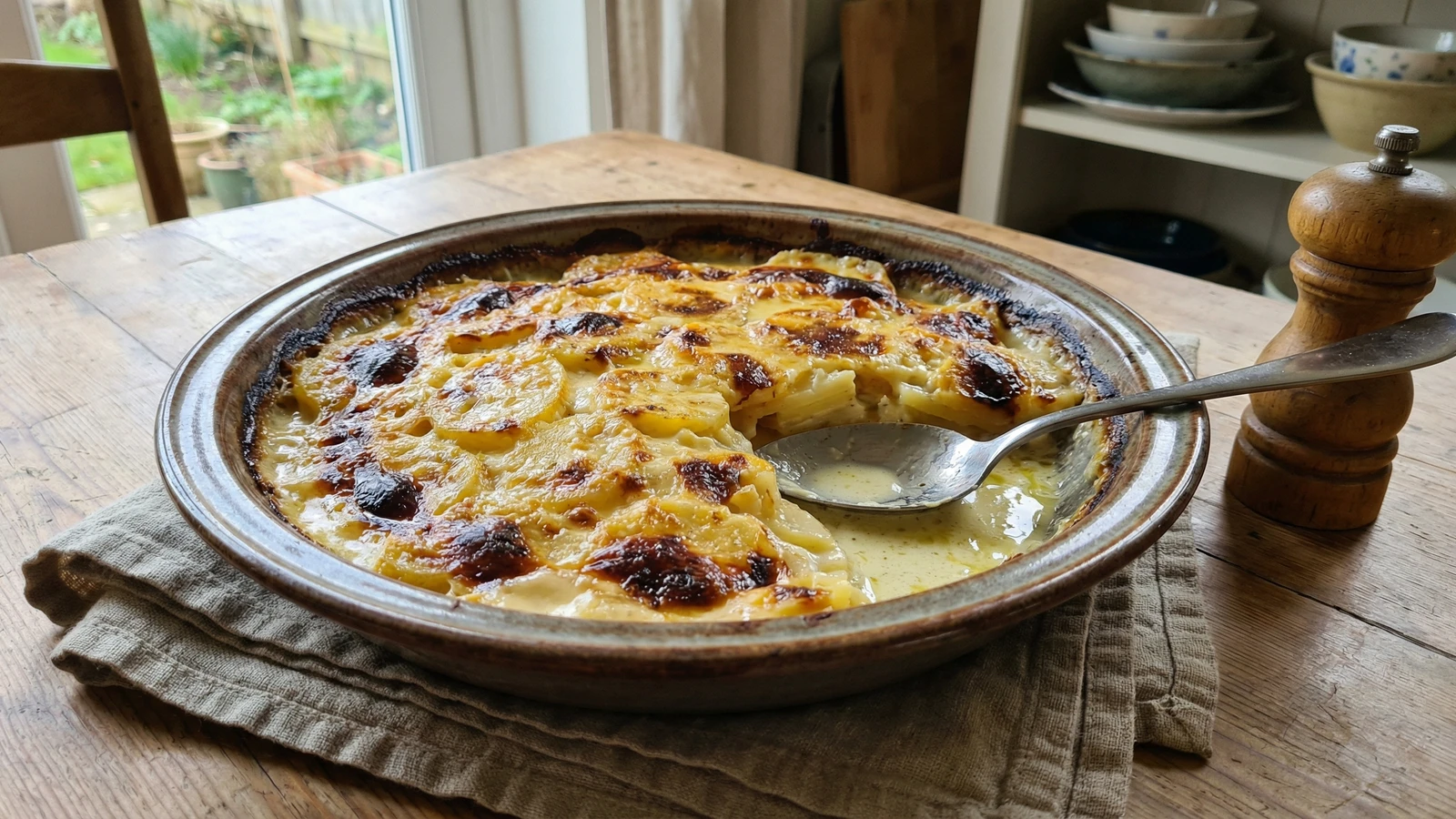
Potato Dauphinoise
Created by Chef Thomas
Potatoes sliced thin and layered with garlicky cream, baked slowly until the top goes golden and the inside turns to something soft, rich, and entirely yielding. The sort of dish that makes a cold evening feel like a favour.
January. The kitchen window has fogged over and the oven has been on long enough to warm the whole room. There's a gratin dish on the middle shelf with potato dauphinoise inside it, doing what it does best: turning three or four simple ingredients into something that makes people go quiet when they taste it.
This is not a complicated dish. Potatoes, cream, garlic, nutmeg, butter. That's it. But the way those things behave together in a low oven over an hour or so is worth paying attention to. The cream reduces and thickens around the potatoes. The garlic mellows into something sweet and barely there. The top goes golden and a little bit sticky at the edges, and when you cut into it, the layers hold for a second before giving way.
I make this when I want a side dish that does most of the talking. A roast chicken, a leg of lamb, even just a green salad alongside, and the dauphinoise carries the evening. It asks for good potatoes, real cream, and some patience. A recipe is a conversation, not a contract. The oven does the work. You just have to slice the potatoes thin enough and trust the process.
I wrote it down in the notebook years ago. The note just says: cream, potatoes, cold night, perfect. I haven't changed a word of it since.
The technique, the tradition, and the story behind every dish.
Discover Culinary AdvisorIngredients
waxy potatoes
Quantity
1kg
peeled and sliced 3mm thin
double cream
Quantity
500ml
whole milk
Quantity
150ml
garlic
Quantity
2 cloves
crushed to a paste with the flat of a knife
whole nutmeg
Quantity
for grating
unsalted butter
Quantity
30g
for the dish and the top
fine sea salt
Quantity
to taste
white pepper
Quantity
to taste
| Ingredient | Quantity |
|---|---|
| waxy potatoespeeled and sliced 3mm thin | 1kg |
| double cream | 500ml |
| whole milk | 150ml |
| garliccrushed to a paste with the flat of a knife | 2 cloves |
| whole nutmeg | for grating |
| unsalted butterfor the dish and the top | 30g |
| fine sea salt | to taste |
| white pepper | to taste |
Equipment Needed
- •Wide, shallow gratin dish or baking dish, roughly 25cm by 18cm
- •Mandoline or sharp knife
- •Wide saucepan for warming the cream
Instructions
- 1
Warm the cream
Pour the cream and milk into a wide saucepan. Add the crushed garlic, a generous grating of nutmeg, a good pinch of salt and some white pepper. Set it over a gentle heat and bring it just to the edge of a simmer, when the surface trembles but doesn't break. Take it off the heat. Let it sit for ten minutes so the garlic can do its work quietly. Taste it. It should be savoury and warm and faintly sweet from the nutmeg. If it needs more salt, now is when you add it. Seasoning cream after it's in the dish is a losing game.
Don't boil the cream. Boiled cream catches on the bottom of the pan and tastes scorched. A tremble on the surface is all you need. - 2
Slice the potatoes
Peel the potatoes and slice them about the thickness of a coin. A mandoline makes this quick, but a sharp knife and a bit of patience will get you there. Consistency matters more than precision: you want the slices roughly even so they cook at the same rate. Don't rinse them. The starch on the surface helps the layers hold together and thickens the cream as it bakes. Drop the slices into the warm cream as you go, turning them gently so each one gets coated.
If using a mandoline, respect it. It is the sharpest thing in your kitchen and it does not care about your fingers. Use the guard, or a cut-proof glove if you have one. - 3
Layer the dish
Set the oven to 160C/140C fan. Rub the inside of a gratin dish generously with butter. It wants to be wide and shallow, not deep, so the cream reaches every layer and the top has plenty of surface to go golden. Lift the potato slices from the cream and layer them into the dish, overlapping like tiles on a roof. Don't be too neat about it. Pour the remaining cream over the top. It should come about two-thirds of the way up the potatoes, no higher, or it won't reduce properly. Dot the surface with small pieces of butter.
A wide, shallow dish gives you more golden crust per serving, which is the whole point. A deep dish makes a nice enough gratin, but you lose that ratio of crisp top to soft, yielding middle. - 4
Bake low and slow
Cover the dish loosely with foil and bake for forty-five minutes. Then remove the foil and bake for another twenty-five to thirty minutes, until the top is deep golden, the edges are bubbling and sticky, and a knife slides into the centre with no resistance at all. The potatoes should feel like butter when you press them. If the top is colouring too quickly, lay the foil back over it for a while. If it's pale and timid after an hour, push the oven up a notch for the last ten minutes.
- 5
Rest before serving
Take it out of the oven and let it sit for ten minutes. This isn't optional. A dauphinoise straight from the oven is a loose, sloppy thing. It needs those ten minutes to settle, for the cream to thicken and the layers to hold their shape when you cut into them. When you do, the spoon should go through softly, and what comes out should be a neat, creamy stack of potato that just holds together before yielding on the plate.
Chef Tips
- •Use waxy potatoes, not floury ones. Charlotte or Maris Peer hold their shape and give you clean, distinct layers. A floury potato like Maris Piper will collapse into the cream and you'll lose the architecture of the thing. The layers matter.
- •Season the cream before it goes anywhere near the potatoes. Seasoning at the end doesn't reach the middle layers and you'll have a gratin that tastes perfect on top and bland in the centre. Get it right in the pan and every layer carries it.
- •Don't rush the oven. A dauphinoise baked hot and fast will brown on top while the middle stays raw and crunchy. Low heat, long time. The cream needs to simmer gently around the potatoes, and the potatoes need to cook through completely. A knife should meet no resistance at all when it slides in.
- •This sits beside a roast better than almost anything. But it's equally good with a sharp green salad dressed in mustard vinaigrette, if you want the gratin to be the main event. It can take the weight.
Advance Preparation
- •The dauphinoise can be assembled, covered with foil, and refrigerated for up to six hours before baking. Add ten minutes to the covered baking time to account for the cold start.
- •Leftovers reheat well in a moderate oven, loosely covered with foil, for twenty minutes or so. The cream thickens further and the edges go even more golden. Some would say the second day is better. I wouldn't argue.
Frequently Asked Questions
Nutrition Information
1 serving (about 270g)
Where cooking meets culture.
Culinary mentorship, cultural storytelling, and the editorial depth that makes cooking meaningful.
Explore Culinary Advisor