Culinary Advisor
A cooking platform built around craft, culture, and the stories behind what we eat.
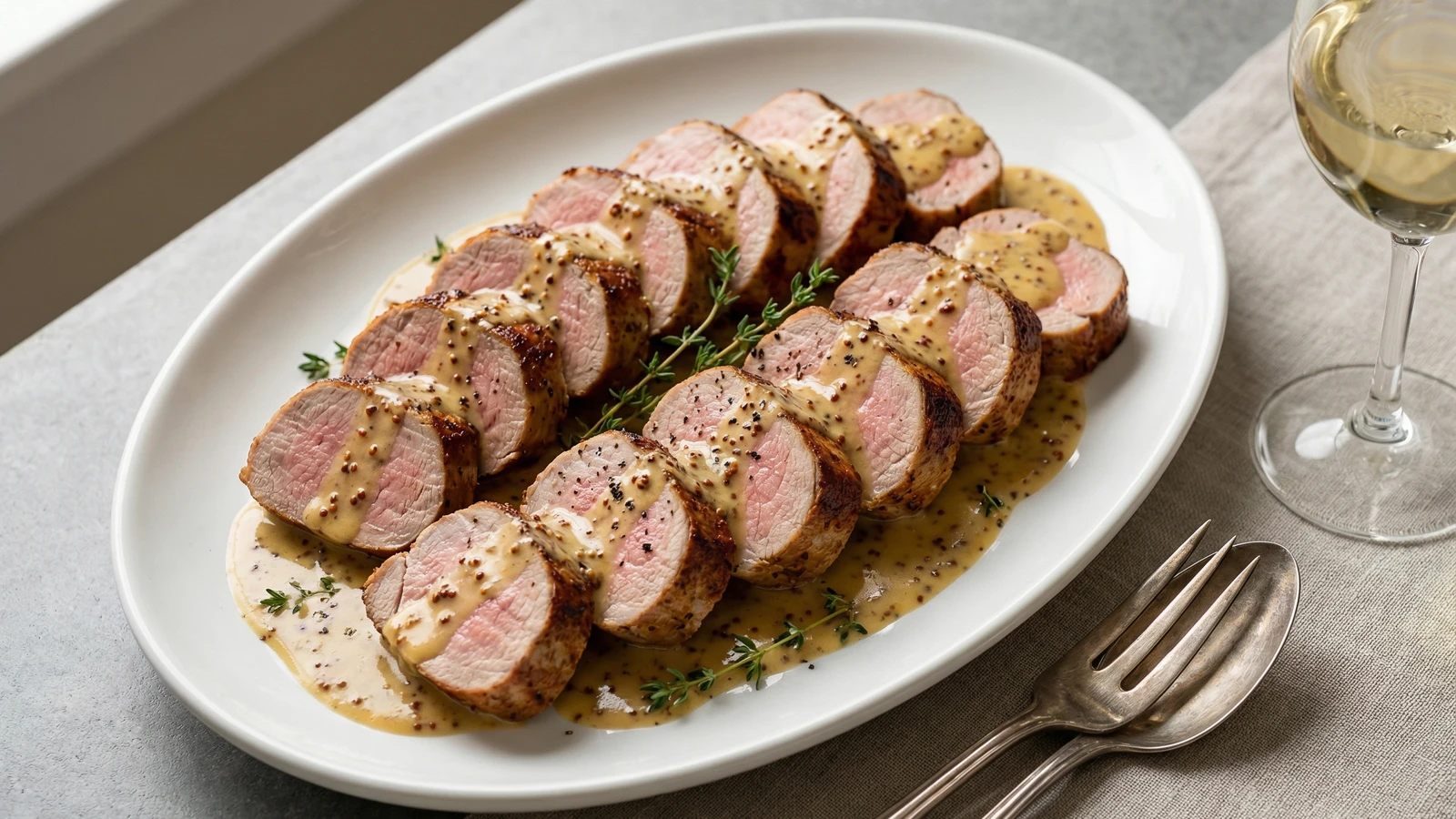
Pork Tenderloin with Mustard Cream Sauce
Created by
Seared and roasted pork tenderloin, sliced into rosy medallions and draped in a tangy mustard cream sauce. This is the kind of honest, impressive cooking that makes a gathering feel like a celebration.
Pork at the New Year table carries meaning. In cultures across Europe and the American South, the pig symbolizes progress because it roots forward, never backward. A tenderloin makes practical sense too: it's lean, cooks quickly, and slices into elegant medallions that look like you spent far more time than you actually did.
The tenderloin is the filet mignon of the pig. It sits along the backbone, does almost no work during the animal's life, and rewards you with butter-soft texture when cooked properly. The challenge is that leanness. Without the fat of a shoulder or belly, you must treat it with respect. Sear it hard to build a crust, roast it gently, and pull it before it dries out. A thermometer is not optional here.
The mustard cream sauce is where this dish becomes something special. Whole-grain mustard provides texture and heat. Dijon adds sharpness. Heavy cream smooths everything together into something silky and rich that clings to each slice. The sauce can be made ahead, which makes this ideal for entertaining. While your guests arrive and coats pile up in the hallway, your tenderloin roasts and your sauce waits patiently on the back burner.
I've served this at New Year's gatherings for decades. It scales beautifully, looks impressive on a platter, and lets you enjoy your own party. That last part matters more than most hosts admit.
The technique, the tradition, and the story behind every dish.
Discover Culinary AdvisorIngredients
pork tenderloins, trimmed of silver skin
Quantity
2 (about 1 pound each)
olive oil
Quantity
2 tablespoons
unsalted butter
Quantity
1 tablespoon
kosher salt
Quantity
2 teaspoons
freshly ground black pepper
Quantity
1 teaspoon
shallots
Quantity
4
minced
garlic
Quantity
3 cloves
minced
dry white wine
Quantity
1/2 cup
chicken stock
Quantity
1 cup
heavy cream
Quantity
1 cup
whole-grain mustard
Quantity
3 tablespoons
Dijon mustard
Quantity
2 tablespoons
fresh thyme leaves
Quantity
2 teaspoons
fresh lemon juice
Quantity
1 tablespoon
| Ingredient | Quantity |
|---|---|
| pork tenderloins, trimmed of silver skin | 2 (about 1 pound each) |
| olive oil | 2 tablespoons |
| unsalted butter | 1 tablespoon |
| kosher salt | 2 teaspoons |
| freshly ground black pepper | 1 teaspoon |
| shallotsminced | 4 |
| garlicminced | 3 cloves |
| dry white wine | 1/2 cup |
| chicken stock | 1 cup |
| heavy cream | 1 cup |
| whole-grain mustard | 3 tablespoons |
| Dijon mustard | 2 tablespoons |
| fresh thyme leaves | 2 teaspoons |
| fresh lemon juice | 1 tablespoon |
Equipment Needed
- •12-inch oven-safe skillet (cast iron or stainless steel)
- •Instant-read digital thermometer
- •Sharp carving knife
- •Wooden spoon for deglazing
Instructions
- 1
Prepare the pork
Remove the tenderloins from refrigeration 30 minutes before cooking. Pat them thoroughly dry with paper towels. That silver skin running along one side must go: slide a thin knife under it at one end, grip the freed flap with a paper towel, and pull while angling your knife against the membrane. Season generously on all sides with salt and pepper. The salt needs time to penetrate, so don't rush this step.
If your butcher hasn't removed the silver skin, ask them to do it. It's a thirty-second job for them and saves you frustration at home. - 2
Preheat and prepare
Position a rack in the center of your oven and preheat to 400°F. Set an oven-safe skillet, preferably 12 inches, on the stovetop. Have your sauce ingredients measured and ready. Once you start searing, you'll move quickly.
- 3
Sear the tenderloins
Heat olive oil in your skillet over medium-high until it shimmers and just begins to smoke. Lay both tenderloins in the pan, leaving space between them. Do not touch them. Let the Maillard reaction do its work. After 2 minutes, check the underside. You want deep golden brown, not pale beige. Rotate to sear all sides, about 6-8 minutes total. The kitchen will smell of caramelizing pork. Your smoke detector may have opinions. This is normal.
If your tenderloins are crowded, sear them one at a time. Crowding creates steam, and steam prevents browning. - 4
Roast to temperature
Transfer the skillet directly to your preheated oven. Roast until an instant-read thermometer inserted into the thickest part reads 135°F, about 12-18 minutes depending on thickness. The meat will continue cooking as it rests. Remove the skillet (careful, that handle is scorching) and transfer the tenderloins to a cutting board. Tent loosely with foil and let rest for 10 minutes. Do not skip this rest. The juices need time to redistribute.
- 5
Build the sauce base
Return that same skillet to medium heat. Add butter to the rendered pork fat and fond. Once the butter foams, add the shallots. Cook, stirring frequently, until they soften and turn translucent, about 3 minutes. Add the garlic and cook until fragrant, 30 seconds more. You'll smell it shift from raw to aromatic. That's your cue.
- 6
Deglaze and reduce
Pour in the white wine. It will sizzle and steam dramatically. Use a wooden spoon to scrape up every bit of fond from the bottom of the pan. Those browned bits are concentrated flavor. Let the wine reduce by half, about 2 minutes. Add the chicken stock and reduce by half again, another 3-4 minutes. The liquid should coat the back of a spoon lightly.
- 7
Finish the mustard cream
Reduce heat to medium-low. Pour in the heavy cream and stir to combine. Let it simmer gently until it thickens enough to coat the spoon heavily, about 4-5 minutes. Whisk in both mustards and the thyme leaves. Taste. Add lemon juice to brighten, then adjust salt and pepper. The sauce should be tangy, creamy, and slightly sharp. If it tastes flat, it needs more acid or salt.
Never boil the sauce after adding mustard. High heat turns mustard bitter and destroys its complexity. - 8
Slice and serve
Slice the rested tenderloins against the grain into medallions about 3/4-inch thick. The interior should be pale pink with clear juices. Arrange on a warmed platter, overlapping slightly. Spoon the mustard cream sauce generously over and around the meat. Scatter fresh thyme leaves across the top. Serve immediately with the remaining sauce in a small pitcher alongside.
Chef Tips
- •Buy two tenderloins rather than one large one. They cook more evenly and slice into more uniform portions for plating.
- •A digital probe thermometer that stays in the meat during roasting eliminates guesswork. Set the alarm for 135°F and forget about it.
- •For larger gatherings, this recipe doubles easily. Sear the tenderloins in batches, roast together on a sheet pan, and make a double batch of sauce in a wide saucepan.
- •The marriage of whole-grain and Dijon mustard matters. Whole-grain provides texture and visual appeal. Dijon provides smoothness and heat. Neither alone achieves what both together accomplish.
- •Pair with a Côtes du Rhône or California Viognier. The wine's fruit and body complement pork beautifully without competing with the mustard's tang.
- •This dish welcomes sides that can also be made ahead: roasted root vegetables, creamy mashed potatoes, or a wild rice pilaf all work splendidly.
Advance Preparation
- •Tenderloins can be trimmed, seasoned, and refrigerated uncovered up to 24 hours ahead. The surface dries, which improves your sear.
- •The mustard cream sauce can be made up to 3 days in advance. Store refrigerated in an airtight container. Reheat very gently over low heat, whisking constantly. Add a splash of cream if it has thickened too much.
- •For a party strategy: sear the tenderloins early in the day and refrigerate. Bring to room temperature 30 minutes before guests arrive, then finish roasting. The sauce waits on the back burner on lowest heat.
- •Sliced pork can be held warm in a 200°F oven for up to 20 minutes, loosely covered with foil, though freshly sliced is always better.
- •The complete dish reheats reasonably well the next day. Slice the pork, arrange in a baking dish, spoon sauce over, cover with foil, and warm at 300°F for 15-20 minutes.
Frequently Asked Questions
Nutrition Information
1 serving (about 340g)
Where cooking meets culture.
Culinary mentorship, cultural storytelling, and the editorial depth that makes cooking meaningful.
Explore Culinary Advisor