Culinary Advisor
A cooking platform built around craft, culture, and the stories behind what we eat.
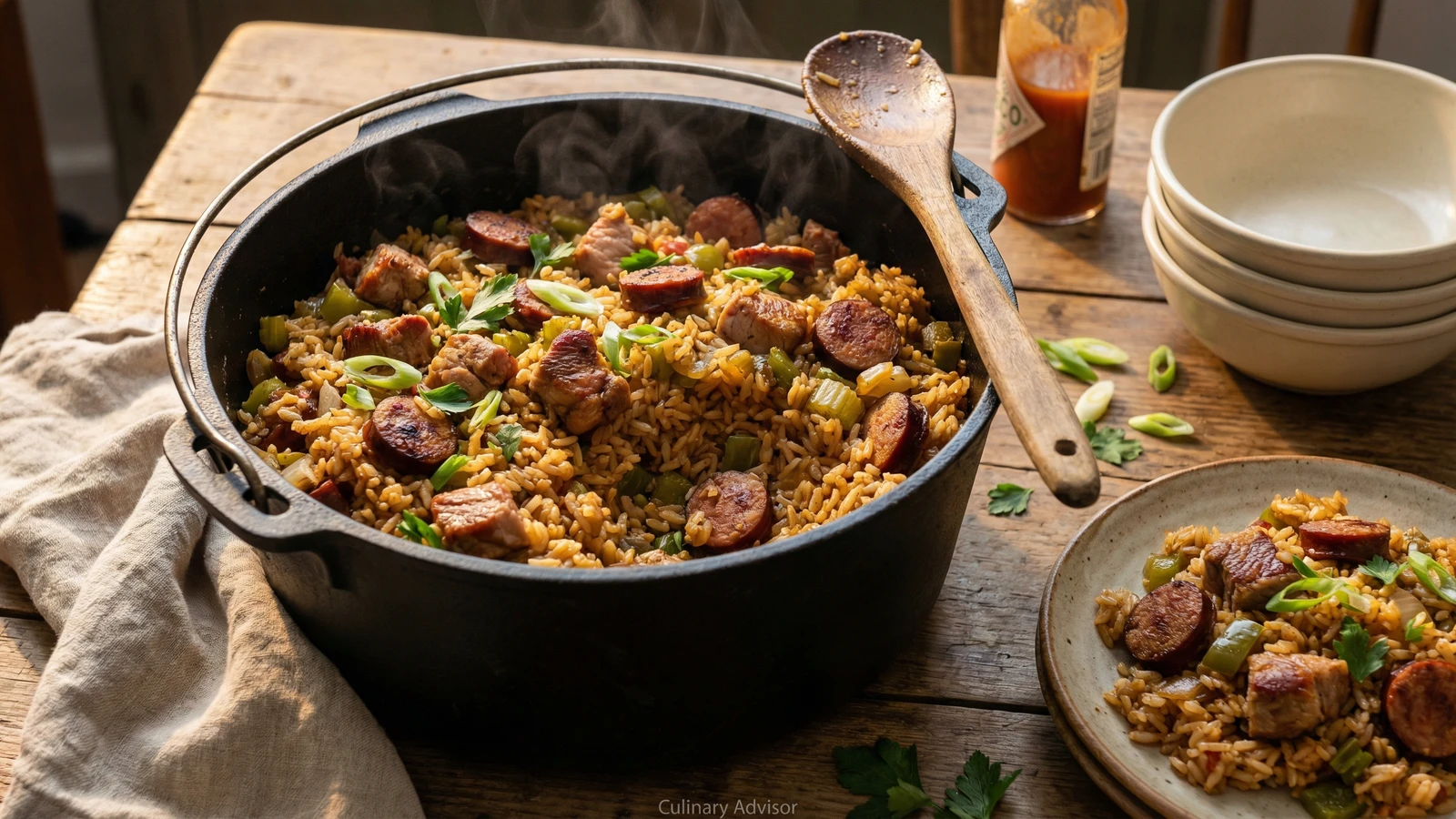
Pork Jambalaya
Created by Chef Remy
Tender chunks of pork shoulder and smoky andouille married with rice in one glorious pot, every grain soaked through with Cajun spice and meaty richness, the kind of dish that feeds a crowd and tastes even better the next day.
Jambalaya is a one-pot testament to making something extraordinary from humble ingredients. This is Cajun jambalaya, the brown kind, no tomatoes. That's how we make it in the bayou country where I grew up. The rice cooks directly in the seasoned stock, absorbing every bit of flavor from the pork, the andouille, and the holy trinity.
My grandmother Evangeline made jambalaya every time company came over because one pot could feed fifteen people without breaking her budget. She taught me that the secret lives in the browning. You sear that pork until it's almost too dark. You render the andouille until the edges crisp. All that fond on the bottom of your pot becomes the soul of the dish when the stock hits it.
At Lagniappe, we serve jambalaya on game days when the Saints are playing. People line up around the block. The thing is, this isn't restaurant food that's fussy or complicated. This is country cooking that anyone can master. Season in layers. Brown your meats properly. Don't lift that lid while the rice cooks. Follow those rules and you'll make jambalaya as good as anything in New Orleans.
The technique, the tradition, and the story behind every dish.
Discover Culinary AdvisorIngredients
boneless pork shoulder
Quantity
2 pounds
cut into 1-inch cubes
andouille sausage
Quantity
1 pound
sliced into half-moons
vegetable oil
Quantity
3 tablespoons, divided
Cajun seasoning
Quantity
2 tablespoons, divided
kosher salt
Quantity
1 teaspoon, plus more to taste
black pepper
Quantity
1/2 teaspoon
freshly ground
yellow onion
Quantity
1 large
diced
celery stalks
Quantity
2
diced
green bell pepper
Quantity
1 large
diced
garlic
Quantity
6 cloves
minced
bay leaves
Quantity
2
dried thyme
Quantity
1 teaspoon
cayenne pepper
Quantity
1/2 teaspoon, or to taste
long-grain white rice
Quantity
2 cups
chicken stock
Quantity
4 cups
preferably homemade
green onions
Quantity
1 bunch
sliced, white and green parts separated
unsalted butter
Quantity
2 tablespoons
fresh flat-leaf parsley (optional)
Quantity
for garnish
chopped
hot sauce (optional)
Quantity
for serving
| Ingredient | Quantity |
|---|---|
| boneless pork shouldercut into 1-inch cubes | 2 pounds |
| andouille sausagesliced into half-moons | 1 pound |
| vegetable oil | 3 tablespoons, divided |
| Cajun seasoning | 2 tablespoons, divided |
| kosher salt | 1 teaspoon, plus more to taste |
| black pepperfreshly ground | 1/2 teaspoon |
| yellow oniondiced | 1 large |
| celery stalksdiced | 2 |
| green bell pepperdiced | 1 large |
| garlicminced | 6 cloves |
| bay leaves | 2 |
| dried thyme | 1 teaspoon |
| cayenne pepper | 1/2 teaspoon, or to taste |
| long-grain white rice | 2 cups |
| chicken stockpreferably homemade | 4 cups |
| green onionssliced, white and green parts separated | 1 bunch |
| unsalted butter | 2 tablespoons |
| fresh flat-leaf parsley (optional)chopped | for garnish |
| hot sauce (optional) | for serving |
Equipment Needed
- •Large Dutch oven or heavy-bottomed pot with tight-fitting lid (5-7 quart)
- •Wooden spoon
- •Large mixing bowl
Instructions
- 1
Season the pork
Toss the pork cubes with one tablespoon of Cajun seasoning, the salt, and black pepper in a large bowl. Work the spices into every piece with your hands. This is layer one. The meat carries flavor deep into the dish, so don't skip this step or rush it. Let the pork sit at room temperature while you prep everything else, at least fifteen minutes.
Cold meat hitting a hot pan drops the temperature and steams instead of searing. Room temperature pork browns better. - 2
Brown the andouille
Heat one tablespoon of oil in a large Dutch oven or heavy-bottomed pot over medium-high heat until it shimmers. Add the andouille slices in a single layer. Let them sizzle undisturbed for two to three minutes until the edges turn dark and the fat renders out. Flip and brown the other side. That rendered fat is pure flavor. Transfer the sausage to a plate but leave every drop of that goodness in the pot.
- 3
Sear the pork
Add another tablespoon of oil to the pot. Working in batches so you don't crowd the pan, brown the seasoned pork on all sides. You want deep golden color, not gray steamed meat. This takes about four minutes per batch. The fond building on the bottom of your pot is money in the flavor bank. Set the browned pork aside with the andouille.
If the bottom of your pot looks like it's burning, reduce the heat slightly. If nothing is sticking at all, your pot isn't hot enough. You want a dark brown layer, not black. - 4
Build the holy trinity
Add the remaining tablespoon of oil to the pot. Drop in the onion, celery, and bell pepper. This is the holy trinity, the backbone of Louisiana cooking. Cook over medium heat, stirring often, until the onions turn translucent and sweet, about eight minutes. The vegetables will pick up all that beautiful fond from the bottom of the pot. Scrape and stir. That's flavor you're building.
- 5
Add aromatics and spices
Push the vegetables to the edges and add the garlic, white parts of the green onions, bay leaves, thyme, cayenne, and the remaining tablespoon of Cajun seasoning to the center. Let the garlic and spices bloom in the heat for about one minute, stirring constantly. You'll know it's ready when the kitchen smells like Louisiana. That's the bayou way: season at every step.
- 6
Toast the rice
Add the rice to the pot and stir to coat every grain with the seasoned fat and vegetables. Toast for two minutes, stirring constantly. The rice should look slightly translucent at the edges. This step keeps your grains separate and firm instead of mushy. Rice that goes straight into liquid without toasting turns to paste.
- 7
Add stock and meats
Pour in the chicken stock and scrape up any remaining bits from the bottom. The liquid should be about an inch above the rice. Nestle the browned pork and andouille into the rice, pushing them down so they're mostly submerged. Bring everything to a boil, then immediately reduce heat to the lowest setting.
Homemade stock makes a difference you can taste. If using store-bought, choose low-sodium so you can control the salt. Taste before adding more. - 8
Cover and cook
Cover the pot with a tight-fitting lid. Do not lift it. Do not stir. Let the jambalaya cook undisturbed for twenty-five to thirty minutes. The rice needs to absorb the liquid in peace. Stirring releases starch and makes the whole thing gummy. Trust the process.
- 9
Check and rest
After twenty-five minutes, lift the lid and check. The rice should be tender and the liquid absorbed. If there's still liquid pooling, cover and cook another five minutes. If the rice is tender but slightly wet, remove from heat and let it sit covered for ten minutes. The residual heat finishes the job.
- 10
Finish and serve
Remove the bay leaves. Add the butter and half the green onion tops, folding gently with a fork to fluff the rice without mashing it. Taste. Adjust salt and cayenne. Spoon generous portions into bowls, scatter the remaining green onions and parsley on top, and set the hot sauce on the table. When the last bite is as good as the first, you've done it right.
Chef Tips
- •Pork shoulder has the fat content you need for jambalaya. Lean cuts like loin dry out during the long cook. Look for good marbling when you're at the butcher.
- •Real andouille from Louisiana makes a difference. If you can't find it, a good quality smoked sausage with some cayenne mixed in will work, but it won't be quite the same.
- •Jambalaya is better the second day after the flavors have had time to get acquainted. Reheat gently with a splash of stock to loosen things up.
- •Start with less cayenne if you're feeding folks who aren't used to heat. You can always pass hot sauce at the table. That's the polite Louisiana way.
Advance Preparation
- •The pork can be seasoned and refrigerated overnight. Bring to room temperature for thirty minutes before browning.
- •Completed jambalaya keeps refrigerated for four days and actually improves overnight as flavors meld.
- •Freeze portions for up to three months. Thaw overnight in the refrigerator and reheat with a splash of stock.
Frequently Asked Questions
Nutrition Information
1 serving (about 310g)
Where cooking meets culture.
Culinary mentorship, cultural storytelling, and the editorial depth that makes cooking meaningful.
Explore Culinary Advisor