Culinary Advisor
A cooking platform built around craft, culture, and the stories behind what we eat.
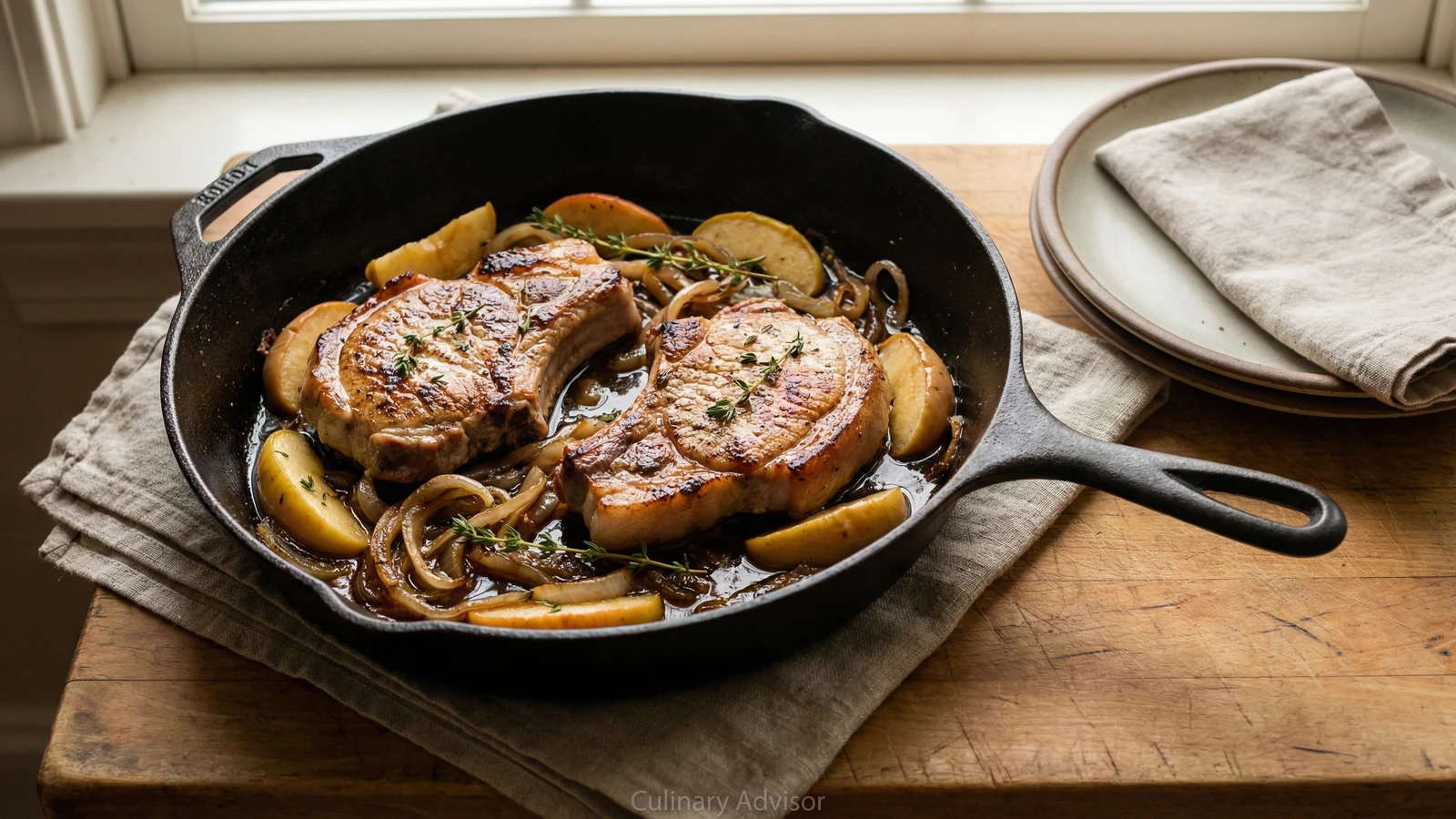
Pork Chops with Apples and Onions
Created by Chef Ally
Bone-in pork chops seared in cast iron until deeply golden, then nestled with fall apples and sweet onions that soften into something almost jammy. This is October on a plate, honest and satisfying.
Start at the market. Look for pork chops with good fat around the edges and a blush of pink through the meat. Bone-in chops from a farmer who raises pigs properly will taste like pork used to taste, before industrial farming bred the flavor out. Ask questions. Know your source.
The apples matter just as much. You want firm fall varieties that hold their shape when cooked: Honeycrisp for sweetness, Braeburn for balance, Granny Smith if you like a sharper edge. These should be local, picked recently, still crisp when you bite in. Out-of-season apples shipped from cold storage will turn to mush.
This is peasant cooking at its best. A single pan. Ingredients that belong together because they ripen together. The pork gives its fat to the apples and onions. The cider and vinegar cut the richness. The thyme ties everything to the garden. You are not doing much here, and that is the point. When the ingredients are right, your job is to get out of the way.
The technique, the tradition, and the story behind every dish.
Discover Culinary AdvisorIngredients
bone-in pork chops
Quantity
4, about 1 inch thick (8-10 ounces each)
kosher salt
Quantity
1 1/2 teaspoons, divided
black pepper
Quantity
1/2 teaspoon
freshly ground
unsalted butter
Quantity
2 tablespoons, divided
good olive oil
Quantity
1 tablespoon
sweet onions
Quantity
2 large
halved and sliced into half-moons
firm fall apples
Quantity
3 (about 1 1/2 pounds)
such as Honeycrisp, Braeburn, or Granny Smith
fresh thyme
Quantity
4 sprigs
fresh apple cider
Quantity
3/4 cup
apple cider vinegar
Quantity
1 tablespoon
Dijon mustard
Quantity
1 teaspoon
| Ingredient | Quantity |
|---|---|
| bone-in pork chops | 4, about 1 inch thick (8-10 ounces each) |
| kosher salt | 1 1/2 teaspoons, divided |
| black pepperfreshly ground | 1/2 teaspoon |
| unsalted butter | 2 tablespoons, divided |
| good olive oil | 1 tablespoon |
| sweet onionshalved and sliced into half-moons | 2 large |
| firm fall applessuch as Honeycrisp, Braeburn, or Granny Smith | 3 (about 1 1/2 pounds) |
| fresh thyme | 4 sprigs |
| fresh apple cider | 3/4 cup |
| apple cider vinegar | 1 tablespoon |
| Dijon mustard | 1 teaspoon |
Equipment Needed
- •12-inch cast iron skillet with lid (or large oven-safe skillet)
- •Instant-read thermometer
- •Sturdy metal spatula
Instructions
- 1
Season the pork
Remove the pork chops from the refrigerator thirty minutes before cooking. Pat them completely dry with paper towels. Season both sides generously with one teaspoon of the salt and all the pepper. Dry meat sears properly. Wet meat steams.
Room temperature meat cooks more evenly. Cold chops will be overcooked on the outside before the center comes up to temperature. - 2
Prepare the apples
Core the apples and cut each into eight wedges. Leave the skin on. It holds the slices together during cooking and adds color to the finished dish. Toss with a pinch of salt to draw out some moisture.
- 3
Sear the chops
Heat one tablespoon of butter and the olive oil in a large cast iron skillet over medium-high heat until the butter foam subsides and you see the first wisps of smoke. Lay the chops in the pan without crowding. Do not move them. Let them sear undisturbed for four minutes until a deep golden crust forms. Flip and sear the second side for three minutes. Transfer to a plate.
If your skillet is not large enough for all four chops with space between them, work in batches. Crowding causes steaming, not searing. - 4
Caramelize the onions
Reduce heat to medium. Add the sliced onions and the remaining half teaspoon of salt to the same skillet. Stir to coat in the rendered fat and any browned bits clinging to the pan. Cook, stirring occasionally, for twelve to fifteen minutes until the onions soften completely and turn golden at the edges. They should smell sweet and look almost jammy.
- 5
Add the apples
Push the onions to the edges of the skillet. Add the remaining tablespoon of butter to the center. When it melts, add the apple wedges in a single layer. Let them cook undisturbed for two minutes to develop some color, then stir them together with the onions. Tuck in the thyme sprigs.
- 6
Braise together
Whisk together the apple cider, vinegar, and mustard in a small bowl. Pour into the skillet. Nestle the pork chops back into the pan, settling them into the bed of apples and onions. Any juices that collected on the plate go in too. Bring to a gentle simmer, then reduce heat to medium-low. Cover and cook for fifteen to eighteen minutes until the pork reaches 140F at the thickest part.
The pork will continue cooking as it rests. Pulling at 140F ensures you finish around 145F, which is juicy and safe. Going higher dries out the meat. - 7
Rest and serve
Transfer the chops to a cutting board and let them rest for five minutes. Taste the apples and onions. Adjust salt if needed. Spoon the apples and onions onto a platter or individual plates and lay the chops on top. Pour any remaining pan juices over everything. Serve immediately while the pork is still blushing pink inside.
Chef Tips
- •Seek out heritage breed pork if you can find it. Berkshire, Duroc, or Red Wattle have fat marbling that bastes the meat from within. The difference is remarkable.
- •Sweet onions like Vidalia, Walla Walla, or Maui varieties caramelize beautifully without added sugar. If using storage onions, add a pinch of brown sugar to the pan.
- •Save this dish for fall when local apples are abundant. In spring, try the same technique with rhubarb and shallots instead.
- •The pan sauce is thin by design. If you prefer something richer, remove the chops and apples, then reduce the liquid by half before spooning it over.
Advance Preparation
- •Onions can be sliced up to a day ahead and stored refrigerated in an airtight container.
- •Apples should be cut just before cooking to prevent browning.
- •The dish is best served immediately but reheats gently in a covered skillet with a splash of cider.
Frequently Asked Questions
Nutrition Information
1 serving (about 400g)
Where cooking meets culture.
Culinary mentorship, cultural storytelling, and the editorial depth that makes cooking meaningful.
Explore Culinary Advisor