Culinary Advisor
A cooking platform built around craft, culture, and the stories behind what we eat.
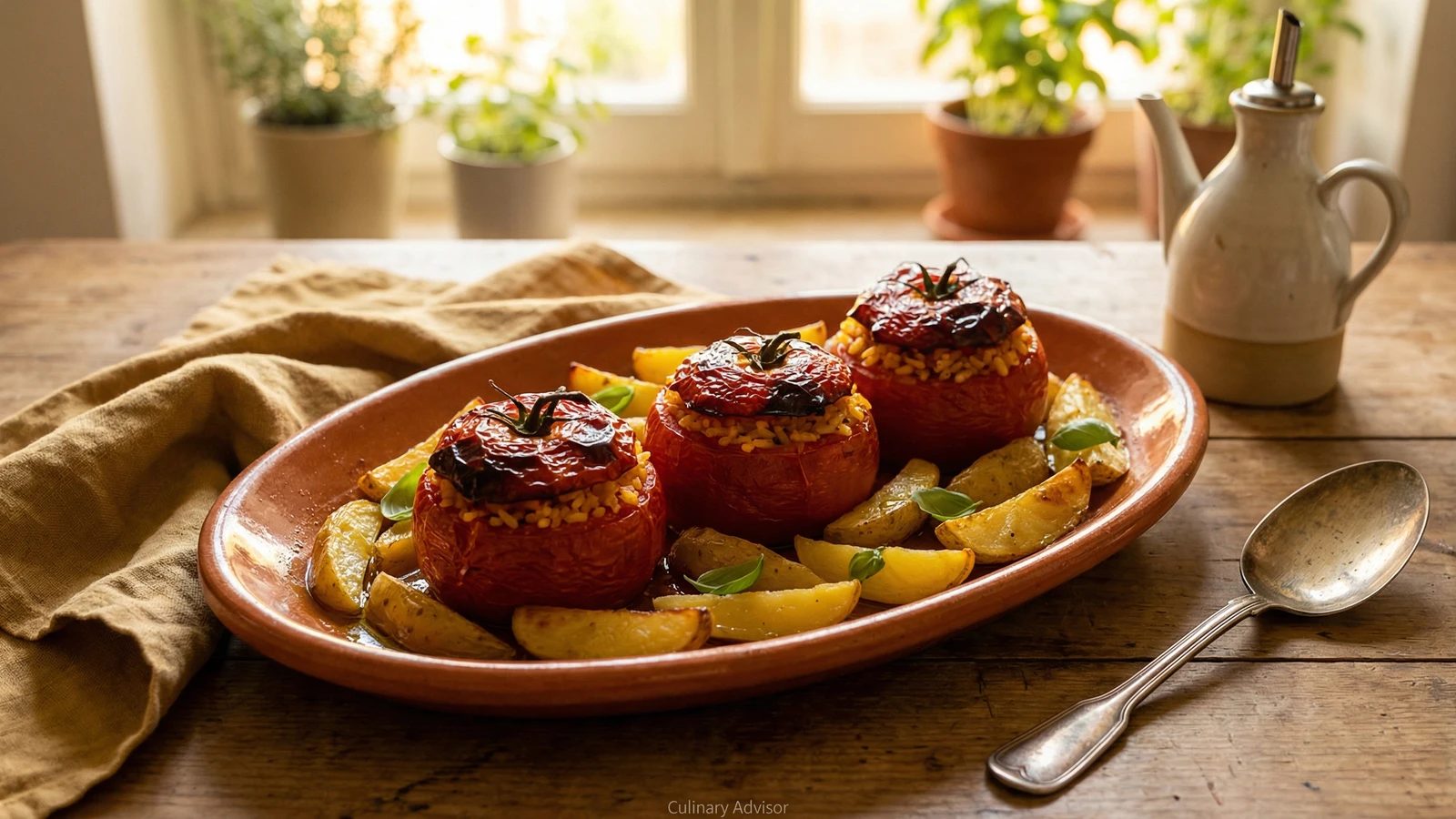
Pomodori Ripieni al Riso
Created by Chef Graziella
The stuffed tomatoes of Rome, where rice absorbs every drop of tomato essence as it bakes, the tops caramelizing into something that needs no embellishment and tolerates none.
In Rome, when August arrives and the tomatoes at Campo de' Fiori are so ripe they threaten to split, this is what the home cooks make. It is not complicated. It cannot be. The tomato does the work. The rice absorbs the juices. The oven provides the heat. Your job is to stay out of the way.
The rice goes in raw. This surprises Americans, who want to cook everything before it enters the oven. But the rice must drink the tomato liquid as it bakes. If you precook it, you have defeated the purpose. You will have rice inside a tomato rather than rice that has become one with the tomato. These are not the same thing.
Roman cooks have made these for generations, setting them out at room temperature alongside grilled lamb or roasted chicken. They are better this way than hot from the oven. The flavors settle. The rice firms. What was merely good becomes correct.
Pomodori ripieni al riso emerged from the Roman tradition of cucina povera in the late 19th century, when home cooks stretched precious rice by baking it inside abundant summer tomatoes. The dish became a fixture in the trattorie of Trastevere and the Jewish ghetto, where cooks perfected the technique of using the tomato itself as both vessel and sauce.
The technique, the tradition, and the story behind every dish.
Discover Culinary AdvisorIngredients
large round tomatoes
Quantity
6 (about 3 pounds)
ripe but still firm
Arborio or Carnaroli rice
Quantity
1 cup
garlic cloves
Quantity
2
minced fine
fresh basil leaves
Quantity
1/4 cup
torn
fresh flat-leaf parsley
Quantity
2 tablespoons
chopped
extra virgin olive oil
Quantity
1/2 cup, divided
kosher salt
Quantity
1 teaspoon
black pepper
Quantity
1/2 teaspoon
freshly ground
Yukon Gold potatoes (optional)
Quantity
1 1/2 pounds
peeled and cut into wedges
| Ingredient | Quantity |
|---|---|
| large round tomatoesripe but still firm | 6 (about 3 pounds) |
| Arborio or Carnaroli rice | 1 cup |
| garlic clovesminced fine | 2 |
| fresh basil leavestorn | 1/4 cup |
| fresh flat-leaf parsleychopped | 2 tablespoons |
| extra virgin olive oil | 1/2 cup, divided |
| kosher salt | 1 teaspoon |
| black pepperfreshly ground | 1/2 teaspoon |
| Yukon Gold potatoes (optional)peeled and cut into wedges | 1 1/2 pounds |
Equipment Needed
- •Fine-mesh strainer
- •Large baking dish (9x13 inches or similar)
- •Sharp knife for tomato tops
Instructions
- 1
Prepare the tomatoes
Slice the top quarter off each tomato and set the tops aside. Using a spoon, scoop out the seeds and pulp into a fine-mesh strainer set over a bowl. Press the pulp to extract all the juice. You should have about one cup of tomato liquid. Discard the seeds. Lightly salt the inside of each tomato shell and invert them on a rack to drain for 15 minutes.
Choose tomatoes that are ripe but still hold their shape. Overripe tomatoes will collapse in the oven. Underripe ones will not yield enough juice to cook the rice. - 2
Make the filling
In a bowl, combine the raw rice with the reserved tomato liquid, the minced garlic, torn basil, chopped parsley, a quarter cup of the olive oil, the salt, and the pepper. Stir well. The rice should be coated and slightly submerged. Let this sit for 10 minutes while you prepare the baking dish.
- 3
Prepare the baking dish
Preheat your oven to 350 degrees Fahrenheit. Coat the bottom of a baking dish large enough to hold the tomatoes snugly with two tablespoons of olive oil. If using potatoes, toss the wedges with the remaining two tablespoons of oil, season with salt and pepper, and scatter them around the edges of the dish.
- 4
Fill the tomatoes
Turn the drained tomato shells right side up and place them in the prepared dish. Spoon the rice mixture into each tomato, filling them three-quarters full. The rice will expand as it cooks. Do not overfill or the filling will spill. Place the reserved tomato tops back on as lids.
The rice must have room to swell. Fill each tomato only three-quarters full. If you pack it tight, the tomato will split and the rice will remain crunchy in the center. - 5
Bake until done
Bake for one hour and 15 minutes, until the tomato skins are wrinkled, the tops are deeply caramelized, and a fork slides easily into the rice. The potatoes, if using, should be golden and tender. If the tops brown too quickly, tent loosely with foil for the final 20 minutes.
- 6
Rest before serving
Remove from the oven and let the tomatoes rest in the dish for at least 30 minutes. They are best served at room temperature or barely warm, when the rice has firmed and the flavors have settled. This is not a hot dish. Romans know this. Now you do too.
Chef Tips
- •The potatoes are traditional and worth including. They roast in the tomato juices that escape during baking, absorbing flavor no plain roasted potato can match.
- •Never refrigerate these if you plan to serve them the same day. Cold dulls the tomato flavor and hardens the rice. Room temperature is correct.
- •Some Roman cooks add a small amount of the scooped tomato pulp back into the rice mixture for extra moisture. This works if your tomatoes are less juicy than they should be.
- •Leftover stuffed tomatoes can be refrigerated overnight. Bring to room temperature for one hour before serving, or warm gently in a low oven.
Advance Preparation
- •The tomatoes can be hollowed, the filling mixed, and everything assembled up to four hours ahead. Refrigerate covered, then bring to room temperature for 30 minutes before baking.
- •Baked tomatoes keep refrigerated for two days. Bring to room temperature before serving. They do not reheat well in the microwave; use a low oven if warming is necessary.
Frequently Asked Questions
Nutrition Information
1 serving (about 360g)
Where cooking meets culture.
Culinary mentorship, cultural storytelling, and the editorial depth that makes cooking meaningful.
Explore Culinary Advisor