Culinary Advisor
A cooking platform built around craft, culture, and the stories behind what we eat.
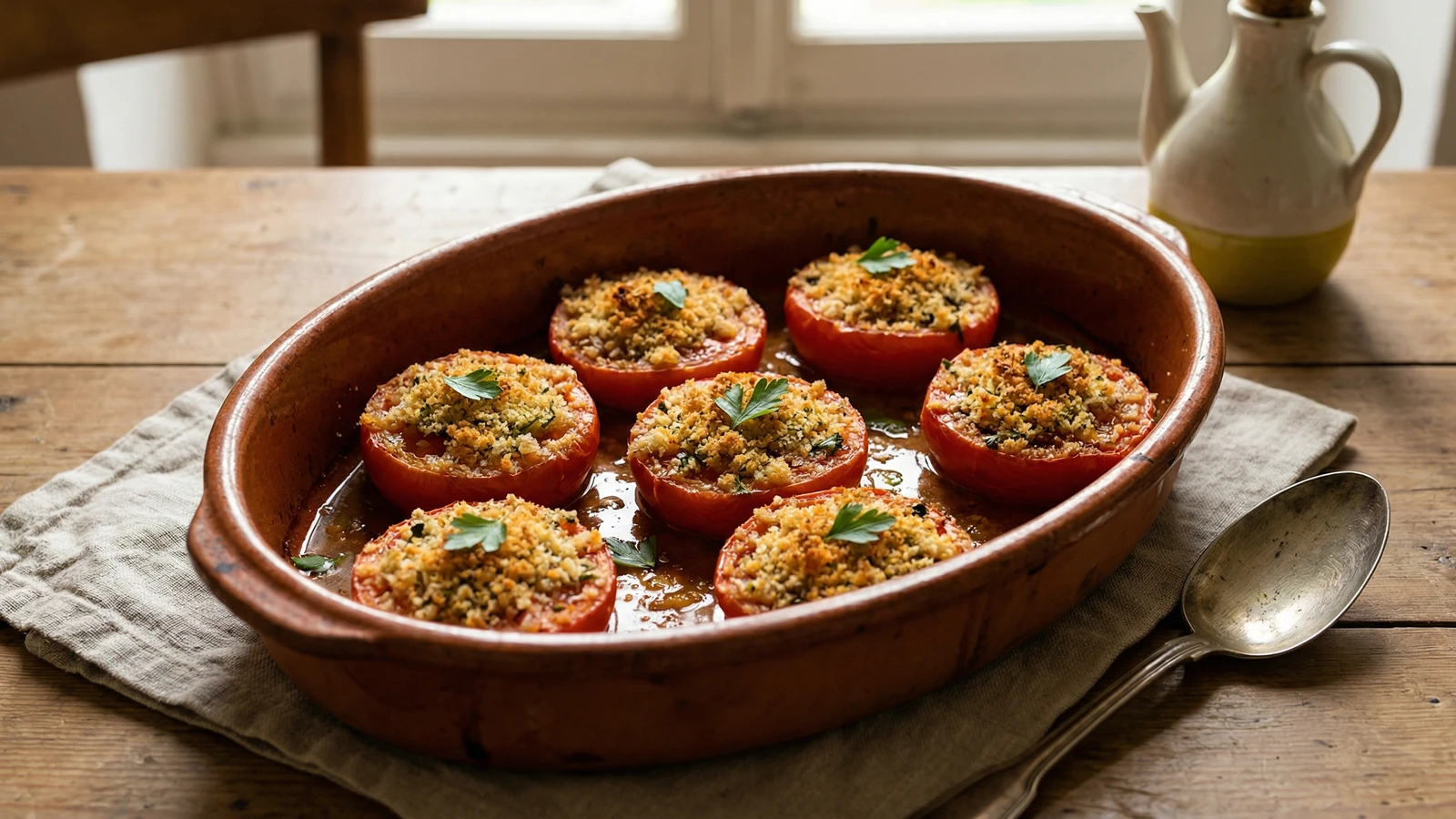
Pomodori Gratinati
Created by Chef Graziella
Ripe tomatoes crowned with crisp, herb-scented breadcrumbs and roasted until the juices concentrate. The kind of contorno that proves vegetables need no apology.
This is a dish of the Italian south, where summer tomatoes grow fat in volcanic soil and home cooks understand that a vegetable prepared simply is not the same as a vegetable prepared carelessly. Pomodori gratinati requires attention. The tomatoes must be ripe but firm. The breadcrumbs must be coarse and fresh, not the dust from a canister. The garlic must be minced so fine it nearly dissolves.
What you keep out is as significant as what you put in. Some recipes call for anchovies, capers, olives, cheese in excess. These additions have their place, but they mask rather than enhance. The tomato is the point. The breadcrumbs exist to provide texture and carry the herbs. The olive oil binds everything and encourages the crust to form.
Serve these beside grilled fish or roasted chicken. Serve them as part of an antipasto. Serve them alone with good bread to catch the juices. They are adaptable in the way of all honest Italian food, which is to say they fit where good ingredients are welcome.
Pomodori gratinati belong to the tradition of cucina povera, the resourceful cooking of southern Italian households who stretched stale bread to make vegetables more substantial. The technique of stuffing and gratinating tomatoes appears in Neapolitan, Puglian, and Sicilian kitchens, each with regional variations in the filling. The dish became a summer staple wherever tomatoes ripened in abundance.
The technique, the tradition, and the story behind every dish.
Discover Culinary AdvisorIngredients
ripe but firm tomatoes
Quantity
6 (about 2 pounds)
coarse fresh breadcrumbs
Quantity
1 1/2 cups
from day-old bread
flat-leaf Italian parsley
Quantity
3 tablespoons
chopped
garlic cloves
Quantity
2
minced very fine
dried oregano
Quantity
1 teaspoon
extra virgin olive oil
Quantity
1/4 cup, plus more for the baking dish
Parmigiano-Reggiano
Quantity
3 tablespoons
freshly grated
kosher salt
Quantity
to taste
black pepper
Quantity
to taste
freshly ground
| Ingredient | Quantity |
|---|---|
| ripe but firm tomatoes | 6 (about 2 pounds) |
| coarse fresh breadcrumbsfrom day-old bread | 1 1/2 cups |
| flat-leaf Italian parsleychopped | 3 tablespoons |
| garlic clovesminced very fine | 2 |
| dried oregano | 1 teaspoon |
| extra virgin olive oil | 1/4 cup, plus more for the baking dish |
| Parmigiano-Reggianofreshly grated | 3 tablespoons |
| kosher salt | to taste |
| black pepperfreshly ground | to taste |
Equipment Needed
- •Baking dish large enough to hold 12 tomato halves
- •Small spoon for scooping seeds
- •Food processor or box grater for breadcrumbs
Instructions
- 1
Prepare the tomatoes
Heat your oven to 400 degrees. Choose tomatoes that are ripe but still firm. Soft tomatoes will collapse into mush. Cut each tomato in half horizontally, through its equator. Using a small spoon, scoop out the seeds and their surrounding gel, leaving the flesh walls intact. You want a shallow cavity, not a hollow shell. Sprinkle the cut surfaces lightly with salt and turn them upside down on a rack or paper towels for 10 minutes. This draws out excess moisture.
Cutting horizontally rather than stem to bottom gives you a more stable base and a wider surface for the breadcrumb topping. - 2
Make the breadcrumb mixture
In a bowl, combine the breadcrumbs, parsley, minced garlic, oregano, and Parmigiano-Reggiano. Drizzle in the olive oil and work it through with your fingers until every crumb is coated and the mixture holds together loosely when pressed. It should be moist but not greasy. Season with a pinch of salt and generous pepper.
The breadcrumbs must be coarse, made from real bread. Fine commercial crumbs turn to paste. Tear day-old bread and pulse it briefly in a food processor, or grate it on the large holes of a box grater. - 3
Fill the tomatoes
Brush a baking dish with olive oil. Arrange the tomato halves cut side up, nestled close together so they support each other. Divide the breadcrumb mixture among them, mounding it generously on top. Press gently so it adheres. Drizzle a thin thread of olive oil over each filled tomato.
- 4
Roast until golden
Bake for 30 to 35 minutes, until the breadcrumbs are deeply golden and crisp, and the tomatoes have softened but still hold their shape. The edges of the tomatoes may char slightly. This is correct. Let them rest for 5 minutes before serving. They are good hot from the oven, warm, or at room temperature.
Chef Tips
- •The garlic here is a whisper, not a shout. Two cloves, minced nearly to paste and distributed through the breadcrumbs. Those who add more misunderstand the dish.
- •Day-old bread makes the best crumbs. Fresh bread is too moist and clumps together. If your bread is fresh, dry the torn pieces in a low oven for 10 minutes before processing.
- •These tomatoes are excellent at room temperature, which makes them ideal for summer entertaining. Roast them an hour before guests arrive and let them wait.
Advance Preparation
- •The breadcrumb mixture can be prepared several hours ahead and refrigerated. Bring to room temperature before filling the tomatoes.
- •Filled tomatoes can wait, covered, at room temperature for up to one hour before baking.
- •Baked tomatoes are best the day they are made. They do not reheat well; the crumbs lose their crispness.
Frequently Asked Questions
Nutrition Information
1 serving (about 150g)
Where cooking meets culture.
Culinary mentorship, cultural storytelling, and the editorial depth that makes cooking meaningful.
Explore Culinary Advisor