Culinary Advisor
A cooking platform built around craft, culture, and the stories behind what we eat.
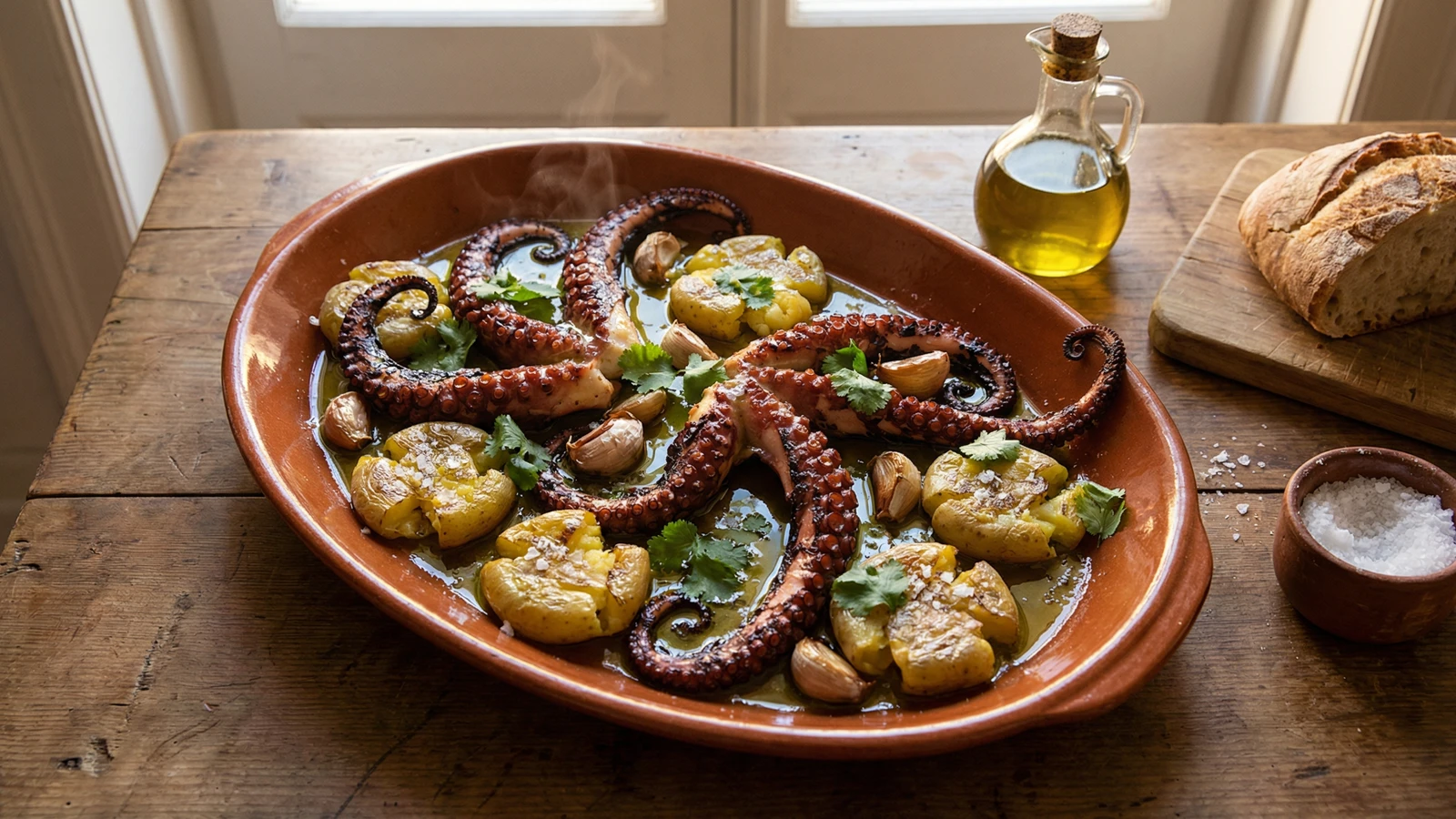
Polvo à Lagareiro
Created by
Octopus roasted until the edges char, served with punched potatoes, drowned in garlic-infused olive oil the way the mill workers ate it. This is what abundance looks like in Portuguese cooking.
Lagareiro. The word itself tells you everything you need to know. It comes from lagar, the olive press, and the workers who operated it. These were men with unlimited access to the first press of the season, that bright green oil that tastes like grass and pepper and something almost alive. They poured it over everything. They poured it like it cost nothing, because for them, it didn't.
Polvo à Lagareiro is that spirit captured on a plate. You take good octopus, cook it until tender, roast it until the edges crisp and char, and then you drown it in olive oil. Not drizzle. Drown. If your first instinct isn't that there's too much oil, you haven't made it right.
I didn't grow up eating this. Avó Leonor was Alentejana, landlocked, far from the coast where octopus came off the boats. But I learned it from the grandmothers in Setúbal and the Beira coast when I started documenting recipes. They all said the same thing: the oil is the point. The octopus is just the vehicle.
At Mesa da Avó, I serve this for special occasions. It's a dish that makes people understand why we Portuguese are so particular about our azeite. When you pour that golden oil over crispy octopus and punched potatoes, watching it pool in the cracks and crevices, you understand that olive oil isn't a cooking fat here. It's a sauce. It's the star. A cozinha é memória, and this dish tastes like memory of abundance.
The lagareiro style originated in central Portugal's olive-producing regions, where mill workers enjoyed the privilege of cooking with fresh-pressed oil in quantities others couldn't afford. The preparation was traditionally applied to bacalhau, but coastal cooks adapted it for octopus, creating a dish that celebrates Portugal's two great food traditions: salt cod and seafood, both united by their love of olive oil.
The technique, the tradition, and the story behind every dish.
Discover Culinary AdvisorIngredients
octopus
Quantity
1 whole (about 1.5 kg)
cleaned
bay leaf
Quantity
1
onion
Quantity
1 medium
halved
small waxy potatoes
Quantity
1 kg
about 5cm diameter
coarse sea salt
Quantity
for boiling
extra virgin olive oil (azeite)
Quantity
200ml
garlic cloves
Quantity
8
smashed but whole
fresh cilantro (coentros)
Quantity
1 small bunch
roughly chopped
black pepper
Quantity
freshly ground, to taste
flaky sea salt
Quantity
for finishing
| Ingredient | Quantity |
|---|---|
| octopuscleaned | 1 whole (about 1.5 kg) |
| bay leaf | 1 |
| onionhalved | 1 medium |
| small waxy potatoesabout 5cm diameter | 1 kg |
| coarse sea salt | for boiling |
| extra virgin olive oil (azeite) | 200ml |
| garlic clovessmashed but whole | 8 |
| fresh cilantro (coentros)roughly chopped | 1 small bunch |
| black pepper | freshly ground, to taste |
| flaky sea salt | for finishing |
Equipment Needed
- •Large pot for boiling octopus
- •Large roasting pan
- •Small saucepan for garlic oil
- •Large warm serving platter
Instructions
- 1
Cook the octopus
Bring a large pot of unsalted water to a boil with the bay leaf and halved onion. Dip the octopus into the boiling water three times, letting the tentacles curl each time before lifting it out. This isn't superstition. This is how the coastal grandmothers do it, and they know things. Lower the octopus fully into the water, reduce to a gentle simmer, and cook until a knife slides easily into the thickest part of a tentacle, about 45 minutes to 1 hour depending on size.
Buy frozen octopus if you can. Freezing breaks down the muscle fibers and tenderizes the meat. If you're using fresh, the old fishermen used to beat it against rocks. A rolling pin works too. - 2
Boil the potatoes
While the octopus cooks, place the potatoes in a separate pot, cover with cold water, and add a generous handful of coarse salt. Bring to a boil and cook until a knife pierces them easily, about 20 minutes. Drain and let them cool just enough to handle. Keep the skins on. This is important.
- 3
Make batatas a murro
Preheat your oven to 220°C (425°F). Transfer the potatoes to a large roasting pan. Now, give each potato a firm punch with your fist or press down with the heel of your hand to crack it open. You want them split and broken, rough edges exposed. These edges will crisp and drink the oil. Drizzle generously with about 4 tablespoons of the olive oil and season with salt. Roast for 20 minutes while you prepare the octopus.
Batatas a murro means 'punched potatoes.' Don't be gentle. The cracks and crevices are where the magic happens, where the olive oil pools and the edges turn golden. - 4
Prepare the octopus for roasting
When the octopus is tender, lift it from the water and let it drain. Cut the tentacles from the body, keeping them whole. If the tentacles are very large, you can halve them lengthwise. Pat everything very dry with paper towels. Wet octopus won't crisp. Brush generously with olive oil.
- 5
Roast the octopus
After the potatoes have roasted for 20 minutes, push them to the sides of the pan and arrange the octopus pieces in the center. The oven should be screaming hot. Roast for another 15 to 20 minutes, turning the octopus halfway through, until the edges char slightly and the skin becomes crispy in places. The tips of the tentacles should curl and color. This is what you want.
- 6
Make the garlic oil
While everything roasts, warm the remaining olive oil in a small pan over low heat. Add the smashed garlic cloves and let them infuse gently for 5 to 7 minutes. The garlic should turn golden and fragrant but never brown. Brown garlic is bitter garlic. Remove from heat and let it steep.
Use the best azeite you have for this. In Alentejo, we say you can judge a cook by their olive oil. This is not the place to economize. - 7
Serve à lagareiro
Transfer the octopus and potatoes to a large warm platter. Pour the garlic oil over everything. Be generous. Absurdly generous. The lagareiro style is named for olive mill workers who had unlimited access to fresh oil, so pour it like you work at the mill. Scatter the coentros over the top, finish with flaky salt and black pepper. Serve immediately with crusty bread to mop up every drop of that precious oil.
Chef Tips
- •Frozen octopus is often better than fresh. The freezing process tenderizes the meat naturally. Don't feel you need to find fresh octopus to make this authentic.
- •The three-dip method when starting to boil the octopus helps the tentacles curl beautifully and may help tenderize. Every coastal grandmother does it. I don't question grandmothers.
- •Your oven must be properly hot for the final roast. The octopus should char at the edges and crisp on the surface. If it's steaming instead of sizzling, your oven isn't hot enough.
- •Use the best olive oil you have. In Portugal, we'd use oil from the Alentejo or Beira Interior, first cold press, something with character. You'll taste it directly, so quality matters.
- •The potatoes must be small and waxy. Large potatoes don't punch properly, and starchy potatoes fall apart instead of cracking.
Advance Preparation
- •The octopus can be boiled a day ahead and refrigerated. Bring to room temperature before roasting.
- •The potatoes should be boiled the same day but can be done a few hours ahead. Punch and roast just before serving.
- •The garlic oil can be made while the octopus roasts, but don't make it too far ahead or the garlic will continue cooking and turn bitter.
Frequently Asked Questions
Nutrition Information
1 serving (about 470g)
Where cooking meets culture.
Culinary mentorship, cultural storytelling, and the editorial depth that makes cooking meaningful.
Explore Culinary Advisor