Culinary Advisor
A cooking platform built around craft, culture, and the stories behind what we eat.
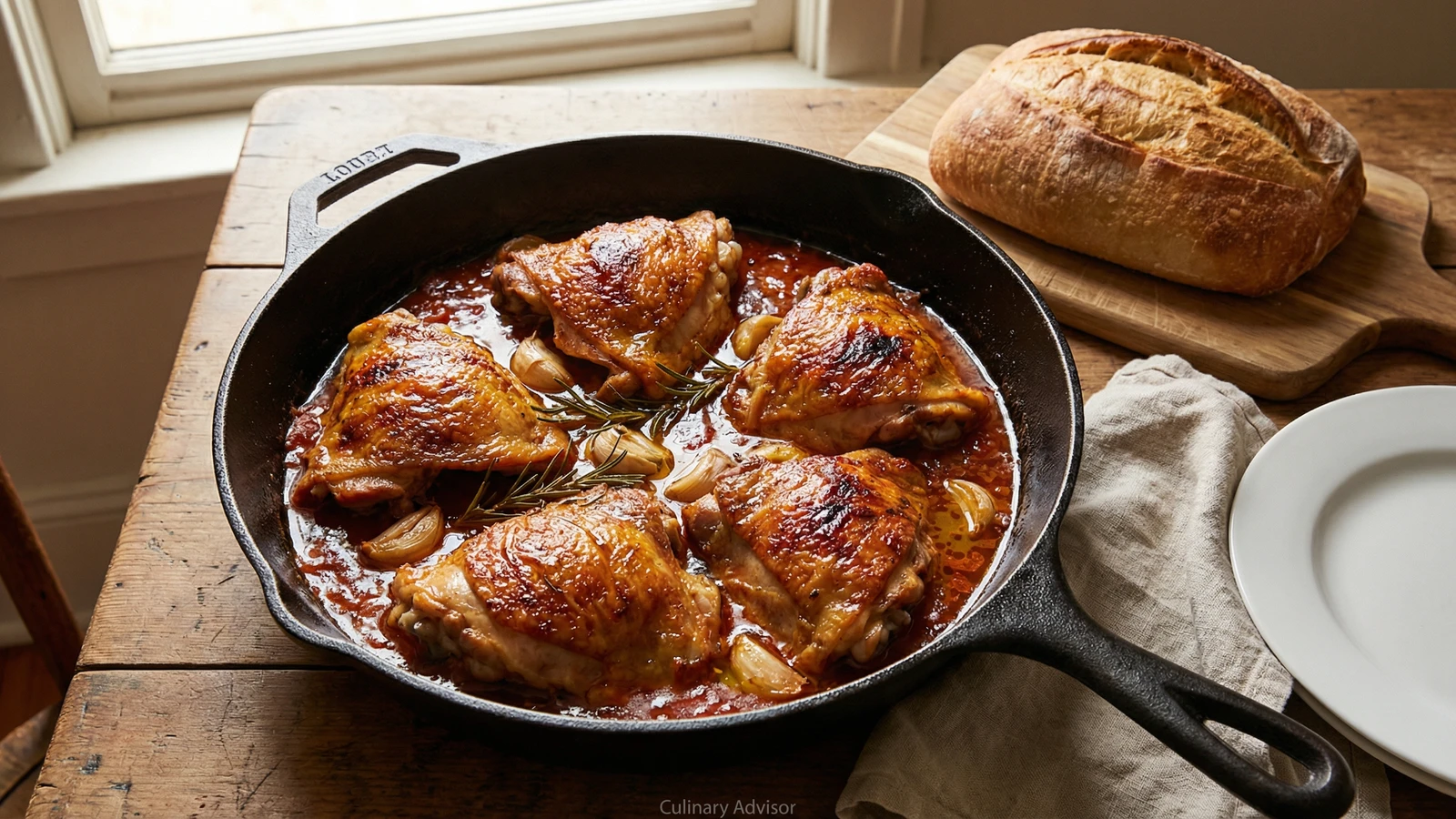
Pollo in Potacchio
Created by Chef Graziella
A farmhouse braise from the Marche, where rosemary, garlic, white wine, and a whisper of tomato transform a simple chicken into something that proves restraint honors the bird.
The Marche is a region Americans do not know. It sits between the Apennines and the Adriatic, between Emilia-Romagna and Abruzzo, and its cooking reflects this position: hearty mountain food meeting coastal simplicity. Potacchio is its signature method, a braise that appears in variations across the region, applied to chicken, rabbit, sometimes fish.
The technique is straightforward. You brown the meat until the skin crackles, build a simple sauce of garlic, rosemary, wine, and tomato, then braise until everything surrenders into harmony. The tomato is restrained, just enough to add body and acidity. This is not chicken cacciatore, that Tuscan hunter's dish Americans have turned into tomato stew. The wine and rosemary should lead. The tomato supports.
What makes potacchio distinctive is the insistence on crisp skin. You braise with the skin facing up, above the liquid, so that it stays taut and golden while the meat below becomes fork-tender. This requires attention. It requires a proper pan. It requires that you not cover the pot and steam away the crispness you worked to create.
Simple does not mean easy. But this is a weeknight dish in the Marche, made by home cooks who understand that a good chicken needs only the respect of proper technique.
Potacchio is a cooking method native to the Marche, documented in regional cookbooks since the 19th century. The name likely derives from 'potaggio,' an old term for stew or pottage, though marchigiani will argue about this. The dish represents the cucina povera of central Italy, where a single chicken fed a family and nothing was wasted.
The technique, the tradition, and the story behind every dish.
Discover Culinary AdvisorIngredients
whole chicken
Quantity
1 (3 1/2 to 4 pounds)
cut into 8 pieces
kosher salt
Quantity
to taste
black pepper
Quantity
to taste
freshly ground
extra virgin olive oil
Quantity
3 tablespoons
garlic cloves
Quantity
4
peeled and lightly crushed
fresh rosemary
Quantity
2 sprigs
red pepper flakes
Quantity
1/2 teaspoon
dry white wine
Quantity
3/4 cup
whole peeled tomatoes
Quantity
1 cup
crushed by hand
chicken broth or water
Quantity
1/2 cup
| Ingredient | Quantity |
|---|---|
| whole chickencut into 8 pieces | 1 (3 1/2 to 4 pounds) |
| kosher salt | to taste |
| black pepperfreshly ground | to taste |
| extra virgin olive oil | 3 tablespoons |
| garlic clovespeeled and lightly crushed | 4 |
| fresh rosemary | 2 sprigs |
| red pepper flakes | 1/2 teaspoon |
| dry white wine | 3/4 cup |
| whole peeled tomatoescrushed by hand | 1 cup |
| chicken broth or water | 1/2 cup |
Equipment Needed
- •Heavy 12-inch skillet or braiser with lid (lid will not be used, but it is good to have)
- •Tongs for turning chicken
- •Wooden spoon for deglazing
Instructions
- 1
Season the chicken
Pat the chicken pieces thoroughly dry with paper towels. Wet skin does not brown; it steams. Season generously with salt and pepper on all sides. Let the pieces sit at room temperature for 15 minutes while you prepare the other ingredients. Cold chicken straight from the refrigerator will lower the temperature of your pan and prevent proper browning.
- 2
Brown the chicken
Heat the olive oil in a heavy 12-inch skillet or braiser over medium-high heat until the oil shimmers and a corner of chicken sizzles immediately on contact. Place the chicken pieces skin-side down in a single layer. Do not crowd the pan; work in batches if necessary. Let them cook undisturbed for 6 to 7 minutes, until the skin is deeply golden and releases easily from the pan. Turn and brown the other side for 3 minutes. Transfer to a plate.
The chicken will stick at first. This is correct. When the skin has properly browned, it will release. If you force it, you will tear the skin and lose the crispness that makes this dish. - 3
Build the aromatics
Pour off all but 2 tablespoons of fat from the pan. Reduce heat to medium. Add the crushed garlic cloves, rosemary sprigs, and red pepper flakes. Stir constantly for 30 seconds to one minute. The garlic should become fragrant and barely golden at the edges. The moment it threatens to turn brown, proceed immediately to the next step. Burnt garlic ruins everything.
- 4
Deglaze with wine
Pour in the white wine. It will bubble aggressively. Use a wooden spoon to scrape up all the browned bits from the bottom of the pan. These fond are concentrated flavor. Let the wine reduce by half, about 2 minutes. You should no longer smell raw alcohol.
- 5
Add tomatoes and braise
Add the crushed tomatoes and chicken broth. Stir to combine. The sauce should be loose, not thick. Return the chicken pieces to the pan, skin-side up, nestling them into the liquid. The liquid should come about halfway up the chicken; the skin must stay above the surface to remain crisp. Bring to a gentle simmer.
Skin-side up is not a suggestion. If you submerge the skin, you will have braised chicken with soggy skin. The skin must remain exposed to the air to stay crisp while the meat below becomes tender. - 6
Simmer until done
Reduce heat to maintain a lazy simmer. Cook uncovered for 30 to 35 minutes, until the chicken is cooked through and the thigh juices run clear when pierced at the thickest part. The breast pieces will finish before the thighs; remove them when done and keep warm. The sauce will reduce and concentrate as the chicken cooks. If it reduces too much, add a splash of water.
- 7
Finish and serve
Taste the sauce and adjust salt. The garlic cloves will have become soft and sweet; you may leave them in or discard them. Spoon the sauce around and over the chicken pieces, being careful not to soak the crisp skin. Serve immediately from the pan, or transfer to a warm serving platter. Good bread is essential for the sauce.
Chef Tips
- •Have your butcher cut the chicken into eight pieces, or do it yourself: two breasts halved crosswise, two thighs, two drumsticks. The backbone can go into your freezer for stock.
- •The quality of your chicken matters here more than in dishes with heavy sauces. A well-raised bird from a farmers market will reward you. Factory chicken will not.
- •If you prefer more heat, increase the red pepper flakes to one teaspoon. The Marche kitchen is not shy about peperoncino, though the dish should not be fiery.
- •Do not substitute dried rosemary. Fresh rosemary is essential to this dish. The dried version tastes like medicine.
Advance Preparation
- •The dish can be made several hours ahead through the braising step. Leave the chicken in its sauce at room temperature. Reheat gently over medium-low heat, skin-side up, until warmed through. The skin will lose some crispness but remain better than if refrigerated.
- •If refrigerating overnight, accept that the skin will soften. Reheat in a 400°F oven for 15 minutes to restore some crispness, or simply enjoy it as tender braised chicken.
- •The braising liquid makes an excellent sauce for pasta the next day, with or without the remaining chicken shredded into it.
Frequently Asked Questions
Nutrition Information
1 serving (about 290g)
Where cooking meets culture.
Culinary mentorship, cultural storytelling, and the editorial depth that makes cooking meaningful.
Explore Culinary Advisor