Culinary Advisor
A cooking platform built around craft, culture, and the stories behind what we eat.
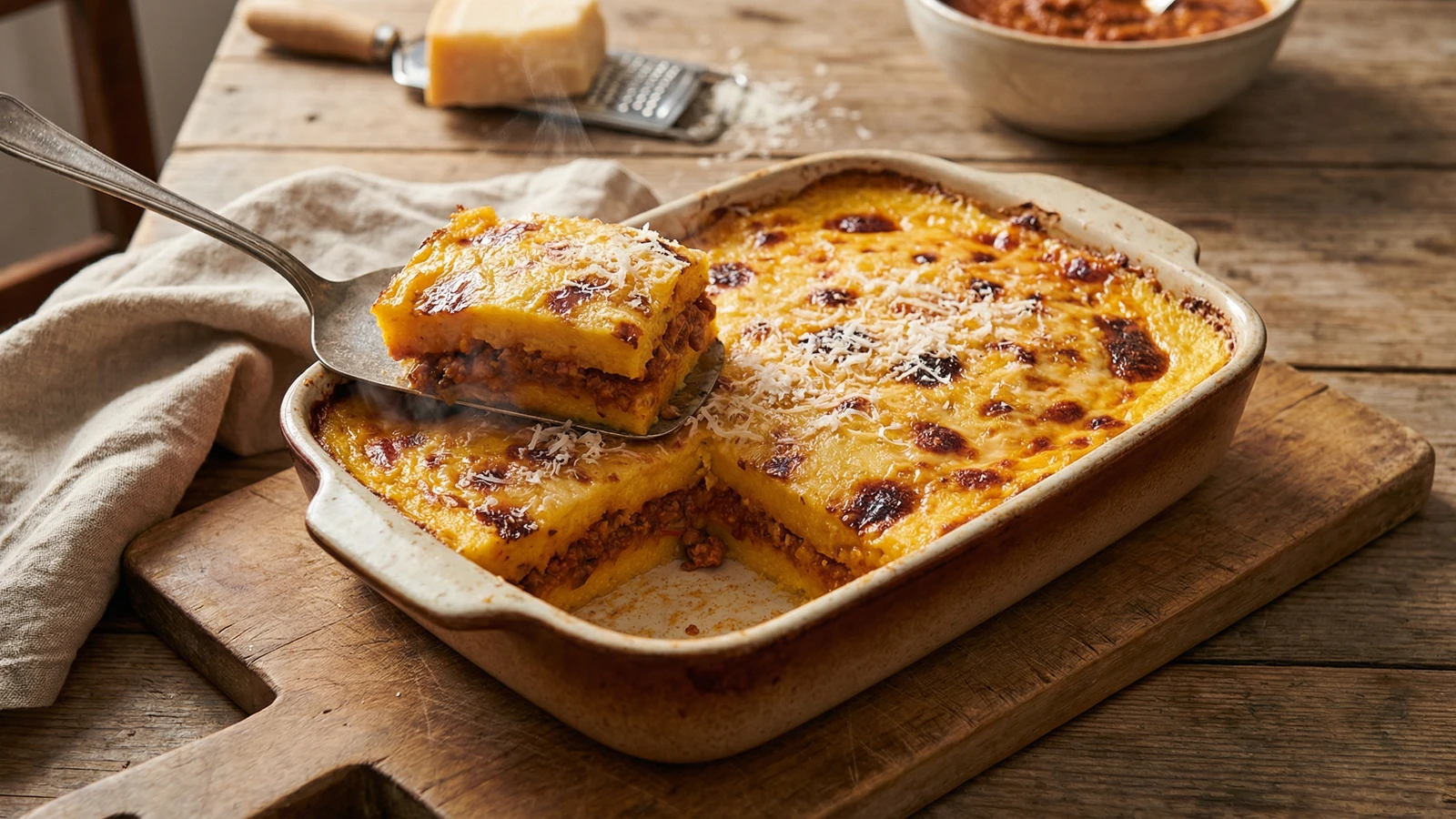
Polenta Pasticciata
Created by Chef Graziella
Northern Italy's answer to lasagna, where humble cornmeal becomes something worthy of Sunday dinner. Layer it, bake it, let it rest. It improves with waiting.
Polenta was peasant food. For centuries, the poor of Lombardy and the Veneto ate it morning, noon, and night because wheat cost money and corn did not. They ate it soft from the pot, they ate it cold and sliced, they ate it fried in lard. And when they had a little meat, a little cheese, they made polenta pasticciata.
Pasticciata means fussed over, dressed up, made into something more than the sum of its parts. You cook the polenta properly, spread it to cool, slice it into layers, and build something substantial with ragù and Parmigiano. Then you bake it until the top turns golden and the edges bubble. This is not fancy cooking. This is farm wives making the most of what they had.
The dish improves with time. Make it a day ahead and reheat it gently. The flavors marry, the layers settle, the whole thing becomes more cohesive. I have served it to guests who refused to believe it began as cornmeal mush. That is the point. Simple ingredients, proper technique, patience. What you keep out is as significant as what you put in.
Polenta pasticciata emerged in the rural kitchens of Lombardy and the Veneto, where cornmeal had sustained the poor since the 16th century. The technique of layering cooled polenta with sauce and cheese transformed everyday sustenance into celebration food, appearing on tables when families had meat to spare and guests to impress.
The technique, the tradition, and the story behind every dish.
Discover Culinary AdvisorIngredients
coarse-ground polenta
Quantity
2 cups
water
Quantity
8 cups
kosher salt
Quantity
2 teaspoons, plus more to taste
unsalted butter
Quantity
4 tablespoons, divided
extra virgin olive oil
Quantity
3 tablespoons
yellow onion
Quantity
1 medium
diced fine
carrot
Quantity
1 medium
peeled and diced fine
celery stalk
Quantity
1
diced fine
ground beef chuck
Quantity
1 pound
ground pork
Quantity
8 ounces
dry red wine
Quantity
1 cup
San Marzano tomatoes
Quantity
1 can (28 ounces)
crushed by hand
beef or chicken broth
Quantity
1 cup
bay leaf
Quantity
1
black pepper
Quantity
to taste
freshly ground
Parmigiano-Reggiano
Quantity
6 ounces (about 2 cups)
freshly grated
| Ingredient | Quantity |
|---|---|
| coarse-ground polenta | 2 cups |
| water | 8 cups |
| kosher salt | 2 teaspoons, plus more to taste |
| unsalted butter | 4 tablespoons, divided |
| extra virgin olive oil | 3 tablespoons |
| yellow oniondiced fine | 1 medium |
| carrotpeeled and diced fine | 1 medium |
| celery stalkdiced fine | 1 |
| ground beef chuck | 1 pound |
| ground pork | 8 ounces |
| dry red wine | 1 cup |
| San Marzano tomatoescrushed by hand | 1 can (28 ounces) |
| beef or chicken broth | 1 cup |
| bay leaf | 1 |
| black pepperfreshly ground | to taste |
| Parmigiano-Reggianofreshly grated | 6 ounces (about 2 cups) |
Equipment Needed
- •Heavy 6-quart pot for ragù
- •Large heavy pot for polenta
- •Wooden spoon
- •Rimmed baking sheet or 9x13-inch baking dish
- •9x13-inch baking dish for assembly
Instructions
- 1
Build the soffritto
In a heavy-bottomed pot, warm the olive oil over medium heat. Add the onion, carrot, and celery. Cook slowly, stirring occasionally, until the vegetables are completely soft and the onion is pale gold, about 15 minutes. The soffritto is the foundation. One can often trace the unsatisfying taste of would-be Italian dishes to the reluctance of cooks to execute this step thoroughly.
- 2
Brown the meat
Add the ground beef and pork to the soffritto. Break the meat into small pieces with a wooden spoon and cook over medium-high heat until it has lost its raw color and begins to brown, about 15 minutes. The meat should crumble finely. Season with salt and pepper.
The combination of beef and pork creates a more interesting sauce than either alone. Beef provides structure, pork adds sweetness and fat. - 3
Add wine and tomatoes
Pour in the red wine and stir, scraping up any browned bits from the bottom of the pot. Let it simmer until the wine has nearly evaporated and you can no longer smell raw alcohol. Add the crushed tomatoes, broth, and bay leaf. Bring to a simmer, then reduce heat to the lowest setting. The sauce should barely bubble. Cook uncovered for 1 hour 30 minutes, stirring occasionally.
If the sauce becomes too thick before the time is up, add water by the quarter cup. The tomatoes should meld with the meat, not dominate it. - 4
Cook the polenta
While the ragù simmers, bring 8 cups of water to a boil in a large heavy pot. Add the salt. Reduce heat until the water is at a steady simmer. Pour the polenta in a thin, steady stream while whisking constantly to prevent lumps. Switch to a wooden spoon and stir frequently as the polenta thickens. Cook for 40 to 45 minutes, stirring every few minutes, until the polenta pulls away from the sides of the pot and has lost any raw corn taste.
- 5
Finish and spread the polenta
Remove the polenta from heat. Stir in 2 tablespoons of the butter and one cup of the grated Parmigiano. Season with salt if needed. Immediately pour the polenta onto a rimmed baking sheet or into a 9x13-inch baking dish and spread it evenly to about three-quarters inch thick. Let it cool and firm for at least 30 minutes. The polenta must be firm enough to slice cleanly.
Work quickly when spreading the polenta. It begins to set within minutes. Wet your spatula or the back of a spoon to smooth the surface. - 6
Prepare for assembly
Preheat the oven to 375°F. Butter a 9x13-inch baking dish generously with the remaining 2 tablespoons butter. Remove and discard the bay leaf from the ragù. Taste the sauce and adjust seasoning. If using the same dish where you spread the polenta, unmold it onto a cutting board and slice into pieces that will fit in layers.
- 7
Layer the pasticciata
Spread a thin layer of ragù on the bottom of the buttered dish. Arrange half of the polenta slices in a single layer, cutting pieces to fit as needed. Spread half of the remaining ragù over the polenta. Scatter one-third of the remaining Parmigiano over the sauce. Repeat with remaining polenta, then remaining ragù. Top with the rest of the Parmigiano.
- 8
Bake until golden
Bake uncovered for 35 to 40 minutes, until the top is golden brown and the edges bubble enthusiastically. The cheese should form a light crust. Let the dish rest for 10 minutes before serving. This resting is not optional. The layers need to settle, and you will burn your mouth otherwise.
Chef Tips
- •Seek out stone-ground polenta from a reputable source. The difference between good polenta and the dusty boxes in supermarkets is the difference between bread and cardboard. Instant polenta is never acceptable for this dish.
- •The ragù can be made three days ahead and refrigerated. The dish itself can be assembled a day ahead and baked when needed. In fact, I recommend this. The flavors develop, and you do not spend the day before a dinner party at the stove.
- •Some Lombard cooks add a layer of béchamel or fontina cheese for richness. I find this excessive. The butter in the polenta and the fat in the ragù provide sufficient richness. What you keep out is as significant as what you put in.
- •Leftovers reheat beautifully. Cover with foil and warm in a 325°F oven for 20 minutes. The second day is often better than the first.
Advance Preparation
- •The ragù can be made up to three days ahead and refrigerated. It improves with time.
- •The polenta can be cooked, spread, and refrigerated up to two days ahead. Cover tightly once cooled.
- •The entire dish can be assembled, covered, and refrigerated up to 24 hours before baking. Add 10 minutes to the baking time if baking from cold.
- •Baked pasticciata keeps refrigerated for four days and reheats without losing quality.
Frequently Asked Questions
Nutrition Information
1 serving (about 350g)
Where cooking meets culture.
Culinary mentorship, cultural storytelling, and the editorial depth that makes cooking meaningful.
Explore Culinary Advisor