Culinary Advisor
A cooking platform built around craft, culture, and the stories behind what we eat.
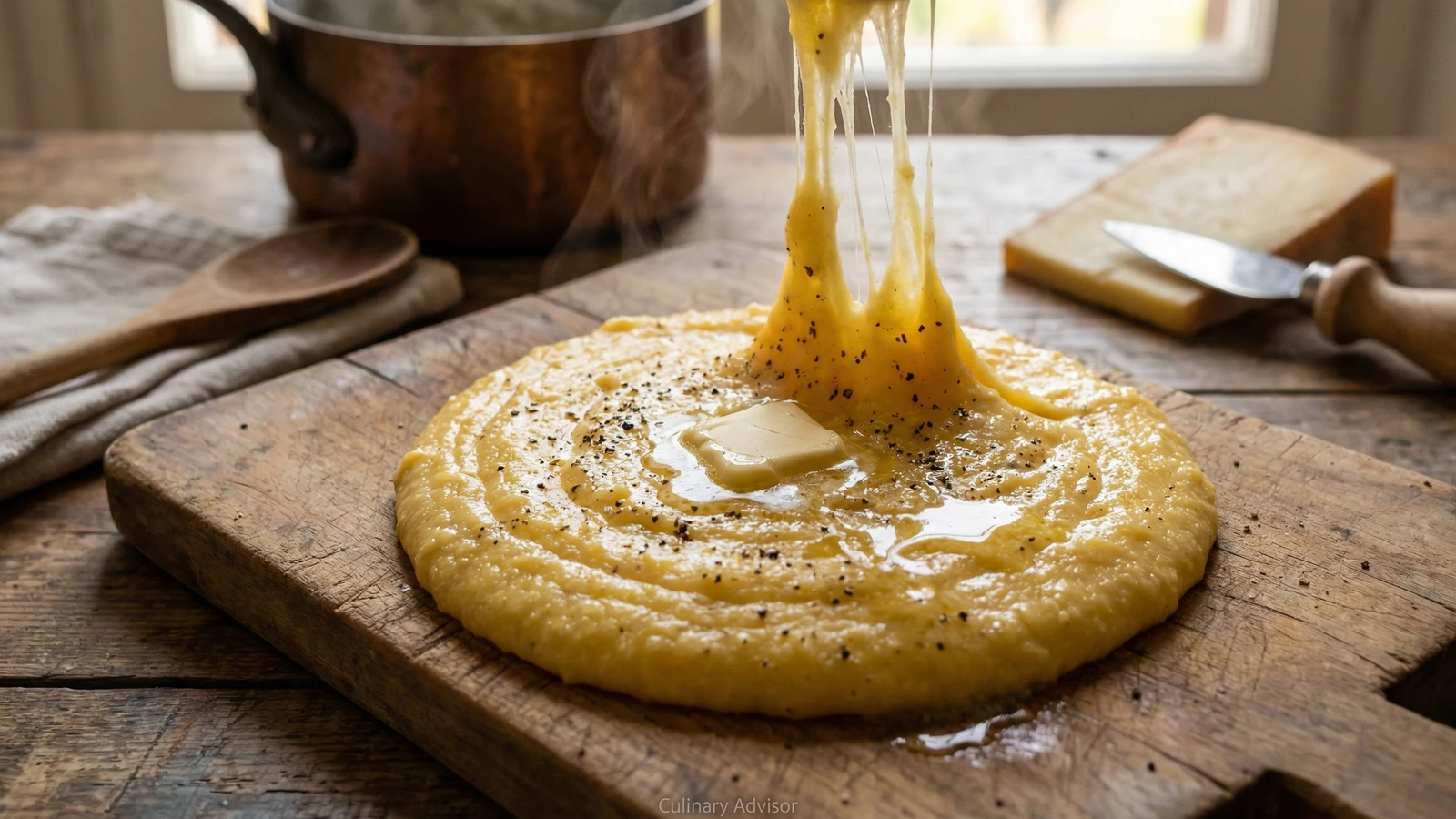
Polenta Concia
Created by Chef Graziella
The enriched polenta of the Aosta Valley, where fontina melts into cornmeal porridge with enough butter to fuel a day in the high Alps. Mountain cooking that asks only for time and a strong arm.
In Valle d'Aosta, the smallest and most alpine of Italian regions, they call this polenta concia. The word means dressed, or seasoned, though enriched comes closer to the truth. This is polenta made fat with fontina cheese and butter, the kind of food that sustained shepherds through frozen winters when nothing else would do.
The dish belongs to a tradition of mountain cooking where calories meant survival. Fontina, made in these valleys since the twelfth century, melts into strings that stretch across the table. The butter does not apologize for its presence. Together they transform simple cornmeal into something that warms you from the inside out.
Do not attempt this with instant polenta. The quick-cooking kind produces paste, not the creamy, slightly textured porridge that true polenta becomes after forty-five minutes of patient stirring. Your arm will know the difference. Your mouth certainly will.
Polenta arrived in the Alpine valleys after Columbus, replacing the buckwheat and millet porridges that mountain people had eaten for centuries. By the 1700s, corn had become the staple grain of Northern Italy's poor. In Valle d'Aosta, cooks enriched their polenta with local fontina, a cheese documented in the valley since 1270, creating a dish that made poverty taste like abundance.
The technique, the tradition, and the story behind every dish.
Discover Culinary AdvisorIngredients
coarse-ground polenta
Quantity
2 cups
water
Quantity
8 cups
kosher salt
Quantity
2 teaspoons
Fontina Val d'Aosta
Quantity
8 ounces
rind removed, cut into small cubes
toma cheese (optional)
Quantity
4 ounces
cut into small cubes
unsalted butter
Quantity
8 tablespoons (1 stick)
cold, cut into pieces
black pepper
Quantity
to taste
freshly ground
| Ingredient | Quantity |
|---|---|
| coarse-ground polenta | 2 cups |
| water | 8 cups |
| kosher salt | 2 teaspoons |
| Fontina Val d'Aostarind removed, cut into small cubes | 8 ounces |
| toma cheese (optional)cut into small cubes | 4 ounces |
| unsalted buttercold, cut into pieces | 8 tablespoons (1 stick) |
| black pepperfreshly ground | to taste |
Equipment Needed
- •Heavy-bottomed 4-quart pot
- •Long wooden spoon or paddle
- •Whisk for initial incorporation
Instructions
- 1
Bring the water to boil
In a heavy pot, bring the water to a rolling boil over high heat. Add the salt. The pot should be heavy enough that it holds heat evenly. Thin pots create hot spots where the polenta scorches.
- 2
Add the polenta
Reduce the heat to medium. Let one hand pour the polenta into the water in a slow, steady stream while the other hand whisks constantly. This prevents lumps. Pour slowly. Whisk continuously. If lumps form anyway, you poured too fast. Keep whisking until they surrender.
The traditional tool is a long wooden stick called a tarello. A sturdy wooden spoon serves the same purpose. Metal whisks work for the initial addition, then switch to wood. - 3
Stir and simmer
Once all the polenta is incorporated, reduce the heat to low. The polenta should bubble lazily, like a hot spring releasing occasional burps of steam. Stir frequently with a wooden spoon, scraping the bottom and sides of the pot. This will take 45 minutes. There are no shortcuts. Instant polenta is not polenta.
Your arm will tire. This is correct. Generations of mountain women built this dish with their labor. The stirring develops the texture and prevents a scorched bottom that would ruin everything. - 4
Test for doneness
The polenta is ready when it pulls away cleanly from the sides of the pot and has lost all grittiness. Taste it. The cornmeal should feel smooth on your tongue, not sandy. If it is still grainy, keep cooking and stirring. The polenta will tell you when it is done.
- 5
Add the cheese and butter
Remove the pot from the heat. Add half the fontina (and toma if using) and half the butter. Stir vigorously until melted and incorporated. The cheese should stretch and pull in long strings. Add the remaining cheese and butter. Stir again until the polenta becomes glossy, rich, and moves like golden lava.
- 6
Serve immediately
Taste for salt. Add pepper generously. Polenta waits for no one. Spoon it onto warm plates or pour it onto a wooden board as mountain families do, letting everyone gather around and eat from the center. The cheese will continue to stretch as you serve. This is what you want.
Chef Tips
- •Fontina Val d'Aosta carries a DOP designation for good reason. The cheese from this specific valley has a particular nuttiness and melting quality that Swedish or Danish fontina cannot replicate. Seek it out. The rind is inedible; remove it.
- •If you cannot find toma, increase the fontina to twelve ounces. Toma adds a sharper, more rustic note, but the dish succeeds with fontina alone.
- •Some cooks layer the finished polenta with cheese and butter in a baking dish, then run it under the broiler until the top blisters golden. This variation, polenta concia al forno, has its own pleasures.
- •Leftover polenta solidifies as it cools. Slice it, fry the slices in butter until crisp on both sides, and top with a fried egg. Breakfast in the mountains.
Advance Preparation
- •Polenta concia is best served immediately, while the cheese still stretches. It does not hold well.
- •Cooled polenta can be refrigerated for three days, sliced, and pan-fried in butter. Different dish, equally valid.
Frequently Asked Questions
Nutrition Information
1 serving (about 325g)
Where cooking meets culture.
Culinary mentorship, cultural storytelling, and the editorial depth that makes cooking meaningful.
Explore Culinary Advisor