Culinary Advisor
A cooking platform built around craft, culture, and the stories behind what we eat.
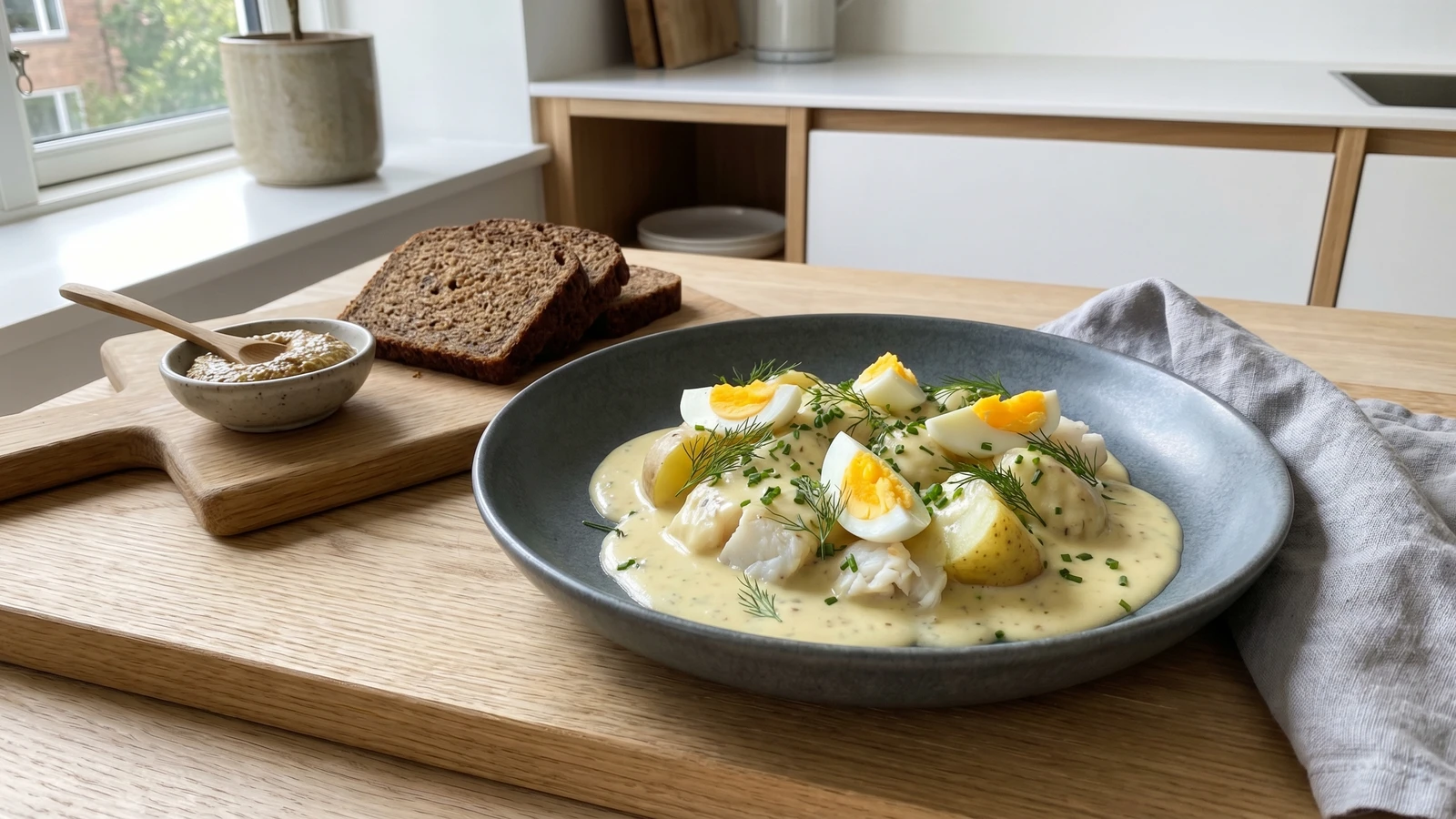
Plukfisk
Created by Chef Freja
Boiled torsk flaked into a gentle mustard bechamel with waxy potatoes, quartered eggs, and fresh dill. Mormormad, the quietest and most generous kind of Danish home cooking, made with love and meant to be shared.
January in Denmark is a dark month. The light barely arrives before it leaves again, and the kitchen becomes the warmest room in the house by necessity and by instinct. This is when plukfisk makes sense. Not because it's complicated, but because it's the opposite: simple, warming, and deeply kind.
Plukfisk is mormormad, grandmother food, the sort of dish that has no restaurant version and no ambition beyond feeding the people at the table. You poach fresh torsk until it flakes apart, boil waxy potatoes until they're tender, and fold both into a mustard bechamel that coats everything in a gentle, savoury warmth. Hard-boiled eggs go around the edges. Dill goes on top. That's the whole thing.
I want you to pay attention to one moment: when the mustard goes into the sauce. The pan must be off the heat. This isn't a suggestion. Mustard that boils turns bitter and loses every bit of its sharpness. Stirred into the warm sauce off the flame, it stays alive, bright, and present. That single step is the difference between a sennepssauce that sings and one that tastes like flour and regret. You'll know when it's right. The sauce will smell clean and warm, with a gentle bite that lifts the whole dish out of plainness and into something you'll want to make again next week.
Plukfisk belongs to the tradition of Danish husmandsret, the thrift cooking of smallholders and working households who stretched a piece of fish into a full family meal with sauce, potatoes, and eggs. The dish appears in Danish household cookbooks from the mid-1800s onward, often listed alongside stuvede kartofler and persillesovs as core kitchen knowledge every Danish woman was expected to carry. Its near-disappearance from modern tables makes it a quiet example of the mormormad revival, a generation of Danish home cooks returning to the dishes their grandmothers knew by feel but never thought to write down.
The technique, the tradition, and the story behind every dish.
Discover Culinary AdvisorIngredients
fresh cod fillet (torsk)
Quantity
600g
skin on, pin-boned
small waxy potatoes
Quantity
500g
peeled and halved
onion
Quantity
1 small
peeled and halved
bay leaves
Quantity
2
whole black peppercorns
Quantity
6
fine sea salt
Quantity
to taste
unsalted butter
Quantity
50g
plain flour
Quantity
50g
whole milk
Quantity
500ml
reserved fish poaching liquid
Quantity
200ml
good Danish mustard
Quantity
2 tablespoons, plus extra to serve
white wine vinegar
Quantity
1 teaspoon
white pepper
Quantity
to taste
eggs
Quantity
3
hard-boiled, peeled and quartered
fresh dill
Quantity
small bunch
fronds picked
chives
Quantity
small bunch
snipped
dark rugbrod
Quantity
to serve
| Ingredient | Quantity |
|---|---|
| fresh cod fillet (torsk)skin on, pin-boned | 600g |
| small waxy potatoespeeled and halved | 500g |
| onionpeeled and halved | 1 small |
| bay leaves | 2 |
| whole black peppercorns | 6 |
| fine sea salt | to taste |
| unsalted butter | 50g |
| plain flour | 50g |
| whole milk | 500ml |
| reserved fish poaching liquid | 200ml |
| good Danish mustard | 2 tablespoons, plus extra to serve |
| white wine vinegar | 1 teaspoon |
| white pepper | to taste |
| eggshard-boiled, peeled and quartered | 3 |
| fresh dillfronds picked | small bunch |
| chivessnipped | small bunch |
| dark rugbrod | to serve |
Equipment Needed
- •Wide, shallow pan for poaching
- •Heavy-bottomed saucepan, 2 litre
- •Whisk
- •Slotted spoon
- •Large serving dish, warmed
Instructions
- 1
Poach the cod gently
Place the cod fillets in a wide, shallow pan. Add the halved onion, bay leaves, peppercorns, and a generous pinch of salt. Pour in enough cold water to just cover the fish. Set the pan over a medium heat and bring the water to the gentlest simmer you can manage. You want small bubbles barely breaking the surface, nothing more. A hard boil will shatter the fish into rags. Poach for eight to ten minutes, depending on the thickness of the fillets. The flesh should flake easily when you press it with the back of a spoon but still hold its shape. Lift the fish out carefully with a slotted spoon and set it on a plate. Strain the poaching liquid through a sieve and reserve 200ml. That liquid carries the flavor of the fish, and it belongs in the sauce.
Start in cold water, not hot. Cold water heats the fish gradually and evenly. Hot water seizes the outside while the center stays raw. - 2
Boil the potatoes
While the fish poaches, put the halved potatoes in a separate pot of cold salted water. Bring them to a simmer and cook until they're tender all the way through, about fifteen minutes. A knife should slide in and out with no resistance. Drain them and set aside. You want waxy potatoes here, the kind that hold their shape when you fold them into the sauce. Floury potatoes would dissolve into the bechamel and turn the whole dish into paste.
- 3
Make the bechamel
Melt the butter in a heavy-bottomed saucepan over a medium heat. When it foams, add the flour all at once and stir with a wooden spoon for two full minutes. The mixture, the roux, should look sandy and smell faintly of biscuits. That cooking time matters: raw flour tastes of paste and will ruin the sauce. Now add the milk in a slow, steady stream, stirring constantly. Each addition should be fully absorbed before you pour more. When all the milk is in, switch to a whisk and add the reserved poaching liquid. Keep whisking over a gentle heat until the sauce thickens enough to coat the back of the spoon, about five minutes. It should be looser than you think. The potatoes and fish will absorb some of the liquid, and the sauce will tighten as it sits.
If lumps form, don't panic. Take the pan off the heat and whisk hard for thirty seconds. They will smooth out. If they won't, press the sauce through a sieve. No one will know. - 4
Add the mustard off heat
Take the saucepan off the heat. Now add the mustard and the white wine vinegar and stir them through. This is the step that matters most, and I want you to understand why: mustard loses its sharpness and turns bitter when it boils. If you add it while the sauce is on the flame, the heat kills the volatile compounds that give mustard its bite and replaces them with a flat, acrid taste. Off the heat, the residual warmth wakes up the mustard without destroying it. Taste the sauce. It should be creamy, gently sharp, and warm with mustard. Season with salt and white pepper. White pepper because black flecks in a white sauce look like mistakes.
Use a good Danish mustard with some texture to it. The smooth, yellow supermarket kind works but won't have the same depth. A coarse-grained sennep gives the sauce character. - 5
Flake and fold
Remove the skin from the cod and flake the flesh into large, generous pieces. Don't shred it. You want chunks big enough to find with your fork, pieces that remind you there's real fish in this dish and not just sauce. Add the flaked cod and the boiled potatoes to the sennepssauce and fold everything together gently with a large spoon. The word is fold, not stir. Stirring will break the fish down. Folding keeps the pieces whole. Return the pan to a very low heat for two or three minutes, just long enough to warm everything through.
The name plukfisk means 'plucked fish,' and that's exactly the motion. You pluck the flesh away from the skin and bones in rough pieces. The irregularity is part of its character. - 6
Serve with warmth
Spoon the plukfisk into a warm serving dish or straight onto deep plates. Nestle the quartered hard-boiled eggs around the edges. Scatter the dill fronds and snipped chives over the top. Put extra mustard on the table and a plate of sliced rugbrod alongside. This is mormormad, grandmother food, the kind of cooking that asks nothing of you except that you sit down and eat it while it's warm. Tak for mad.
Chef Tips
- •Use fresh cod from a good fishmonger, not the pre-frozen kind wrapped in plastic. Fresh torsk holds together in large flakes. Frozen cod releases water into the sauce and the texture goes soft and woolly. If fresh cod isn't available, fresh haddock or pollock works honestly and well.
- •Save the poaching liquid. It's fish stock you made without trying. The flavor it brings to the bechamel is the quiet backbone of the whole dish, the thing you can't quite name but would miss if it weren't there.
- •Make the sauce a little thinner than feels right. The potatoes and fish absorb liquid as the dish sits, and what started loose will thicken into exactly the consistency you want by the time it reaches the table.
- •A splash of white wine vinegar in the sauce, just a teaspoon, lifts everything. Cream sauces need a whisper of acid to keep from feeling heavy. You won't taste vinegar. You'll taste balance.
Advance Preparation
- •The sauce can be made a few hours ahead, kept covered with cling film pressed directly against the surface to stop a skin forming. Reheat it gently before folding in the fish and potatoes. Add the mustard only after reheating, off the heat, so it stays sharp.
- •The hard-boiled eggs can be cooked a day ahead and kept in the fridge. Peel and quarter them just before serving.
- •Plukfisk reheats well the next day. Add a splash of milk when warming it through to loosen the sauce back to the right consistency. It becomes even more comforting the second time, the way all mormormad does.
Frequently Asked Questions
Nutrition Information
1 serving (about 450g)
Where cooking meets culture.
Culinary mentorship, cultural storytelling, and the editorial depth that makes cooking meaningful.
Explore Culinary Advisor