Culinary Advisor
A cooking platform built around craft, culture, and the stories behind what we eat.
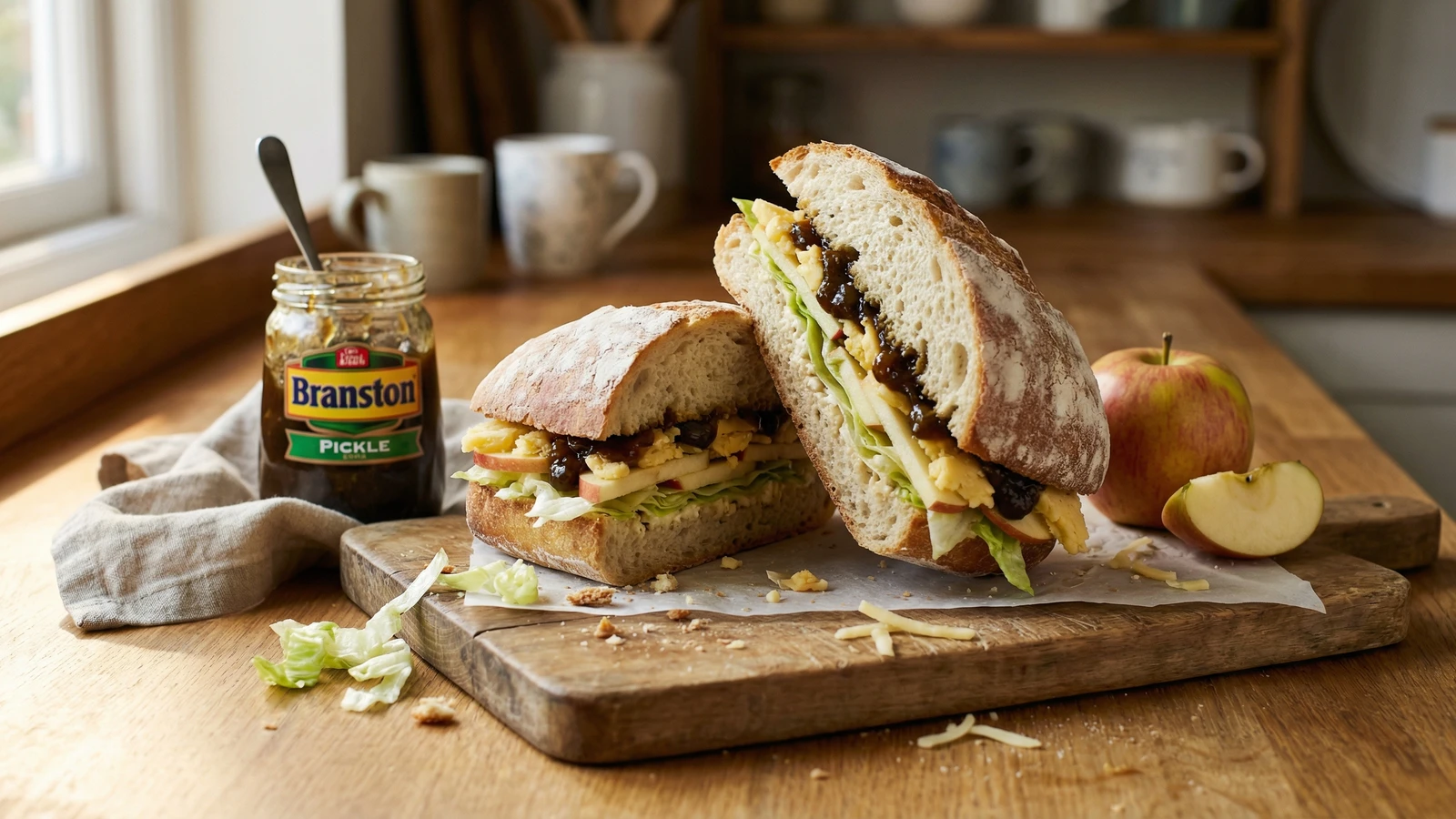
Ploughman's Sandwich
Created by Chef Thomas
The pub ploughman's board folded between two slices of crusty bread: sharp Cheddar, sticky pickle, cold apple, and soft lettuce, wrapped in greaseproof paper and taken outside.
Saturday lunchtime. The bread is from this morning's market, a white cob with a flour-dusted crust that cracks when you press it. There's a wedge of Cheddar in the fridge that's been there since Wednesday, drying out slightly at the edges, which only makes it sharper. A jar of Branston on the shelf. An apple in the bowl. That's lunch.
The ploughman's is one of those ideas that's better than it has any right to be. Cheese, pickle, bread, something crisp. It started as a pub plate, everything laid out separately with a knife and a pint beside it. Putting it between two slices of bread doesn't diminish it. If anything, it concentrates the pleasure: every bite gets the sharp cheese, the sweet-sour pickle, the cold snap of apple, all at once. The bread holds it together and gives it weight.
I make these when the weather turns warm enough to eat outside, or when the kitchen is too hot to cook in, or when I simply don't feel like cooking at all. That's the quiet genius of a sandwich this good. It asks almost nothing of you. Ten minutes, a sharp knife, bread you'd be happy eating on its own. The rest is assembly, done with care but without ceremony. Your kitchen, your rules.
I wrote it down in the notebook years ago: Cheddar, pickle, apple, bread. Saturday. Garden. It hasn't changed since, and I see no reason it should.
The technique, the tradition, and the story behind every dish.
Discover Culinary AdvisorIngredients
crusty white loaf or cob
Quantity
4 thick slices
mature Cheddar
Quantity
150g
sliced thickly
Branston pickle
Quantity
2-3 tablespoons
eating apple
Quantity
1
cored and sliced thinly
butterhead or Little Gem lettuce
Quantity
a few leaves
unsalted butter
Quantity
generous amount
softened
watercress (optional)
Quantity
small handful
English mustard (optional)
Quantity
to taste
| Ingredient | Quantity |
|---|---|
| crusty white loaf or cob | 4 thick slices |
| mature Cheddarsliced thickly | 150g |
| Branston pickle | 2-3 tablespoons |
| eating applecored and sliced thinly | 1 |
| butterhead or Little Gem lettuce | a few leaves |
| unsalted buttersoftened | generous amount |
| watercress (optional) | small handful |
| English mustard (optional) | to taste |
Equipment Needed
- •Sharp bread knife
- •Chopping board
Instructions
- 1
Butter the bread
Cut the bread thickly. Not delicately, not for a sandwich toaster. Thick, honest slices from a loaf with a proper crust. Butter each slice generously with softened butter, right to the edges. The butter isn't decorative. It seals the bread so the pickle doesn't make it soggy and it adds richness that the whole thing leans on.
- 2
Layer the cheese and pickle
Lay the Cheddar on two of the buttered slices. Thick slabs, not shavings. You should be able to feel the cheese when you bite through. Spoon the Branston pickle over the cheese, spreading it roughly but making sure it reaches the edges. The sweet, vinegary tang of the pickle against the sharp cheese is the backbone of the whole sandwich. Don't be shy with it.
The Cheddar matters. A proper mature farmhouse Cheddar with some bite to it, crumbly and sharp, is a different thing entirely from the mild, rubbery sort. This is a sandwich of three or four ingredients. Each one has to earn its place. - 3
Add apple and leaves
Lay the apple slices over the pickle in a single layer. They should be thin enough to bite through cleanly but thick enough to taste. The apple brings a cold, crisp sweetness that cuts through the richness of the cheese and the stickiness of the pickle. Tuck the lettuce leaves on top, and the watercress if you have it. A thin scraping of English mustard on the top slice of bread, if you like a bit of heat. Close the sandwiches and press down gently.
- 4
Wrap or serve
Cut each sandwich in half. If it's for a picnic, wrap tightly in greaseproof paper and let it sit for ten minutes before you leave. The paper holds it together and the flavours settle into each other. If it's for lunch at home, put it on a board with whatever else is around: a few cherry tomatoes, a pickled onion, a handful of crisps if you're being honest about it. This is not complicated food. It is good food.
Chef Tips
- •The Cheddar is the thing. A mature farmhouse Cheddar, the sort that crumbles when you cut it and leaves a sharp, almost mineral tang on the tongue. Montgomery's, Westcombe, Keen's, whatever your cheesemonger recommends. Mild Cheddar will leave you with a sandwich that tastes of bread and pickle. The cheese should hold its own.
- •Slice the apple at the last moment. It browns quickly, and while that doesn't change the taste, it changes the feeling. A white, crisp slice of apple against golden cheese and dark pickle is part of the pleasure. A Cox's or a Braeburn, something with acidity, works better than anything too sweet.
- •Branston Original, not the smooth sort. You want those chunks of swede and carrot in the pickle, that texture against the crumb of the cheese. This is not negotiable.
- •If you're packing this for a picnic, wrap it tightly in greaseproof paper and leave it for twenty minutes. The paper compresses the sandwich gently and the pickle has time to soak into the cheese without turning the bread to pulp. It arrives better than it left.
Advance Preparation
- •The sandwich can be made up to two hours ahead if wrapped tightly in greaseproof paper and kept cool. The flavours improve with a short rest, but the bread starts to soften after a couple of hours.
- •Slice the apple just before assembling or toss the slices in a drop of lemon juice to keep them bright.
Frequently Asked Questions
Nutrition Information
1 serving (about 300g)
Where cooking meets culture.
Culinary mentorship, cultural storytelling, and the editorial depth that makes cooking meaningful.
Explore Culinary Advisor