Culinary Advisor
A cooking platform built around craft, culture, and the stories behind what we eat.
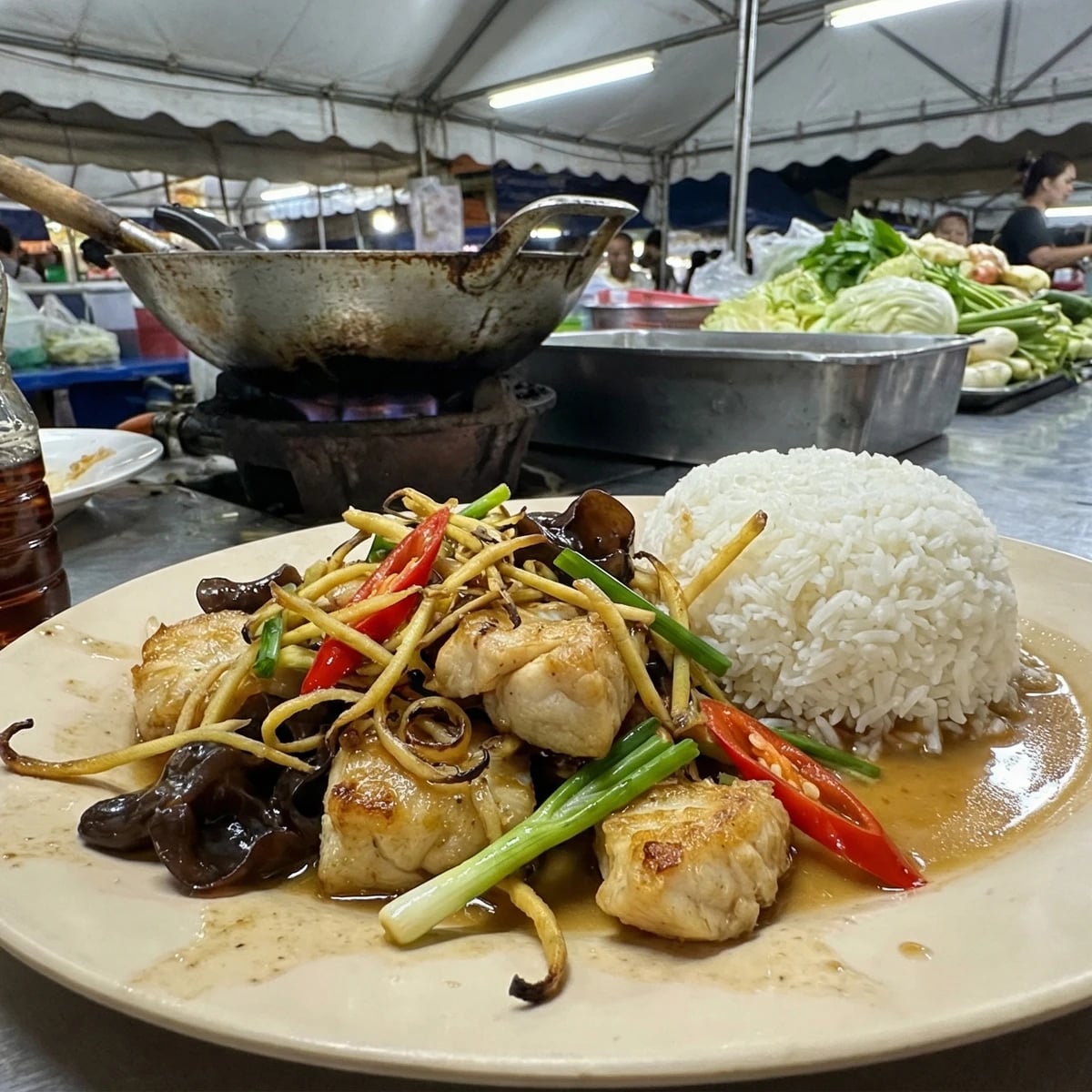
Fish with Ginger Stir-Fry (Pla Pad Khing)
Created by Chef Fai
Ginger is the governing aromatic here, slivered and seared in a screaming wok, coating delicate fish in a light glaze that proves Thai stir-frying isn't always about brute force. Sometimes the wok whispers.
Not every Thai stir-fry is a violent act. Pad kra pao demands aggression. Pad khing demands finesse. The wok is still screaming hot, the garlic still hits the oil first, but the moment the fish enters, your hands need to be gentle. You're not smashing minced pork against carbon steel. You're coaxing a piece of snapper through hot oil without letting it fall apart.
Ginger is the governing aromatic of this dish. Not pounded into a paste, but slivered into thin matchsticks that fry until their edges crisp and their oils perfume the entire wok. Ajarn always said that Thai cooking has nine essential aromatics. Ginger (khing) is one of them, and this is its showcase. Every strand of ginger in the wok is doing the same job a kreung tam does in a curry: building the aromatic foundation that everything else rests on. The method is different. The principle is the same.
The sauce here is light. Fish sauce for salt, oyster sauce for body and gloss, a touch of light soy sauce (si ew khao) because this dish carries Chinese-Thai DNA and the soy belongs here, plus palm sugar to round the edges. No lime. No chili paste. Pad khing sits in the quieter corner of the four-pillar system: salty and sweet dominate, with heat coming only from the ginger's natural bite and a few sliced chilies for color. That restraint is the point. The system doesn't demand all four pillars at full volume in every dish. It demands that whatever you use is in balance.
I teach this dish at Fai Thai workshops specifically because it breaks people's assumption that Thai wok cooking is all fire and fury. The wok is the second most important tool after the mortar. Learning to use it gently is just as important as learning to use it with force.
Ingredients
firm white fish fillets (pla kapong/snapper or sea bass)
Quantity
400g
cut into bite-sized pieces, about 1 inch thick
fresh ginger (khing)
Quantity
80g
peeled and cut into fine matchsticks
dried cloud ear mushrooms (het hu nu)
Quantity
15g
soaked in warm water 15 minutes, drained and torn into bite-sized pieces
| Ingredient | Quantity |
|---|---|
| firm white fish fillets (pla kapong/snapper or sea bass)cut into bite-sized pieces, about 1 inch thick | 400g |
| fresh ginger (khing)peeled and cut into fine matchsticks | 80g |
| dried cloud ear mushrooms (het hu nu)soaked in warm water 15 minutes, drained and torn into bite-sized pieces | 15g |