Culinary Advisor
A cooking platform built around craft, culture, and the stories behind what we eat.
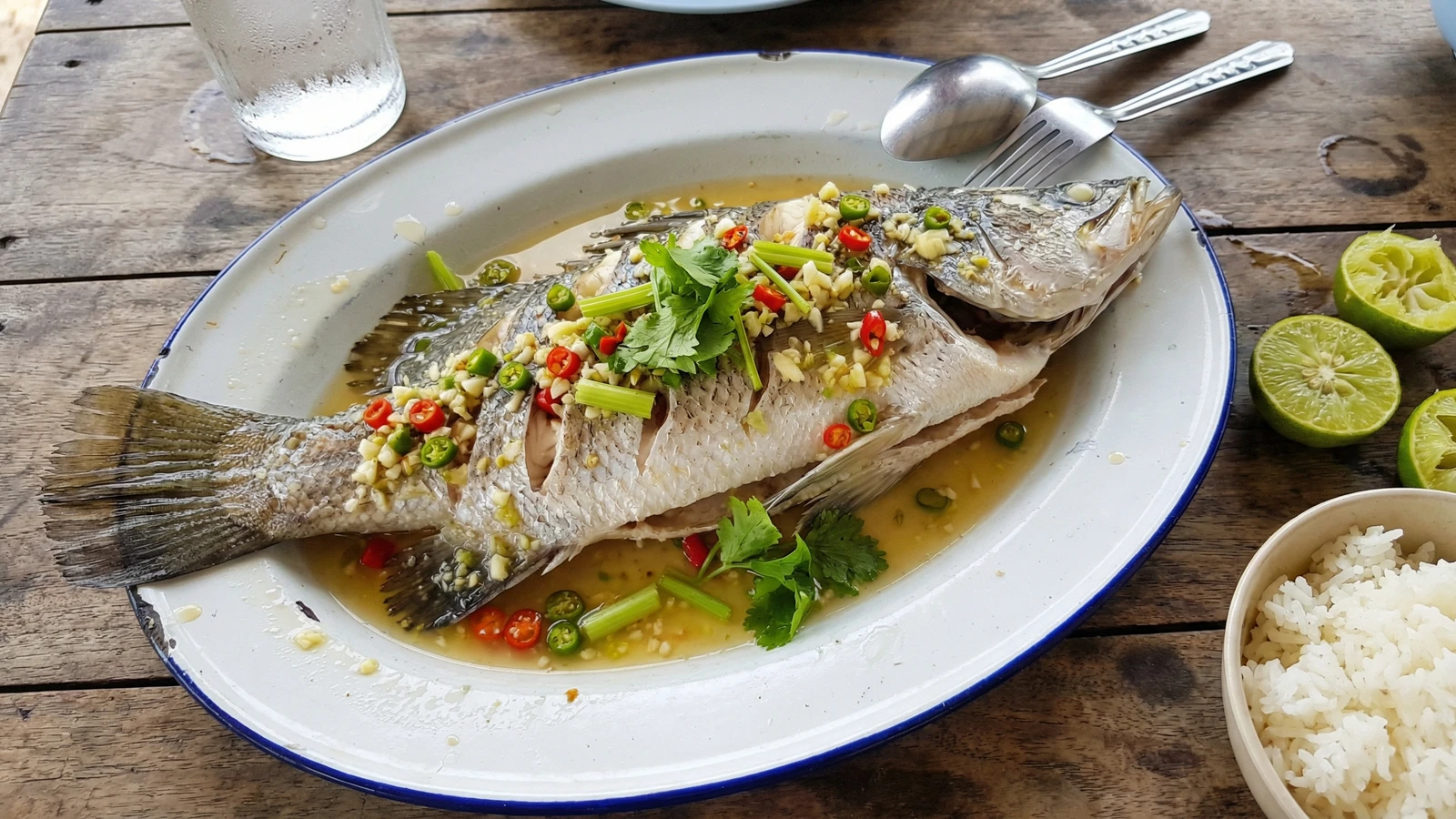
Steamed Sea Bass with Lime (Pla Kapong Neung Manao)
Created by
The sour pillar does all the work here. Sea bass steamed gentle and clean, then hit with a dressing of lime, garlic, fish sauce, and bird's eye chilies that wakes up every nerve in your mouth. Acid is the technique.
Sour is the most underestimated pillar. People think Thai food is about heat. It's not. It's about acid.
Ajarn always said that of the four pillars, manao (lime) is the one that separates Thai cuisine from every other Southeast Asian kitchen. Vietnamese use lime. Malay cooks use tamarind. But nobody leans on raw tropical acid the way Thai cooks do. Pla kapong neung manao is the proof. You take a whole sea bass, steam it with nothing but ginger and a little stock, and then you pour a dressing over it that is essentially concentrated sour pillar: lime juice, garlic, chilies, fish sauce, the barest touch of palm sugar. The fish is the canvas. The dressing is the painting.
Down south, along the Andaman coast and the Gulf, this dish is a given. You buy pla kapong off the boat in the morning. By lunch it's steamed and dressed. The Southern cooks I've watched in Nakhon Si Thammarat and Krabi pound their garlic and chilies harder, use more prik khi nu than you'd see in Bangkok, and go lighter on the sugar. That's the Southern palate: sour forward, spicy without apology, sweet barely a whisper. The fish does what the fish does. The dressing is where the cook lives.
This is not a kreung tam dish. There's no paste foundation here. Like tom yam, it breaks that rule. But the four pillars hold: nam pla for salt, nam tan pip for sweet (just enough to round the edges), manao for sour (the dominant voice), prik khi nu for heat. The system is flexible enough to work without a mortar. That's what makes it a system and not a formula.
Pla neung manao is a Central Thai preparation that became a staple of coastal communities across the Gulf of Thailand and the Andaman Sea, where fresh-caught sea bass (pla kapong khao) is available daily. The technique of steaming fish and dressing it with raw citrus sauce likely predates the wok's arrival in Siam, reflecting an older tradition of applying acid-based sauces to simply cooked proteins. In Southern Thailand, the dish skews markedly more sour and spicy than its Bangkok counterpart, with palm sugar reduced to near-absence, a reflection of the Southern palate's preference for sharp, confrontational flavors over Central Thai balance.
The technique, the tradition, and the story behind every dish.
Discover Culinary AdvisorIngredients
whole sea bass (pla kapong khao)
Quantity
1, about 600-700g
cleaned, gutted, and scored with 3 diagonal slashes on each side
lime juice (nam manao)
Quantity
3 tablespoons (about 3 limes)
fish sauce (nam pla)
Quantity
2 tablespoons
palm sugar (nam tan pip)
Quantity
1 teaspoon
bird's eye chilies (prik khi nu)
Quantity
10
finely sliced
garlic
Quantity
8 cloves
finely chopped
cilantro roots (rak phak chi)
Quantity
3
bruised
ginger (khing)
Quantity
1 thumb-sized piece
sliced
celery (kheun chai)
Quantity
2 stalks
cut into 2-inch pieces
light soy sauce (si ew khao)
Quantity
1 tablespoon
chicken stock or water
Quantity
2 tablespoons
fresh cilantro leaves (phak chi)
Quantity
for finishing
steamed jasmine rice
Quantity
for serving
| Ingredient | Quantity |
|---|---|
| whole sea bass (pla kapong khao)cleaned, gutted, and scored with 3 diagonal slashes on each side | 1, about 600-700g |
| lime juice (nam manao) | 3 tablespoons (about 3 limes) |
| fish sauce (nam pla) | 2 tablespoons |
| palm sugar (nam tan pip) | 1 teaspoon |
| bird's eye chilies (prik khi nu)finely sliced | 10 |
| garlicfinely chopped | 8 cloves |
| cilantro roots (rak phak chi)bruised | 3 |
| ginger (khing)sliced | 1 thumb-sized piece |
| celery (kheun chai)cut into 2-inch pieces | 2 stalks |
| light soy sauce (si ew khao) | 1 tablespoon |
| chicken stock or water | 2 tablespoons |
| fresh cilantro leaves (phak chi) | for finishing |
| steamed jasmine rice | for serving |
Equipment Needed
- •Steamer or wok with rack and domed lid
- •Heatproof plate that fits inside the steamer
- •Citrus juicer or reamer
Instructions
- 1
Prepare the fish
Score the sea bass with three deep diagonal slashes on each side, cutting almost to the bone. This isn't cosmetic. The slashes let heat penetrate evenly and let the dressing seep into the flesh after steaming. Rub the fish lightly inside and out with a splash of light soy sauce. Lay the ginger slices and bruised cilantro roots inside the cavity and across the top. Place the fish on a heatproof plate that fits inside your steamer.
Buy the freshest fish you can find. Pla kapong neung manao has nowhere to hide. There's no paste, no coconut cream, no heavy seasoning. If the fish isn't fresh, you'll know it. Clear eyes, firm flesh, clean smell. If the fishmonger's bass smells like anything other than the sea, walk away. - 2
Steam the fish
Bring your steamer to a full, rolling boil before the fish goes in. This is critical. If the water isn't at a hard boil, the fish steams too slowly and the flesh goes mushy instead of flaking clean. Set the plate with the fish into the steamer, cover tightly, and steam for 12 to 15 minutes depending on the size of your bass. The flesh should be white and opaque all the way through, and it should flake when you press the thickest part with a chopstick. Don't open the lid to check until at least 12 minutes. Every time you lift the lid, you lose heat and extend the cooking time.
A wok with a rack and a domed lid works as a steamer. Fill the wok with water to just below the rack, bring it to a rolling boil, set the plate on the rack. The domed lid gives the fish room. This is how most Thai home cooks do it. - 3
Make the lime dressing
While the fish steams, build the dressing. Combine the lime juice, fish sauce, and palm sugar in a bowl. Stir until the sugar dissolves. Add the chopped garlic and sliced bird's eye chilies. Taste it. It should hit you: sour first, salty second, with heat building behind. The sugar should be invisible, just rounding the sharp edges of the lime without announcing itself. If you can taste sweetness, you've added too much. Southern cooks barely use any. Adjust until the balance is right. This dressing is the entire point of the dish.
Squeeze your limes fresh. Right before serving. Lime juice oxidizes fast and goes from bright to flat within twenty minutes. Bottled lime juice is dead on arrival. If you're going to make one ingredient perfect in this dish, make it the manao. - 4
Drain and dress
When the fish is done, carefully remove the plate from the steamer. There will be liquid pooled around the fish, a mix of steam condensation and fish juices. Pour most of it off. Leave a thin layer. Some cooks discard it all, some keep a bit for body. I keep a little. Add the chicken stock to the remaining liquid on the plate for a touch more savory depth.
- 5
Finish and serve
Scatter the celery pieces over and around the fish. Pour the lime dressing directly over the bass, making sure it pools into the scored slashes and the cavity. Spoon it over twice to make sure every surface is coated. Finish with fresh cilantro leaves. Serve immediately with steamed jasmine rice. The rice is there to catch the dressing that runs off the fish. That dressing-soaked rice is half the pleasure of this dish. Don't waste a drop.
Ajarn always said: acid dishes don't wait. The lime juice is alive for maybe fifteen minutes after it hits the fish. After that, the brightness fades and the garlic gets harsh. Steam the fish, dress it, eat it. Pla neung manao is a dish that exists in a window.
Chef Tips
- •This dish has no kreung tam, no paste, no coconut cream. It's one of the most exposed dishes in Thai cooking. The fish quality is everything. On the Southern coast, from Krabi to Nakhon Si Thammarat, vendors buy pla kapong off the morning boats and have it steamed by noon. If you're inland, find the best fishmonger you can and ask for whole sea bass, cleaned and gutted but head on. The head holds gelatin and flavor. Don't discard it.
- •Southern Thai cooks use more prik khi nu (bird's eye chilies) than Central Thai cooks. Ten chilies in this dressing isn't aggressive by Southern standards. It's the baseline. If you want it Southern-proper, go to fifteen. The heat should make you pause between bites, not stop eating. That's the line.
- •The celery used here is kheun chai, Chinese celery, which has thin stalks and a more intense, almost herbaceous flavor compared to Western celery. It's a common finishing herb in Thai steamed fish dishes. If you can't find it, the thin inner stalks of regular celery work, but cut them fine.
- •Don't confuse this dish's simplicity with lack of skill. The timing is the technique. Oversteamed fish falls apart. Understeamed fish is translucent at the bone. The dressing has to be made fresh and poured at the right moment. Simple dishes expose bad technique. There's no sauce to hide behind.
Advance Preparation
- •The fish can be cleaned, scored, and rubbed with soy sauce up to 2 hours ahead. Keep refrigerated on the steaming plate, covered.
- •The garlic and chilies can be prepped (chopped and sliced) up to an hour ahead. Do not combine them with the lime juice until just before serving. Lime juice is alive for minutes, not hours.
- •The dressing cannot be made ahead. Squeeze the limes, mix the dressing, and pour it over the fish the moment steaming is done. This dish exists in a fifteen-minute window of perfection.
Frequently Asked Questions
Nutrition Information
1 serving (about 150g)
Where cooking meets culture.
Culinary mentorship, cultural storytelling, and the editorial depth that makes cooking meaningful.
Explore Culinary Advisor