Culinary Advisor
A cooking platform built around craft, culture, and the stories behind what we eat.
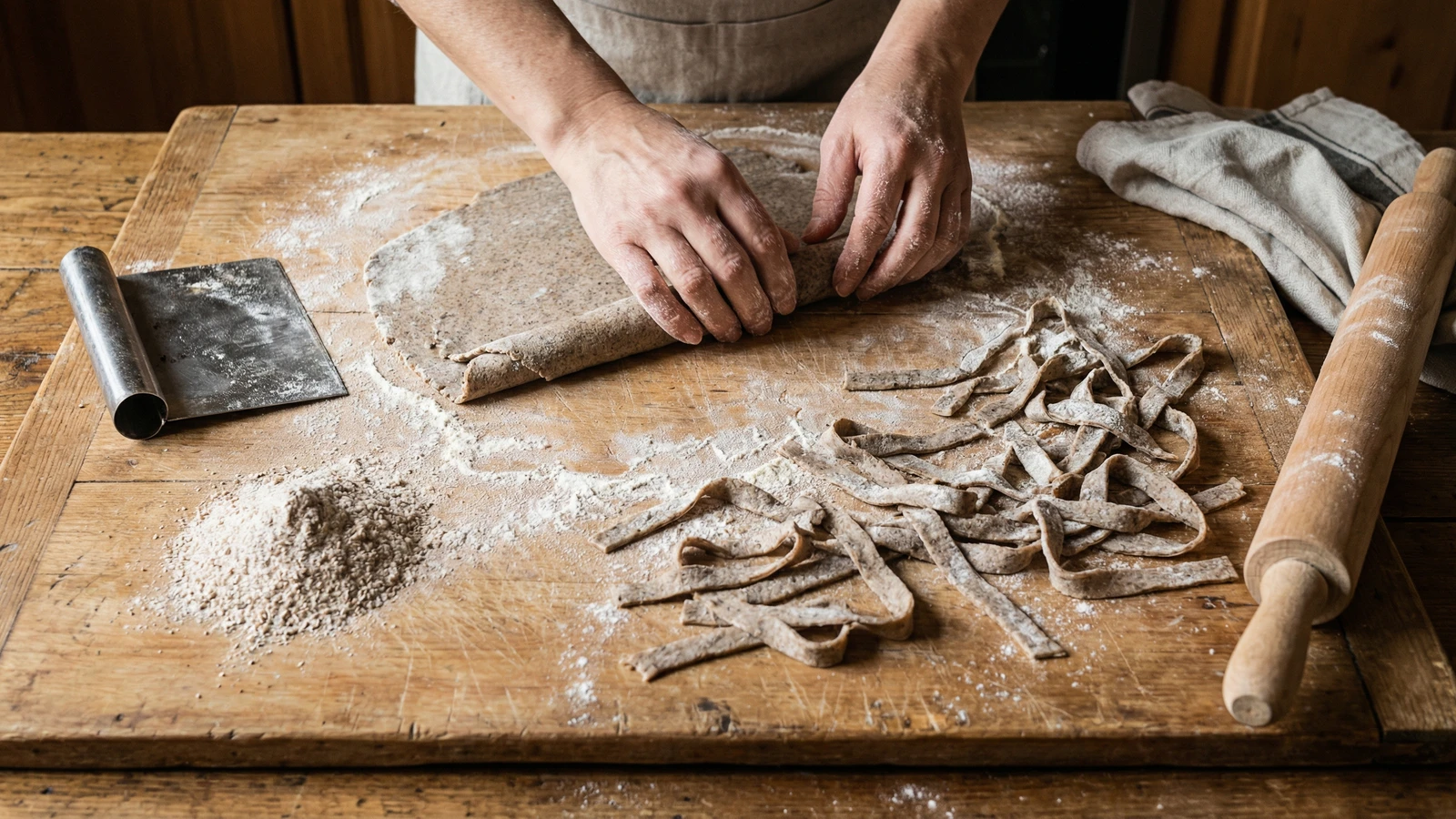
Pizzoccheri della Valtellina
Created by Chef Graziella
The buckwheat pasta of the Lombardy Alps, where harsh mountain winters demanded food that sustained body and spirit. Nutty pasta, earthy cabbage, melting cheese, and the luxury of butter.
Pizzoccheri comes from the Valtellina, a narrow Alpine valley in Lombardy where winters are long and buckwheat grows where wheat cannot. The farmers of this valley developed a pasta unlike any other in Italy: short, thick ribbons made from dark buckwheat flour, with just enough wheat to hold them together.
This is not delicate food. It is fuel for people who work with their hands in cold weather. The pasta cooks in the same water as the cabbage and potatoes, everything drained together and layered with local cheese, then drenched in butter that has been slowly infused with garlic and sage. The cheese melts into strings. The butter coats everything. You eat it and you understand why Valtellinesi have made it this way for centuries.
The buckwheat flour gives pizzoccheri a distinctive nuttiness and a texture softer than wheat pasta. Do not expect it to behave the same way. It is more fragile, more forgiving of imperfect technique, and more rewarding when you get it right. Simple does not mean easy, but this pasta is more accessible than sfoglia because buckwheat asks less of your rolling arm.
Buckwheat arrived in the Alpine valleys of northern Italy during the 15th century, likely from Central Asia via the trade routes. In the Valtellina, where altitude and climate made wheat cultivation difficult, buckwheat became the grain of survival. Pizzoccheri was first documented in the 18th century, though the dish certainly predates its written record. The Accademia del Pizzocchero di Teglio has guarded the traditional recipe since 2002.
The technique, the tradition, and the story behind every dish.
Discover Culinary AdvisorIngredients
buckwheat flour
Quantity
300g
tipo 00 flour
Quantity
100g, plus more for dusting
fine sea salt
Quantity
1/2 teaspoon
warm water
Quantity
150ml, approximately
large egg
Quantity
1
Savoy cabbage
Quantity
400g
ribs removed, leaves cut into 2-inch pieces
waxy potatoes
Quantity
300g
peeled and cut into 1/2-inch cubes
Casera cheese or Fontina Val d'Aosta
Quantity
250g
cut into thin slices
Parmigiano-Reggiano
Quantity
100g
freshly grated
unsalted butter
Quantity
150g
garlic cloves
Quantity
4
peeled and lightly crushed
fresh sage leaves
Quantity
12
kosher salt
Quantity
for pasta water
| Ingredient | Quantity |
|---|---|
| buckwheat flour | 300g |
| tipo 00 flour | 100g, plus more for dusting |
| fine sea salt | 1/2 teaspoon |
| warm water | 150ml, approximately |
| large egg | 1 |
| Savoy cabbageribs removed, leaves cut into 2-inch pieces | 400g |
| waxy potatoespeeled and cut into 1/2-inch cubes | 300g |
| Casera cheese or Fontina Val d'Aostacut into thin slices | 250g |
| Parmigiano-Reggianofreshly grated | 100g |
| unsalted butter | 150g |
| garlic clovespeeled and lightly crushed | 4 |
| fresh sage leaves | 12 |
| kosher salt | for pasta water |
Equipment Needed
- •Large wooden board or clean work surface for kneading and rolling
- •Rolling pin, at least 18 inches long
- •Hand-crank pasta machine (optional but helpful for even thickness)
- •Large 8-quart pot for cooking
- •Small saucepan for butter
- •Large warmed serving bowl or shallow baking dish
- •Bench scraper for cutting and cleanup
Instructions
- 1
Combine the flours
Measure both flours onto a wooden board or into a large bowl. Add the salt and mix thoroughly with your hands. The buckwheat should be evenly distributed through the white flour. Make a well in the center.
- 2
Form the dough
Crack the egg into the well. Add about two-thirds of the warm water. Begin drawing flour from the inner walls of the well into the liquid, mixing with a fork. Continue until a shaggy mass forms. Add remaining water gradually, only as needed. The dough should come together but feel drier than egg pasta. Buckwheat absorbs liquid slowly.
The dough will feel different from wheat pasta. Buckwheat has no gluten, so it lacks elasticity. The small amount of wheat flour provides just enough structure to hold the pasta together. Do not expect springiness. - 3
Knead the dough
Turn the dough onto a lightly floured surface. Knead for 8 to 10 minutes, folding and pressing with the heel of your hand. The dough will feel grainy at first. It becomes smoother as you work it, though never silky like egg pasta. When it holds together without crumbling and feels uniformly dense, it is ready. Wrap tightly in plastic and rest at room temperature for 30 minutes.
- 4
Roll the pasta
Divide the rested dough into four portions. Keep unused portions covered. Working with one piece at a time, roll on a floured surface into a rectangle about 1/8 inch thick. A pasta machine works here, though the dough is fragile. If using a machine, roll to the second-to-last setting. The pasta should be thicker than tagliatelle. Buckwheat pasta that is too thin will fall apart in the water.
If the dough cracks at the edges during rolling, it is too dry. Wet your hands slightly and knead the moisture in. If it sticks relentlessly, it is too wet. Add flour sparingly. - 5
Cut the pizzoccheri
Cut each rolled sheet into ribbons about 3 inches long and 1/2 inch wide. They need not be uniform. The women of Valtellina cut them by hand with a knife, and so should you. Toss the cut pasta lightly with buckwheat flour and spread on a floured tray. They can sit for up to one hour at room temperature.
- 6
Cook the vegetables
Bring a very large pot of water to a vigorous boil. Salt it generously. Add the potato cubes first. After 5 minutes, add the cabbage. Cook together until the potatoes are nearly tender, about 8 minutes more. Do not drain. You will add the pasta to this same water.
- 7
Cook the pizzoccheri
Add the pizzoccheri to the pot with the vegetables. Stir gently to prevent sticking. Cook until the pasta is tender but retains a pleasant chew, 3 to 4 minutes for fresh pasta. The buckwheat gives it a distinctive texture, slightly softer than wheat pasta. Test a piece. When done, drain everything together, reserving one cup of the cooking water.
- 8
Make the garlic sage butter
While the pasta cooks, melt the butter in a small saucepan over medium-low heat. Add the crushed garlic cloves and sage leaves. Cook very slowly until the garlic turns pale gold and the butter smells deeply of sage, about 5 minutes. The garlic must not brown. Remove and discard the garlic cloves. The sage leaves remain.
The garlic here is a whisper, not a shout. You infuse its essence into the butter, then remove it. This is how Italians actually use garlic, not the excess Americans mistake for authenticity. - 9
Layer and serve
Work quickly now. In a large warmed serving bowl or baking dish, layer one-third of the drained pasta and vegetables. Scatter one-third of the Casera slices and one-third of the Parmigiano over top. Repeat twice more, ending with cheese. Pour the hot sage butter over everything. The butter should melt the cheese into ribbons. Toss gently at the table, ensuring every portion has pasta, vegetables, melted cheese, and a sage leaf or two. Serve immediately. This dish does not wait.
Chef Tips
- •Seek out stone-ground buckwheat flour from a reputable mill. The flavor is incomparably better than commercial buckwheat flour, which often tastes flat and dusty. Italian grocery stores or online specialty suppliers stock proper grano saraceno.
- •Casera is the traditional cheese of Valtellina, a semi-soft mountain cheese with a delicate tang. If unavailable, Fontina Val d'Aosta is the proper substitute. Do not use Fontina from elsewhere. The Swiss Gruyère some suggest as alternative changes the dish entirely.
- •The pasta, cabbage, and potatoes must cook together in the same water. This is not merely convenience. The starch from the potatoes and the minerals from the cabbage season the pasta in a way that separate cooking cannot replicate.
- •Warm your serving dish. Pizzoccheri cools quickly, and cold pizzoccheri is a sad thing. The cheese must melt from the residual heat.
Advance Preparation
- •The dough can be made up to 24 hours ahead, wrapped tightly, and refrigerated. Bring to room temperature before rolling, about 30 minutes.
- •Cut pizzoccheri can be dried at room temperature for several hours, then stored in a paper bag for up to 2 days. Cooking time increases slightly for dried pasta.
- •The dish cannot be made ahead or reheated successfully. The cheese seizes, the pasta clumps. Make it and eat it.
Frequently Asked Questions
Nutrition Information
1 serving (about 335g)
Where cooking meets culture.
Culinary mentorship, cultural storytelling, and the editorial depth that makes cooking meaningful.
Explore Culinary Advisor