Culinary Advisor
A cooking platform built around craft, culture, and the stories behind what we eat.
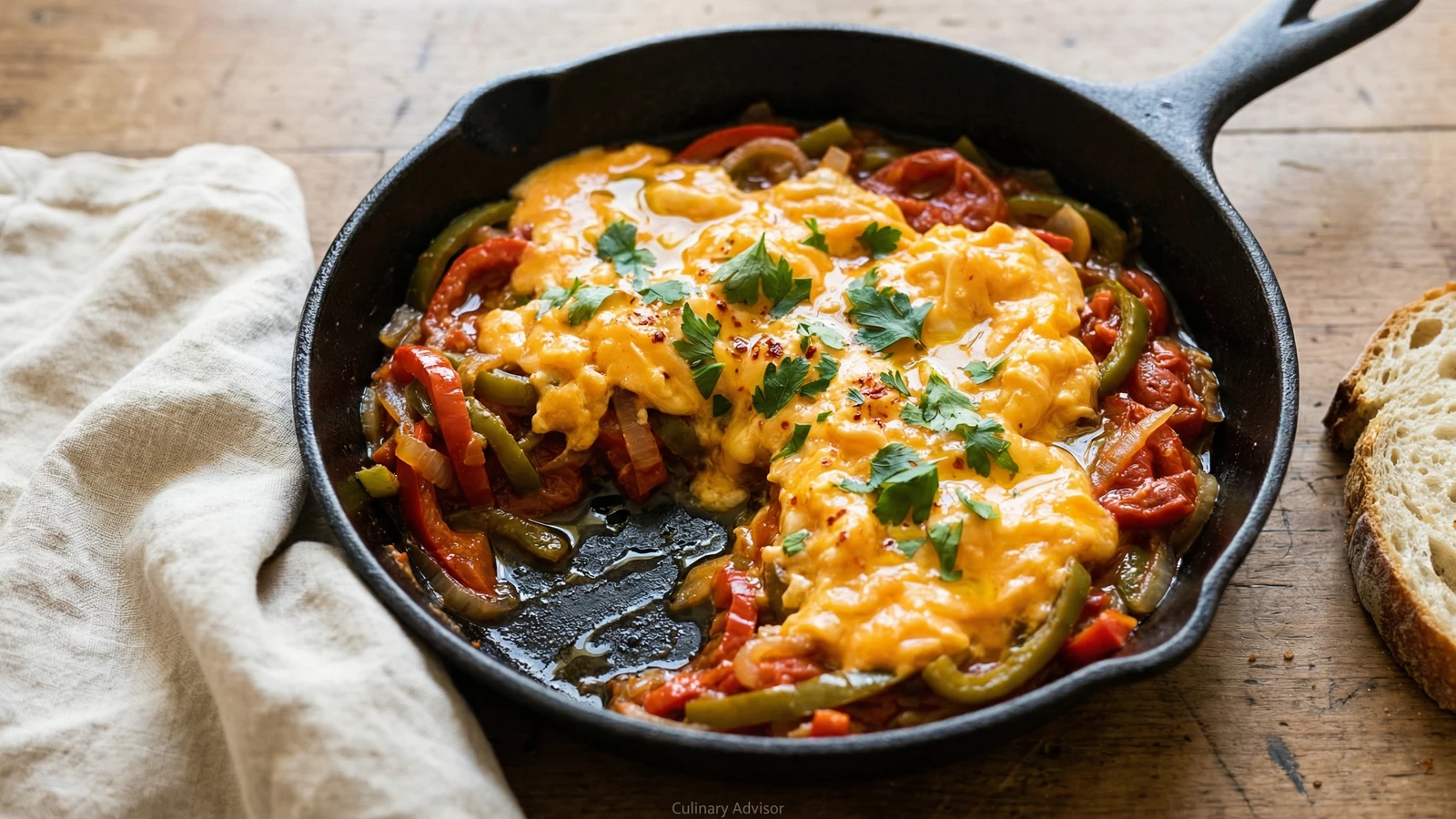
Pipérade with Farm-Fresh Eggs
Created by Chef Ally
A slow-cooked Basque tangle of sweet peppers, ripe tomatoes, and onions folded with soft-scrambled eggs, the kind of morning dish that rewards patience and demands good bread.
Pipérade comes from the Basque Country, that green and mountainous stretch where France meets Spain and the peppers grow thick on the vine. The dish itself is simple: peppers, tomatoes, onions, cooked slowly until they lose their structure and become something new. Then eggs, folded through at the last moment.
The secret is time. You cannot rush a pipérade. The peppers need thirty minutes of gentle heat to surrender their sweetness. The tomatoes need to break down into the mix. By the time you add the eggs, the vegetables have become a kind of jam, sweet and smoky and soft.
Buy your peppers from someone who grows them. At the height of summer, they should feel heavy and smell faintly sweet even through their skins. The tomatoes should give slightly when pressed and perfume your hands. Eggs from pastured hens, with their deep orange yolks, make all the difference in a dish this simple.
Every meal is a meaningful choice. This one says: I have time. I have good ingredients. I will let them become what they want to become.
The technique, the tradition, and the story behind every dish.
Discover Culinary AdvisorIngredients
red bell peppers
Quantity
3 large
stemmed, seeded, and sliced into thin strips
green bell peppers
Quantity
2 large
stemmed, seeded, and sliced into thin strips
yellow onion
Quantity
1 large
halved and thinly sliced
ripe tomatoes
Quantity
4 (about 1 pound)
cored and roughly chopped
garlic
Quantity
4 cloves
minced
extra-virgin olive oil
Quantity
1/4 cup, plus more for finishing
piment d'Espelette or sweet paprika
Quantity
1 teaspoon
fine sea salt
Quantity
1/2 teaspoon, plus more to taste
black pepper
Quantity
to taste
freshly ground
large eggs
Quantity
6
from pastured hens
fresh flat-leaf parsley
Quantity
2 tablespoons
roughly chopped
crusty bread
Quantity
for serving
| Ingredient | Quantity |
|---|---|
| red bell peppersstemmed, seeded, and sliced into thin strips | 3 large |
| green bell peppersstemmed, seeded, and sliced into thin strips | 2 large |
| yellow onionhalved and thinly sliced | 1 large |
| ripe tomatoescored and roughly chopped | 4 (about 1 pound) |
| garlicminced | 4 cloves |
| extra-virgin olive oil | 1/4 cup, plus more for finishing |
| piment d'Espelette or sweet paprika | 1 teaspoon |
| fine sea salt | 1/2 teaspoon, plus more to taste |
| black pepperfreshly ground | to taste |
| large eggsfrom pastured hens | 6 |
| fresh flat-leaf parsleyroughly chopped | 2 tablespoons |
| crusty bread | for serving |
Equipment Needed
- •12-inch heavy skillet or sauté pan
- •Wooden spoon or heat-proof spatula
Instructions
- 1
Warm the oil and onion
Set a wide, heavy skillet over medium-low heat and add the olive oil. When the oil shimmers, add the sliced onion with a pinch of salt. Cook slowly, stirring occasionally, until the onion turns soft and translucent, about ten minutes. You are not looking for color here. You are coaxing out sweetness.
A wide pan matters. The vegetables need room to release their moisture without crowding, or they will steam instead of soften. - 2
Add the peppers
Add all the pepper strips to the pan. Season with another pinch of salt. Stir everything together and let the peppers cook gently for twenty minutes, stirring every few minutes. They will collapse and become silky. The kitchen will start to smell sweet and warm. This patience is the whole point of pipérade.
- 3
Introduce tomatoes and garlic
Add the chopped tomatoes, minced garlic, piment d'Espelette, and the remaining salt. Stir to combine. Let everything simmer together for another fifteen minutes, until the tomatoes have broken down completely and the mixture looks like a thick, jammy stew. The vegetables should melt into one another, distinct but unified.
- 4
Taste and adjust
Taste the pipérade. It should be sweet from the peppers, bright from the tomatoes, gently warm from the Espelette. Add more salt if needed. Grind in black pepper. This vegetable base is the foundation of everything that follows. Get it right before you touch the eggs.
The pipérade can rest at this point. Some cooks make it a day ahead and warm it gently before adding eggs. The flavors only deepen with time. - 5
Fold in the eggs
Crack the eggs into a bowl and beat them lightly with a fork, just enough to combine yolks and whites. Reduce the heat to low. Pour the eggs over the warm pipérade and use a wooden spoon or spatula to fold them through gently, pulling from the edges toward the center. The eggs should form soft, creamy curds throughout the vegetables. This takes three to four minutes. Remove the pan from heat while the eggs still look slightly underdone. They will finish cooking in the residual warmth.
- 6
Finish and serve
Scatter the parsley over the top. Drizzle with a thread of good olive oil. Serve immediately from the pan, with thick slices of crusty bread to soak up every bit. This is food meant for the middle of the table, for reaching in with your bread and eating without ceremony.
Chef Tips
- •Piment d'Espelette is the traditional pepper of the Basque Country, mildly spicy with a sweet, almost fruity warmth. If you cannot find it, sweet paprika works, though the flavor will be gentler. Seek out Espelette if you can. It transforms the dish.
- •The ratio of red to green peppers matters. Red peppers bring sweetness; green peppers bring a slight bitterness that keeps the dish from cloying. Adjust to your taste, but do not skip the green.
- •In winter, when fresh tomatoes taste like nothing, use good canned whole tomatoes from San Marzano. Drain them, crush them by hand, and proceed. This is honest cooking, not performance.
- •Some Basque cooks add thin slices of Bayonne ham or a few strips of good bacon to the onions at the start. It is not necessary, but it is very good.
Advance Preparation
- •The pepper and tomato base (before adding eggs) can be made up to two days ahead and refrigerated. Warm it gently over low heat before folding in the eggs.
- •Once the eggs are added, the dish must be served immediately. There is no reheating a pipérade.
Frequently Asked Questions
Nutrition Information
1 serving (about 320g)
Where cooking meets culture.
Culinary mentorship, cultural storytelling, and the editorial depth that makes cooking meaningful.
Explore Culinary Advisor