Culinary Advisor
A cooking platform built around craft, culture, and the stories behind what we eat.
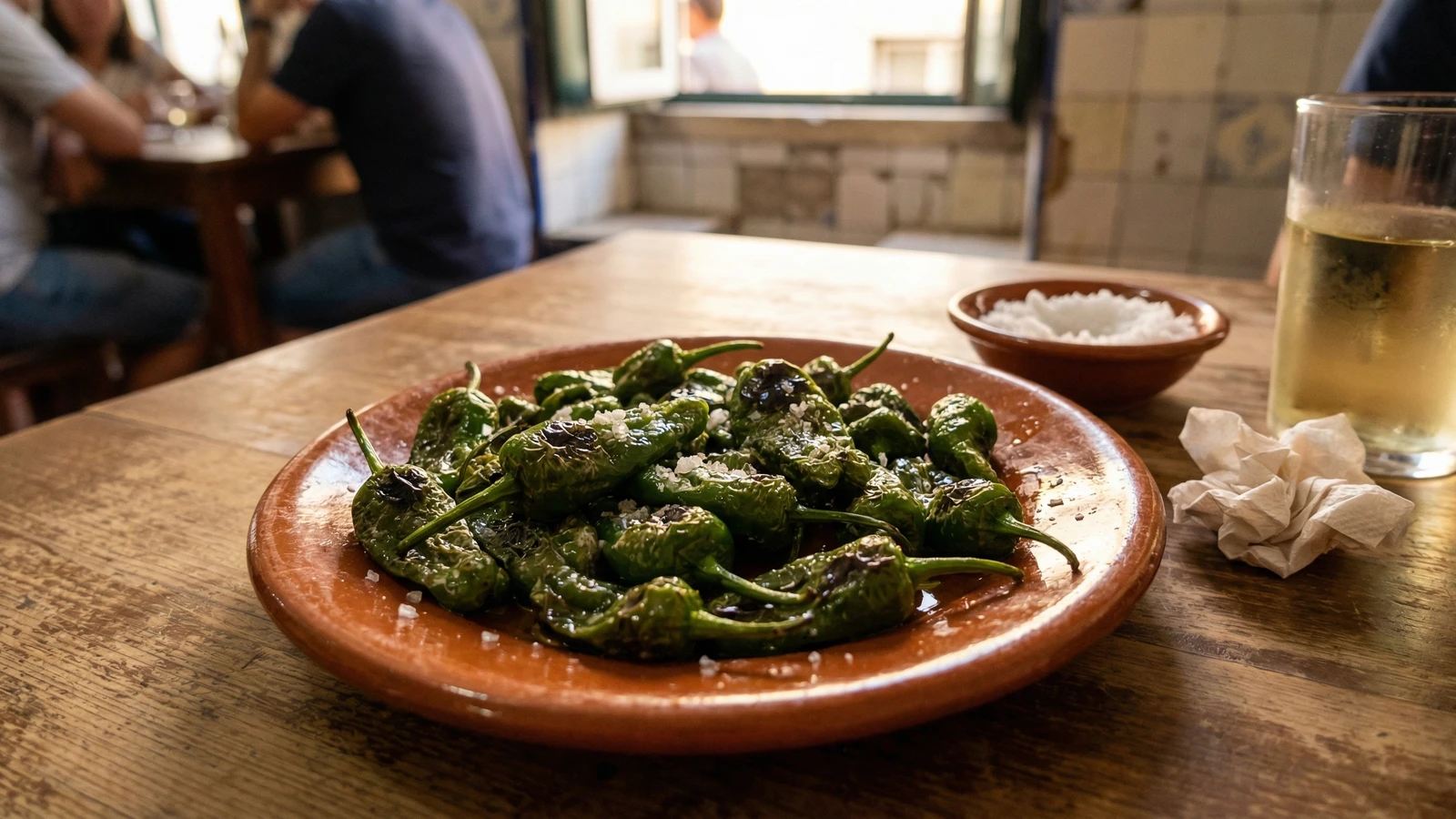
Pimentos Padrão
Created by
The gambling dish of Portuguese tascas. Grab a pepper, bite, hope for mild, maybe get fire. Coarse salt, hot oil, and a prayer. This is how you start an evening.
There's a saying in the north: uns picam, outros não. Some sting, others don't. You never know which until you bite.
These little green peppers from the Minho-Galicia border are the perfect petisco, the kind of dish that makes people stay longer than they planned. You order them at the tasca with a cold beer or a glass of vinho verde. You reach for one, hoping it's mild. Usually it is. But every now and then, one catches fire on your tongue and everyone at the table laughs.
There's no technique to identify the hot ones. Scientists have tried. The grandmothers just shrug. The uncertainty is the point.
I serve these at every Mesa da Avó dinner before anything else hits the table. They get people talking, loosening up, reaching across the table. Shared plates. Shared risk. That's how an evening should start.
The cooking is simple: screaming hot oil, a few minutes of blistering, a shower of coarse salt. The peppers should be charred and collapsed, glistening and slightly wrinkled. Don't overthink it. This is peasant cooking from the border region, tavern food, drinking food. The only rule is high heat and good salt.
Pimentos de Padrón originated in the Galician town of Padrón, just north of the Portuguese border, where Franciscan monks brought pepper seeds from Mexico in the 16th century. The microclimate and soil of this region produce peppers that are genetically identical but randomly vary in capsaicin levels, creating the famous roulette effect. The dish has been shared across the Minho-Galicia cultural region for centuries, claimed equally by both sides of the border.
The technique, the tradition, and the story behind every dish.
Discover Culinary AdvisorIngredients
pimentos de Padrón
Quantity
400g
extra virgin olive oil (azeite)
Quantity
3 tablespoons
flaky sea salt (flor de sal)
Quantity
generous pinch
| Ingredient | Quantity |
|---|---|
| pimentos de Padrón | 400g |
| extra virgin olive oil (azeite) | 3 tablespoons |
| flaky sea salt (flor de sal) | generous pinch |
Equipment Needed
- •Large cast iron skillet or heavy pan
- •Tongs for turning
Instructions
- 1
Prepare the peppers
Wash the peppers and dry them thoroughly. This matters. Water hitting hot oil means chaos and a kitchen full of splatter. Pat each one dry with a clean towel. Leave the stems on. You'll need something to hold onto when you're eating them.
- 2
Heat the oil
Heat the olive oil in a large heavy skillet over high heat. The oil needs to be almost smoking. This isn't gentle cooking. This is fast, aggressive heat that blisters the skin before the inside overcooks. Test with one pepper: it should sizzle violently the moment it hits the pan.
A cast iron skillet works best. It holds heat like nothing else, and you need that heat to stay high even when the peppers go in. - 3
Blister the peppers
Add the peppers in a single layer. Don't crowd the pan. Work in batches if you must. Let them sit for 30 seconds, then shake the pan or turn them with tongs. You want blistered, charred skin on all sides. The sound should be aggressive, crackling, alive. Total cooking time is 3 to 4 minutes. The peppers should collapse slightly and the skin should be puckered with black spots.
If the peppers aren't blistering and charring, your heat isn't high enough. Don't be timid. This dish rewards boldness. - 4
Season and serve immediately
Transfer the peppers to a warm plate the moment they're done. Shower them with flaky salt while they're still glistening with oil. The salt should be visible, generous, coarse. Serve immediately. These don't wait. Eat them with your fingers, holding the stem, biting the pepper off in one go. Some will be sweet and mild. Some will make you reach for your wine. That's the game.
Chef Tips
- •The peppers must be completely dry before they hit the oil. Any moisture creates dangerous splatter and prevents proper blistering. Pat them dry, then let them air dry another few minutes.
- •Season while they're hot. The salt sticks better to warm, oily peppers. Cold peppers, the salt just slides off.
- •Smaller peppers tend to be milder. The larger ones have had more time to develop capsaicin. But this is not a guarantee. There are no guarantees. That's the whole point.
- •Use flor de sal or another flaky finishing salt. Fine table salt disappears. You want to see the salt crystals, feel them crunch between your teeth.
Advance Preparation
- •The peppers can be washed and dried up to a few hours ahead. Keep them at room temperature, uncovered.
- •This dish cannot be made ahead. The peppers must go from pan to plate to mouth in minutes. Waiting ruins them.
Frequently Asked Questions
Nutrition Information
1 serving (about 110g)
Where cooking meets culture.
Culinary mentorship, cultural storytelling, and the editorial depth that makes cooking meaningful.
Explore Culinary Advisor